Neovara News

2026-03-13T10:41:43.812Z
End to End AI: Building Connected Systems That Work

Modern businesses face a critical challenge: artificial intelligence solutions that promise transformation but deliver fragmentation. Models trained in isolation, data pipelines that break at integration points, and systems that cannot adapt when operational reality shifts. The answer lies in end to end ai-a holistic approach that connects every stage of the AI lifecycle into a single, coherent flow. Instead of building sophisticated models that fail when they meet real-world operations, end to end ai ensures that data collection, model training, deployment, monitoring, and continuous improvement work as one unified system. This approach transforms AI from a collection of experiments into a reliable operational asset.

Understanding End to End AI Architecture

End to end ai represents a fundamental shift in how organizations build and deploy intelligent systems. Rather than treating machine learning as a discrete project with a beginning and end, this methodology creates continuous loops where models learn from operational feedback and improve over time.

The architecture starts with data infrastructure. Raw inputs from sensors, customer interactions, field operations, and business transactions flow into centralized repositories. Data quality matters more than volume: inconsistent formats, missing timestamps, or siloed sources create blind spots that compromise every downstream process.
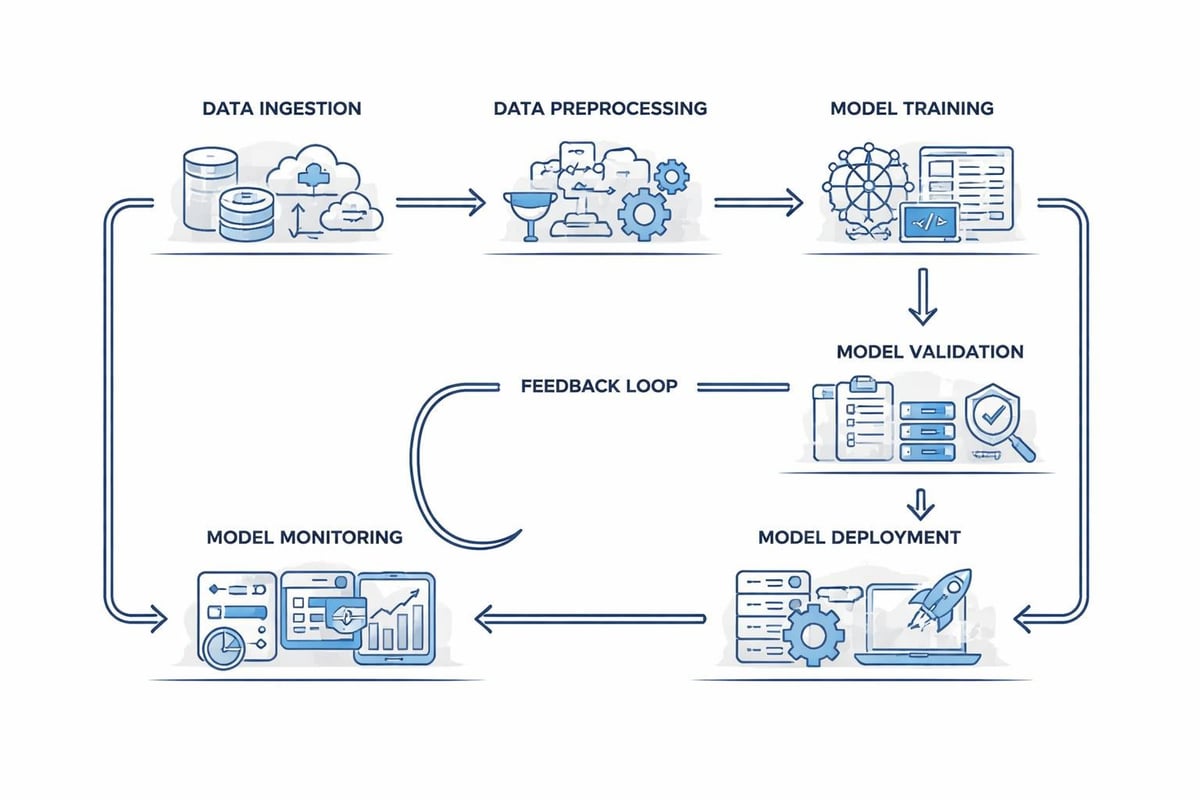
End to end AI pipeline components

Core Components of Integrated AI Systems

A complete end to end ai implementation requires several interconnected layers working in harmony:

Research from IBM demonstrates how end to end AI workflows can be implemented using modern orchestration tools, highlighting the importance of infrastructure as code and MLOps practices. The integration reduces handoff friction and keeps models synchronized with operational needs.

Traditional approaches break at the boundaries between these stages. Data scientists build models in notebooks, engineers struggle to productionize them, operations teams receive predictions they cannot act on, and no one captures whether the AI actually improved business outcomes. End to end ai eliminates these gaps by designing for the complete lifecycle from day one.

Business Operations and AI Integration

The promise of AI in operations fails when predictions cannot trigger actions. A demand forecast means nothing if it does not adjust procurement schedules. Route optimization provides no value if drivers never receive updated instructions. Customer churn predictions waste resources unless they activate retention workflows.

End to end ai in operational contexts means models connect directly to the systems that execute work. When a model predicts equipment failure, it automatically generates a maintenance work order, checks technician availability, orders replacement parts, and updates customer ETAs. The prediction becomes the trigger, not just information.

Integration Point Traditional Approach End to End AI Approach
Demand forecasting Weekly report emailed to planners Automatic purchase orders and capacity allocation
Route optimization Planner reviews suggestions manually Routes sync to driver mobile apps in real-time
Quality prediction Alerts sent to supervisor inbox Inspection workflow triggered with priority scoring
Inventory optimization Monthly stock review meetings Dynamic reorder points adjusted continuously

This level of integration requires operational platforms designed for automation rather than retrofitted with AI as an afterthought. The modular operations platform approach enables teams to connect AI capabilities directly to transport, orders, assets, and field service execution without rebuilding core systems.

Connecting Planning to Execution

The gap between planning and execution destroys value in most organizations. Plans optimize for ideal conditions, but reality introduces delays, cancellations, equipment failures, and resource constraints. Static plans become obsolete within hours.

End to end ai closes this gap by continuously recalculating optimal actions as conditions change. When a delivery truck breaks down, the system immediately:

  1. Reassigns orders to available vehicles based on capacity and location
  2. Recalculates route sequences to minimize total delay
  3. Updates customer ETAs across all affected deliveries
  4. Generates exception reports for orders that cannot meet original commitments
  5. Triggers alerts to suppliers or partners if service levels are at risk

This requires AI models embedded in operational workflows, not separated from them. The system needs real-time data about vehicle locations, driver hours, order priorities, customer requirements, and traffic conditions. Models must run frequently enough to respond before circumstances change again.
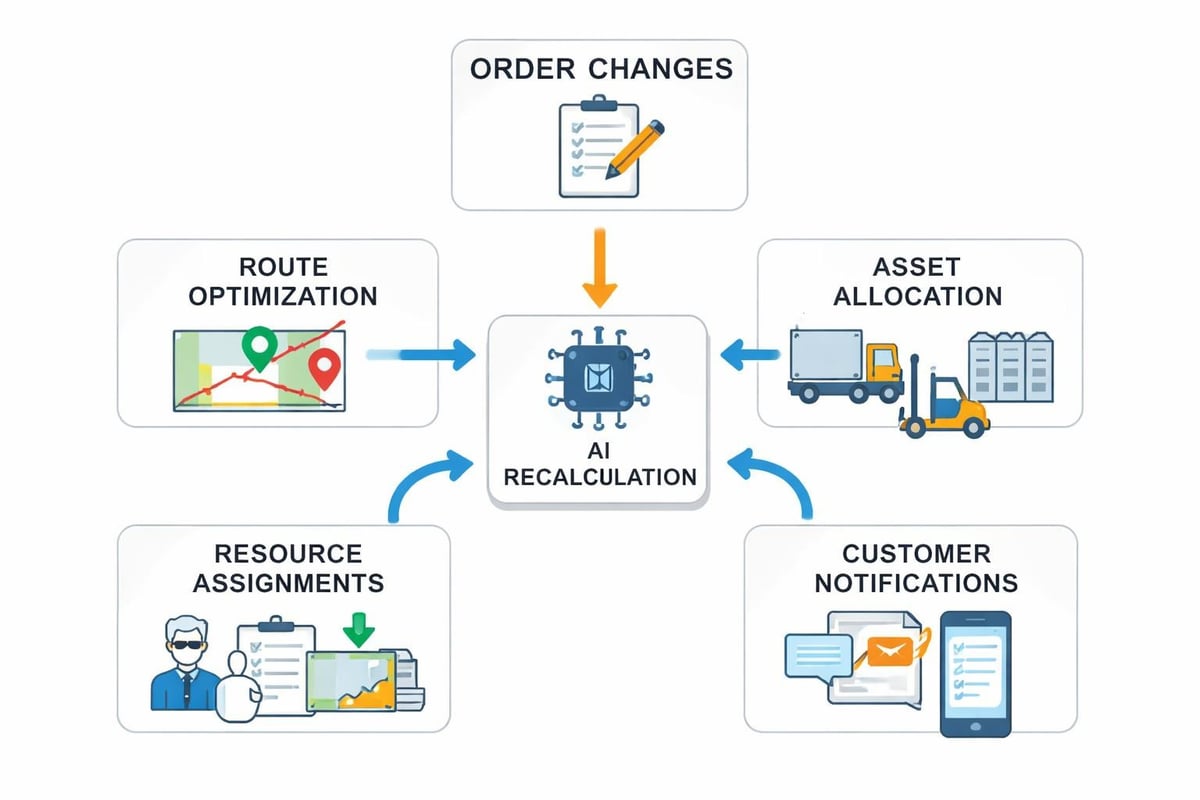
Real-time AI decision flow

Data Flow and Model Lifecycle Management

Sustainable end to end ai depends on managing the complete model lifecycle as a production process, not a research project. Models degrade over time as patterns shift, new product lines launch, customer behavior evolves, and market conditions change. Without systematic retraining, yesterday's accurate predictions become today's costly errors.

The lifecycle begins with labeled training data extracted from historical operations. Quality labels matter more than sophisticated algorithms: if outcomes are mislabeled, errors recorded inconsistently, or edge cases excluded, models learn the wrong patterns. Operations teams must validate that training data represents reality, including exceptions and rare events that matter most.

Continuous Learning Frameworks

Static models trained once and deployed forever fail in dynamic business environments. End to end ai implements continuous learning where:

The EndToEndML pipeline approach demonstrates how automated workflows can handle preprocessing, training, evaluation, and deployment with minimal manual intervention. This reduces the specialized expertise required while maintaining rigor in model development.

Production AI systems must handle model versioning, experiment tracking, and reproducibility. When a model makes a critical business decision, teams need to reconstruct exactly which version ran, what data it used, and why it produced that output. Verifiable AI pipelines using cryptographic methods address these transparency and trust requirements in regulated industries.

Operational Challenges and Practical Solutions

Organizations struggle with end to end ai not because the technology fails, but because implementation crosses organizational boundaries. Data scientists report to analytics teams, IT owns infrastructure, operations controls execution systems, and business units define requirements. No single group has authority or visibility across the complete flow.

Breaking Down Organizational Silos

Successful end to end ai requires cross-functional ownership where teams share accountability for outcomes, not just their component pieces. This means:

Operations platforms designed for transport, logistics, field service, and rental businesses can accelerate this integration by providing a shared command layer where AI automation connects naturally to daily execution. When the platform already unifies orders, assets, routes, and resources, embedding AI becomes configuration rather than custom development.

Scaling AI Across Multi-Site Operations

Single-location AI pilots often succeed while enterprise rollouts stumble. The complexity multiplies with geography, regulatory requirements, language differences, local operational practices, and varying data availability. End to end ai at scale requires architecture that handles this heterogeneity without fragmenting back into disconnected point solutions.

Centralized models assume uniform processes and consistent data quality across all sites. This rarely matches reality. Regional differences in customer behavior, seasonal patterns, supplier networks, and competitive dynamics mean a model optimized for one location performs poorly elsewhere.

Federated approaches balance central control with local adaptation:

Scaling Challenge Symptom End to End AI Solution
Inconsistent data formats Model fails when deployed to new sites Centralized schema enforcement with local adapters
Regional operational differences Predictions accurate at pilot site but wrong elsewhere Federated training with site-level fine-tuning
Varying deployment infrastructure Models run in cloud but sites lack connectivity Edge deployment with offline operation and sync
Local compliance requirements Data cannot leave jurisdiction On-premise training with encrypted central aggregation

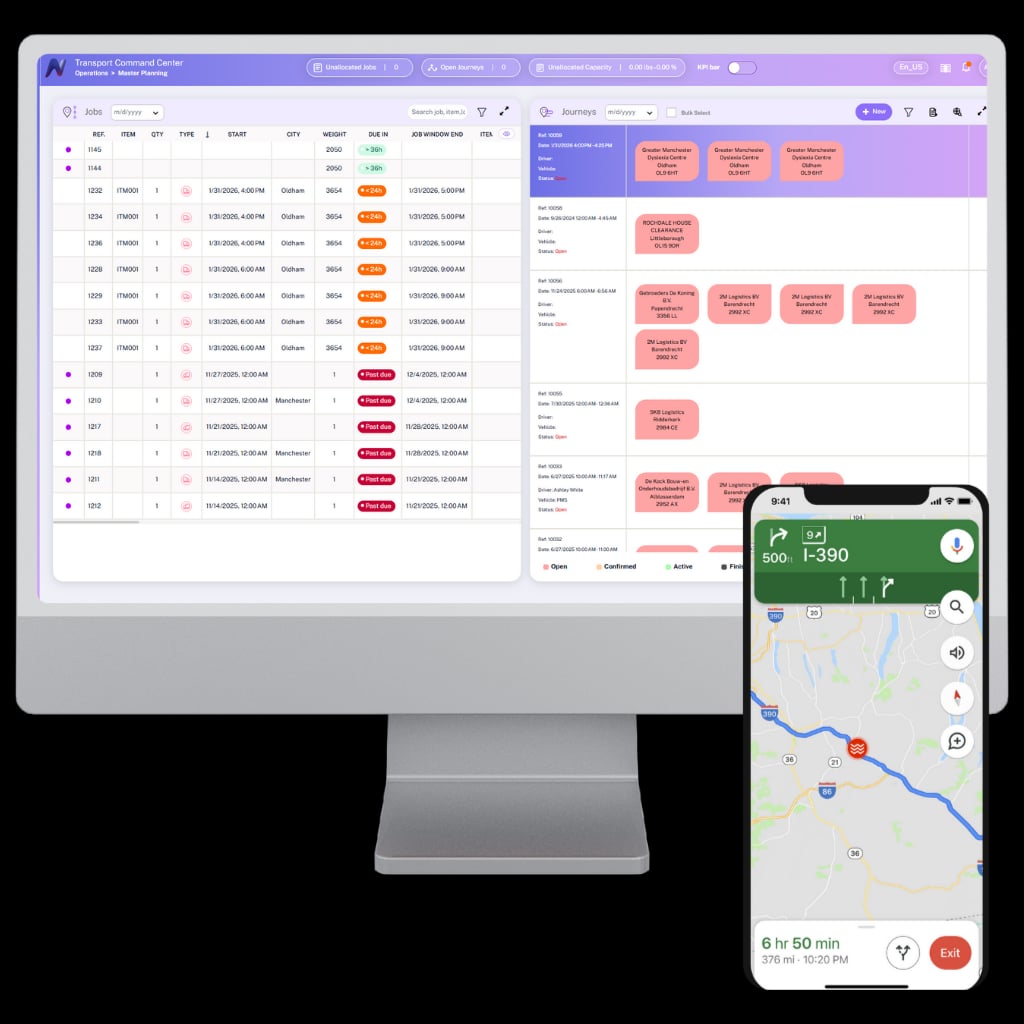
For multi-site operations, AI automation must respect the autonomy field teams need while maintaining enterprise visibility. The Transport Command Center demonstrates this balance by providing real-time control that unifies orders, assets, routes, and resources while enabling local dispatch teams to adapt to immediate conditions. AI routing and automated dispatch workflows operate within constraints defined by both central policy and local knowledge.

Transport Command Center - Neovara Operations Center

Managing Model Performance Across Locations

When the same model version runs across dozens of sites, performance variation reveals hidden operational differences. One location consistently achieves 95% forecast accuracy while another struggles at 75%. The gap indicates process differences, data quality issues, or market conditions that the model does not capture.

End to end ai treats these variations as learning opportunities rather than failures. Systematic comparison identifies which local practices improve outcomes and which create blind spots. High-performing sites provide templates for improvement. Persistent underperformance signals where local conditions require specialized models or where operational changes would deliver more value than algorithm refinement.
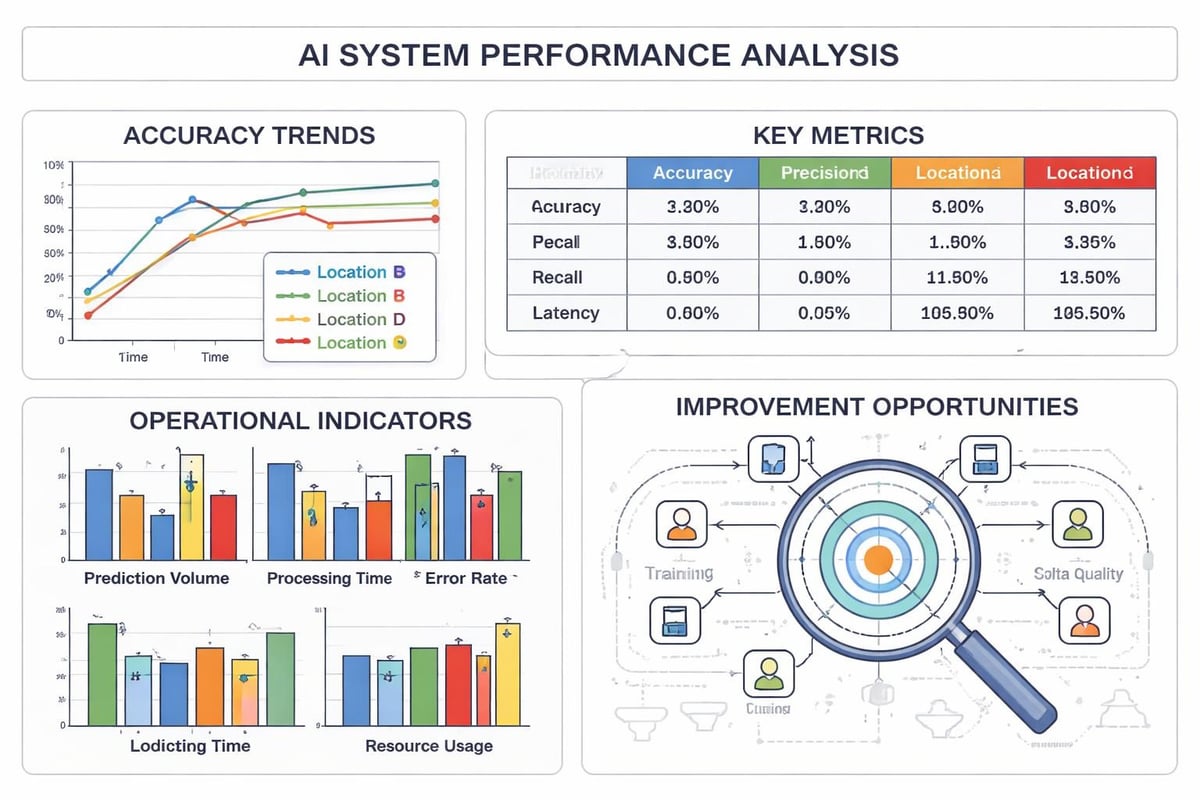
Multi-site AI performance monitoring

Building Toward Autonomous Operations

The ultimate goal of end to end ai extends beyond automation to autonomy: systems that sense changing conditions, decide appropriate responses, execute actions, and learn from outcomes with minimal human intervention. This does not eliminate human oversight but shifts it from routine decisions to exception handling and strategic guidance.

Autonomous operations require trust built through demonstrated reliability. Teams will not delegate critical decisions to AI that fails unpredictably or makes choices they cannot explain. The path to autonomy follows a progression:

  1. AI recommendations that humans review and approve before execution
  2. Automated execution for routine scenarios with human monitoring
  3. Autonomous operation within defined boundaries with exception escalation
  4. Continuous expansion of autonomous boundaries as reliability proves consistent

This progression respects the end-to-end principle in system design, which suggests that application-specific intelligence belongs at the endpoints where context and accountability reside. AI should augment human judgment in complex scenarios rather than replace it entirely.

The Role of Explainability and Trust

Black-box predictions create accountability gaps that prevent operational teams from trusting AI decisions. When a model recommends canceling a customer order, denying a service request, or reallocating resources, the team executing that decision needs to understand why. Unexplained recommendations get ignored or overridden, wasting AI investment.

End to end ai must include explainability throughout the pipeline:

Modern approaches to end-to-end learning emphasize training single models from raw input to final output without intermediate steps. While this can improve accuracy by avoiding information loss at handoff points, it often reduces interpretability. Operational AI systems must balance end-to-end optimization with the explainability required for business adoption.

Integration with Existing Systems

Most organizations cannot replace their entire technology stack to adopt end to end ai. Legacy ERP systems, industry-specific software, compliance tools, and partner integrations represent millions in investment and years of process refinement. Practical AI implementation must work with existing infrastructure, not require abandoning it.

API-First Architecture for AI Integration

Modern operations platforms provide API connectivity that enables AI models to access data from legacy systems and trigger actions without direct integration. This approach:

The Neovara technology approach demonstrates how API integrations can connect operational AI to ERP and finance systems while maintaining a unified command layer for daily execution. Financial transactions flow to the ERP while operational decisions happen in real-time where work occurs.

Measuring Business Impact Beyond Model Metrics

Data science teams naturally focus on metrics like accuracy, precision, recall, and F1 scores. These matter for model development but tell an incomplete story about business value. A 95% accurate model that reduces operational costs by 2% delivers less value than an 85% accurate model that cuts costs by 15%.

End to end ai requires business metrics that connect model performance to operational outcomes:

Model Metric Operational Translation Business Impact
Demand forecast MAE Stockout rate and excess inventory days Working capital reduction and revenue capture
Route optimization gap Average delivery time and fuel cost per order Customer satisfaction and operating margin
Equipment failure prediction recall Unplanned downtime hours and emergency repair costs Service level achievement and maintenance spend
Churn prediction precision Retention campaign ROI and customer lifetime value Revenue retention and acquisition cost offset

These translations require collaboration between data teams and operations leaders. Models should optimize for business outcomes, not statistical perfection. In some scenarios, a simpler model that operations teams understand and trust delivers better results than a sophisticated algorithm that people work around.

Research on guideline-driven AI deployment highlights how automating the connection between model outputs and business processes reduces human intervention while improving scalability. When deployment follows clear rules about which predictions trigger which actions, the system becomes more consistent and measurable.

Training and Change Management

End to end ai changes how people work. Planners who once spent hours building schedules review AI-generated plans and handle exceptions. Customer service teams shift from answering status questions to resolving complex issues that AI cannot handle. Field teams receive dynamic assignments rather than static daily routes.

This transition requires more than technical training. Teams need to understand:

Organizations underestimate this change management challenge and pay with low adoption, workarounds, and eventual abandonment. The AI works technically but fails organizationally because people do not trust it, understand it, or believe it helps them succeed.

Future-Proofing Operational AI Systems

Technology evolves rapidly while business operations require stability. The end to end ai architecture you build today must adapt to new algorithms, different data sources, evolving regulatory requirements, and changing business models without requiring complete rebuilds.

Future-proof design principles include:

The modular operations platform concept applies this thinking to business operations: start with the modules you need today and expand when it adds value. The same philosophy extends to AI capabilities-embed automation where it delivers clear ROI and preserve flexibility for future enhancement.

As AI technology matures, new capabilities like large language models for natural language interfaces, computer vision for automated inspection, and reinforcement learning for dynamic optimization become practical. Systems designed with clear abstraction layers can incorporate these advances without disrupting proven workflows.


End to end ai transforms artificial intelligence from experimental technology into operational infrastructure by connecting every stage of the AI lifecycle into unified workflows that learn and improve continuously. The business value comes not from model sophistication but from seamless integration between prediction and execution, planning and adaptation, automation and oversight. Neovara Operations Center brings this integration to multi-workflow businesses through a modular platform that unifies transport, orders, assets, field service, and planning in one command layer where AI automation reduces manual steps and keeps work moving when reality changes. Book a demo to see how end to end operations and intelligent automation work together in practice.
2026-03-12T11:01:20.547Z
Operations Capacity: Planning and Optimization Guide

Managing operations capacity has become one of the most critical challenges facing modern businesses in 2026. Whether coordinating transport fleets, managing field service teams, or balancing rental inventory, organizations must align available resources with fluctuating demand while maintaining service quality and profitability. The ability to accurately measure, forecast, and optimize operations capacity determines whether businesses can scale efficiently or struggle with bottlenecks, idle resources, and missed opportunities. This comprehensive guide explores strategic approaches to capacity planning, real-time visibility tools, and practical optimization techniques that help operational leaders make confident decisions in dynamic environments.

Understanding Operations Capacity in Modern Business

Operations capacity represents the maximum output an organization can deliver within a specific timeframe using available resources, infrastructure, and processes. This encompasses physical assets like vehicles and equipment, human resources including drivers and technicians, facility space, and the technological systems that coordinate work across teams and locations.

Effective capacity management requires visibility across multiple dimensions simultaneously. Asset availability, workforce schedules, geographical constraints, service time windows, and maintenance requirements all impact what an organization can commit to customers. Tactical capacity planning approaches have evolved beyond simple headcount calculations to encompass integrated frameworks that account for operational uncertainty and variability.

The Three Levels of Capacity Planning

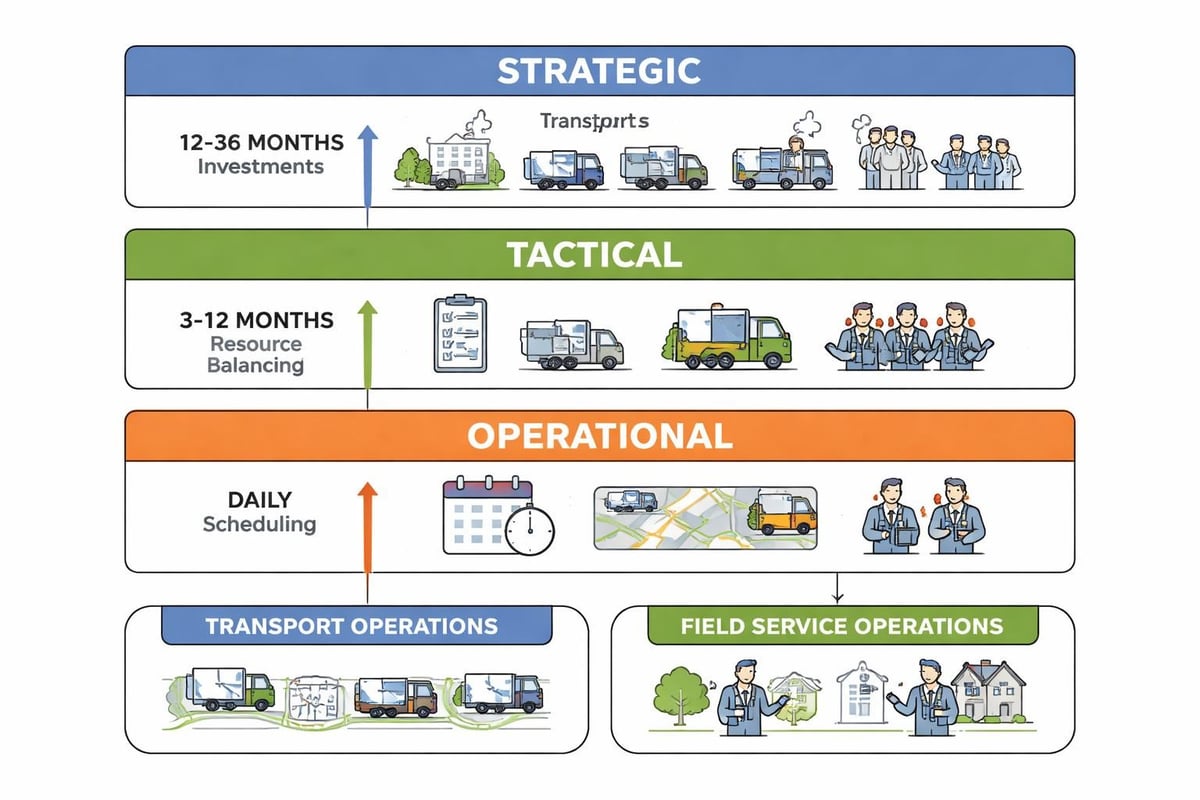
Organizations typically address operations capacity at three distinct planning horizons:

Strategic capacity planning focuses on long-term investments and fundamental resource decisions. This includes facility expansion, fleet acquisition, territory coverage, and workforce development over 12 to 36 months. Strategic decisions shape the upper boundaries of what the organization can deliver.

Tactical capacity planning operates in the three to twelve-month window, balancing demand forecasts with resource allocation. Teams adjust staffing levels, equipment deployment, maintenance schedules, and inventory positioning to match anticipated workload fluctuations across seasons or market cycles.

Operational capacity planning happens daily or weekly, matching immediate demand with available resources. Dispatchers assign jobs, planners schedule routes, and coordinators allocate equipment based on real-time status updates and changing customer requirements.

Three-tier capacity planning framework

Measuring and Monitoring Capacity Utilization

Accurate measurement forms the foundation of effective operations capacity management. Organizations must track both theoretical maximum capacity and realistic achievable capacity under normal operating conditions.

Utilization rate represents the percentage of available capacity actively deployed on productive work. A fleet with 50 vehicles where 40 are in service on a typical day operates at 80% utilization. However, raw utilization numbers can mislead without context about profitability, service quality, and strategic priorities.

Effective capacity accounts for planned downtime, maintenance windows, regulatory rest requirements, and quality standards. A field service team might have eight technicians available, but effective capacity recognizes that training, travel time, equipment prep, and administrative tasks reduce billable hours to approximately six hours per person daily.

Capacity Metric Definition Target Range
Peak Utilization Resources deployed during highest demand periods 85-95%
Average Utilization Mean resource deployment across standard operations 70-80%
Idle Capacity Resources available but not assigned to productive work 5-15%
Reserve Capacity Resources held for emergency response or surge demand 10-20%

Leading organizations track capacity metrics in real-time rather than relying on monthly reports. Capacity management technology enables teams to identify bottlenecks as they emerge, reallocate resources dynamically, and maintain service commitments when conditions change unexpectedly.

Demand Forecasting and Capacity Alignment

Operations capacity planning fails when organizations base resource decisions on intuition rather than data-driven demand forecasts. Accurate prediction of future workload allows proactive capacity adjustments instead of reactive scrambling.

Building Reliable Demand Models

Effective forecasting combines historical performance data, market trends, seasonal patterns, and known future events. Transport operations might analyze delivery volumes by day of week, time of year, weather patterns, and promotional calendars. Field service businesses track service request patterns, equipment age profiles, and preventive maintenance schedules.

Statistical methods provide baseline predictions, but operational leaders add contextual intelligence. New customer contracts, competitor movements, regulatory changes, and economic indicators all influence future capacity requirements beyond what historical data reveals.

Scenario planning prepares organizations for multiple possible futures. Rather than committing to a single forecast, teams model optimistic, realistic, and conservative demand scenarios, then design capacity plans that remain viable across the range. This approach to planning under uncertainty reduces the risk of significant over-investment or catastrophic under-capacity.

Continuous forecast refinement improves accuracy over time. Organizations should review predictions weekly or monthly, comparing actual demand against forecasts and adjusting models based on variance patterns. Machine learning algorithms can automate much of this refinement, but human oversight remains essential for interpreting anomalies and incorporating strategic knowledge.

Real-Time Visibility and Adaptive Capacity Management

Static capacity plans become obsolete the moment field conditions change. Vehicle breakdowns, sick calls, weather delays, urgent customer requests, and scope changes all disrupt carefully constructed schedules. Organizations need real-time visibility into current capacity status to adapt quickly and maintain service commitments.

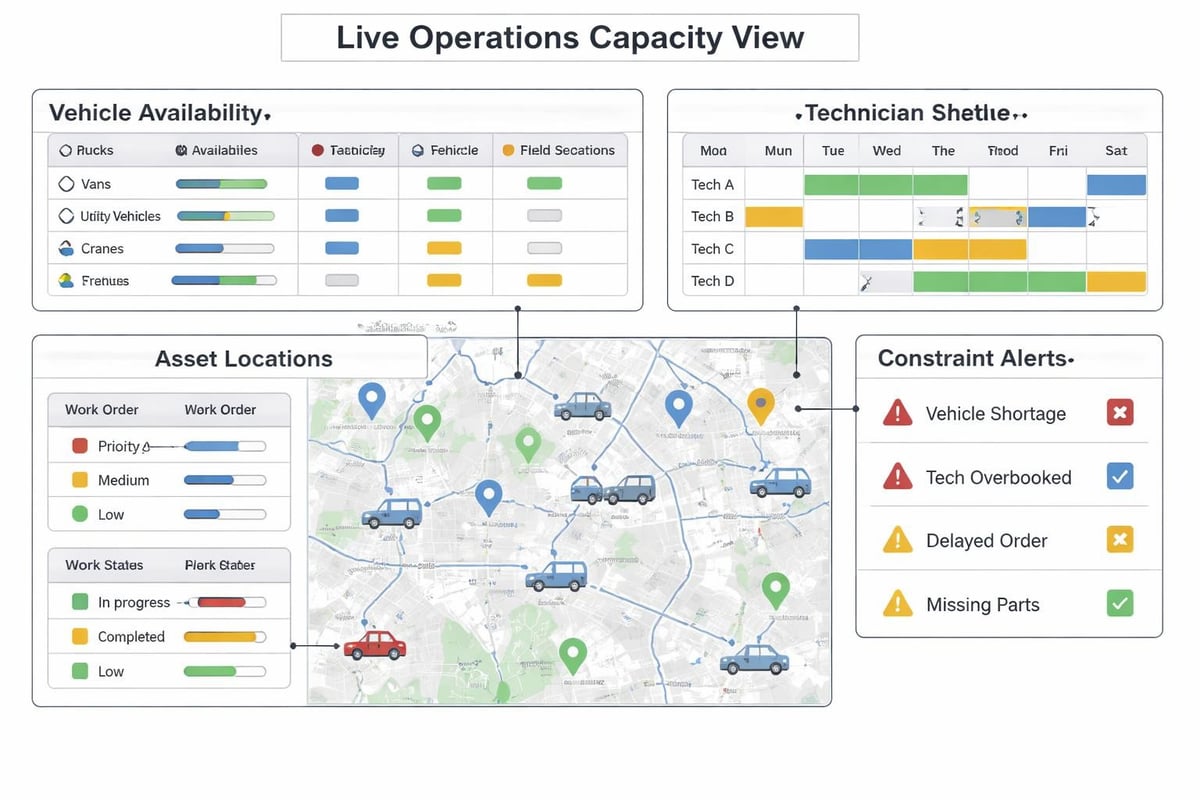
Modern operations platforms provide unified views of resource availability, location, assignment status, and estimated availability across all assets and personnel. When a delivery truck experiences mechanical failure, dispatchers immediately see which vehicles have capacity to absorb the impacted stops. When a field technician completes a job ahead of schedule, planners can assign additional work without delay.

Dynamic resource allocation moves beyond fixed daily assignments to continuous optimization. As work completes, new requests arrive, or conditions change, the system recalculates optimal assignments based on current state. This keeps utilization high while minimizing travel time, overtime costs, and service delays.

Teams can coordinate effectively across locations and shifts when everyone works from a single operational view rather than fragmented spreadsheets and disconnected tools. The modular operations platform approach unifies planning, execution, and monitoring so capacity decisions reflect actual current state.

Real-time capacity dashboardTransport Command Center - Neovara Operations Center

Capacity Constraints and Bottleneck Management

Every operation faces constraints that limit overall capacity regardless of individual resource availability. Identifying and managing these bottlenecks determines whether organizations can scale effectively or hit rigid ceilings.

Physical constraints include facility space, equipment availability, vehicle fleet size, and geographical coverage. A rental business cannot fulfill more orders than available inventory, regardless of staff capacity. A transport operation cannot deliver to distant locations without vehicles positioned nearby.

Temporal constraints involve time-based limitations like service windows, operating hours, regulatory rest requirements, and appointment schedules. Field service teams might have available technicians, but customer availability windows or permit restrictions limit how much work can be scheduled.

Skills and certification constraints restrict which resources can perform specific work types. Not all drivers can operate specialized equipment. Not all technicians hold required licenses for particular service categories. Capacity planning must account for qualified resource availability, not just total headcount.

Strategies for Constraint Optimization

Organizations address capacity constraints through multiple approaches. Capacity expansion adds resources directly, but requires capital investment and lead time. Process optimization accomplishes more with existing resources by eliminating waste and improving efficiency. Demand management shapes customer requests to better align with available capacity through pricing, scheduling incentives, or service level options.

Dynamic capacity planning frameworks emphasize flexibility and modularity, allowing organizations to scale specific constraint areas without wholesale system changes. When transport capacity becomes the bottleneck, expanding the fleet addresses the issue. When skilled labor limits growth, training and certification programs increase qualified resources.

Cross-training creates capacity flexibility by expanding the range of work individual resources can perform. A technician certified for both electrical and plumbing service provides more scheduling options than specialists. Drivers trained on multiple vehicle types improve fleet utilization.

Integrating Capacity Planning Across Workflows

Operations capacity does not exist in isolation. Order entry, customer commitments, execution planning, and financial forecasting all depend on accurate capacity visibility. Disconnected systems create coordination failures where sales promises exceed fulfillment capacity or resources sit idle while work piles up.

Integrated platforms check real-time capacity constraints during quote and order creation. When a customer requests service on a specific date, the system validates whether qualified resources, required equipment, and travel logistics can support that commitment. This prevents the common scenario where sales accepts work that operations cannot deliver.

Automated workflows maintain capacity alignment as work progresses. Confirmed orders flow directly into scheduling systems that allocate resources and reserve capacity. Completed jobs release capacity immediately for new assignments. Changes in one area cascade through connected workflows without manual handoffs.

Workflow Stage Capacity Integration Benefit
Quote/Order Entry Real-time availability check Accurate customer commitments
Planning Constraint-based scheduling Optimal resource allocation
Dispatch Live capacity updates Adaptive execution
Completion Automatic capacity release Continuous optimization

The unified operational dashboard approach eliminates information silos that create capacity planning failures. When everyone works from shared real-time data about orders, resources, schedules, and status, coordination improves dramatically and capacity utilization increases.

Technology Enablers for Capacity Optimization

Manual capacity planning using spreadsheets and phone calls cannot keep pace with operational complexity in 2026. Organizations need technology platforms that automate data collection, calculate optimal allocations, and provide decision support across planning horizons.

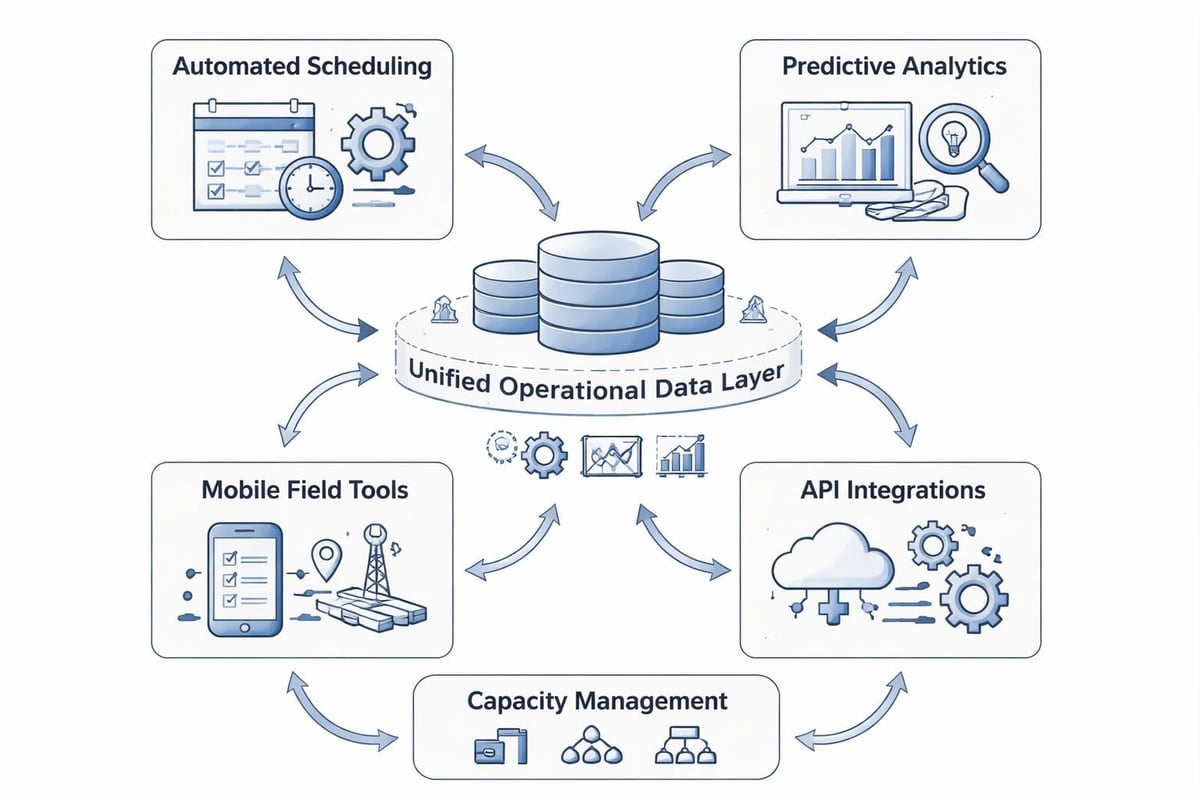
Automated scheduling engines apply constraint-based optimization algorithms to match work with resources. These systems consider availability, skills, location, equipment requirements, service windows, and dozens of other variables to generate efficient schedules that maximize capacity utilization while meeting service commitments.

Predictive analytics identify capacity issues before they cause service failures. Machine learning models detect patterns indicating approaching bottlenecks, enabling proactive intervention. If equipment failure rates increase, the system recommends preventive capacity reserves or maintenance scheduling adjustments.

Mobile execution tools keep field teams connected to central planning systems. Drivers and technicians receive assignments, report progress, log exceptions, and update status from mobile devices. This real-time synchronization ensures capacity planning reflects actual execution state rather than outdated assumptions.

Capacity planning tools should provide visibility at both summary and detailed levels. Executives need aggregate metrics showing overall utilization trends and constraint areas. Operational managers need granular views of specific resource availability, schedule conflicts, and assignment options for immediate decision-making.

API integrations extend capacity visibility to financial and customer systems. ERP platforms access current capacity data for accurate costing and margin analysis. Customer portals display real availability for self-service scheduling. This connected ecosystem ensures capacity information flows wherever decisions occur.

Capacity optimization technology stack

Workforce Capacity Planning and Development

Human resources represent both the most flexible and most complex dimension of operations capacity. Unlike equipment that operates predictably, workforce capacity varies with skills, experience, motivation, availability, and countless other factors.

Skills inventory mapping documents what each team member can do, certification levels, equipment qualifications, and service type expertise. This enables precise matching of work requirements to capable resources rather than treating all workers as interchangeable capacity units.

Training programs expand workforce capacity by developing new capabilities. Strategic workforce capacity planning aligns development investments with forecast demand patterns and identified constraint areas. If specialized service demand grows, certification programs increase qualified technician capacity.

Scheduling flexibility increases effective workforce capacity. Staggered shifts, part-time resources, and on-call availability create capacity coverage beyond standard full-time staffing. Seasonal workers address predictable demand peaks without maintaining excess permanent capacity.

Performance optimization improves individual productivity, effectively increasing capacity without adding headcount. Standardized processes, better tools, streamlined workflows, and elimination of non-value tasks enable workers to accomplish more in available time.

Measuring Capacity Planning Success

Organizations need clear metrics to evaluate whether capacity planning efforts deliver business value. Success measurement should span efficiency, service quality, and financial performance.

Utilization efficiency tracks how much available capacity actually generates productive output. High utilization indicates effective planning, though excessive levels may create service quality risks and leave no buffer for unexpected demand.

Service level achievement measures delivery performance against customer commitments. On-time completion rates, response time compliance, and commitment accuracy indicate whether capacity planning enables reliable service delivery.

Cost efficiency compares capacity costs to revenue generation. Labor cost per delivery, equipment utilization rates, overtime expense trends, and idle resource costs reveal whether the organization operates within target margins.

Leading organizations establish capacity planning dashboards that surface these metrics in real-time, enabling continuous improvement rather than periodic reviews. Facility capacity analysis should become an ongoing practice embedded in operational routines, not an annual strategic exercise.

Managing Capacity Across Multiple Sites and Regions

Organizations operating in multiple locations face additional complexity coordinating capacity across distributed resources. Local optimization may create global inefficiencies, while centralized planning can miss regional nuances.

Capacity pooling treats resources across locations as shared capacity available for cross-site support. When one region experiences unexpected demand surge while another has idle resources, coordinated allocation prevents service failures without maintaining excess local capacity everywhere.

Regional autonomy within central frameworks balances local decision-making with enterprise coordination. Sites manage daily capacity allocation independently using standardized processes and shared visibility tools. Central planning handles cross-site coordination, capacity rebalancing, and strategic resource deployment.

Technology platforms enable this distributed coordination by providing unified visibility across all locations while supporting location-specific planning. Regional managers see local detailed capacity while maintaining awareness of enterprise-wide status. Central planners identify optimization opportunities and constraint transfers between sites.

Geographic capacity planning considers travel time, service territories, and regional demand patterns. Resources position near forecast demand centers, minimizing non-productive travel. Cross-border operations account for regulatory differences affecting resource availability and deployment flexibility.

Capacity Planning for Multi-Service Operations

Businesses offering diverse service types face additional capacity planning complexity. Transport, field service, rental fulfillment, and installation operations require different resources with varying constraints and planning horizons.

Service-specific capacity modeling recognizes that different operations have unique capacity drivers. Transport capacity depends on vehicle availability, driver hours, and route efficiency. Field service capacity involves technician skills, equipment access, and customer location. Rental capacity centers on inventory availability and location positioning.

Shared resource allocation across service types requires sophisticated optimization. A vehicle fleet might support both delivery and field service. Technicians could perform installation, maintenance, and repair work. Capacity planning systems must optimize across competing demands while respecting service-specific constraints.

Modular platform architecture allows organizations to manage capacity for each operation type using purpose-built tools while maintaining unified visibility. The Neovara modular approach provides specialized modules for transport, field service, orders, and assets that share operational data through a common command layer.

Capacity planning becomes particularly critical during quote and order entry for multi-service businesses. Customer requests often span multiple operation types with interdependent timing. An equipment rental might require delivery transport, installation service, and scheduled maintenance. Capacity checking must validate availability across all required services before confirming commitments.

Future Trends in Operations Capacity Management

Capacity planning continues evolving as technology capabilities expand and business complexity increases. Several emerging trends will shape how organizations approach capacity optimization in coming years.

AI-powered predictive capacity planning moves beyond historical pattern analysis to sophisticated forecasting incorporating real-time signals, external data sources, and continuous learning. Systems recommend capacity adjustments proactively rather than waiting for human analysis of trends.

Autonomous capacity optimization will increasingly handle routine allocation decisions without human intervention. When conditions change, systems recalculate assignments, notify affected parties, and implement adjustments automatically within predefined parameters. Humans focus on exception handling and strategic planning.

Ecosystem capacity coordination extends beyond organizational boundaries to partner networks. Capacity planning incorporates subcontractor availability, supplier lead times, and collaborative fulfillment across business networks. Shared visibility enables coordinated planning that optimizes total ecosystem capacity.

Sustainability-driven capacity decisions balance utilization efficiency with environmental impact. Route optimization minimizes fuel consumption. Load consolidation reduces empty miles. Capacity planning algorithms incorporate carbon footprint alongside traditional cost and service metrics.

These trends accelerate the shift from periodic capacity planning exercises to continuous adaptive optimization embedded in operational systems. Organizations that embrace integrated platforms with real-time visibility and automation will maintain competitive advantage through superior capacity utilization and service delivery.


Mastering operations capacity requires integrated visibility, data-driven planning, and adaptive execution across resources, workflows, and time horizons. Organizations that replace fragmented spreadsheets with unified operational systems gain the real-time coordination needed to optimize utilization while maintaining service commitments. Neovara Operations Center provides the modular command layer that brings transport, field service, orders, assets, and planning together in one real-time operational view, enabling teams to plan with confidence, execute efficiently, and adapt quickly when conditions change. Book a demo to see how unified capacity management transforms operational performance.

2026-03-11T11:02:28.674Z
Inventory Tracking System Excel: Complete 2026 Guide

Managing inventory through spreadsheets remains one of the most common starting points for businesses tracking stock, equipment, and assets. An inventory tracking system excel setup offers immediate accessibility, familiar interfaces, and zero upfront software costs. Whether you're managing rental equipment, field service parts, delivery fleet supplies, or warehouse stock, Excel provides the foundational tools to record quantities, monitor movement, and calculate availability. However, as operational complexity grows-multiple locations, real-time allocation needs, or cross-departmental coordination-the spreadsheet approach reveals limitations that directly impact accuracy, speed, and scalability. Understanding both the capabilities and constraints of Excel-based inventory management helps businesses make informed decisions about when spreadsheets serve their needs and when a transition to integrated platforms delivers measurable returns.

Setting Up Your Inventory Tracking System Excel Foundation

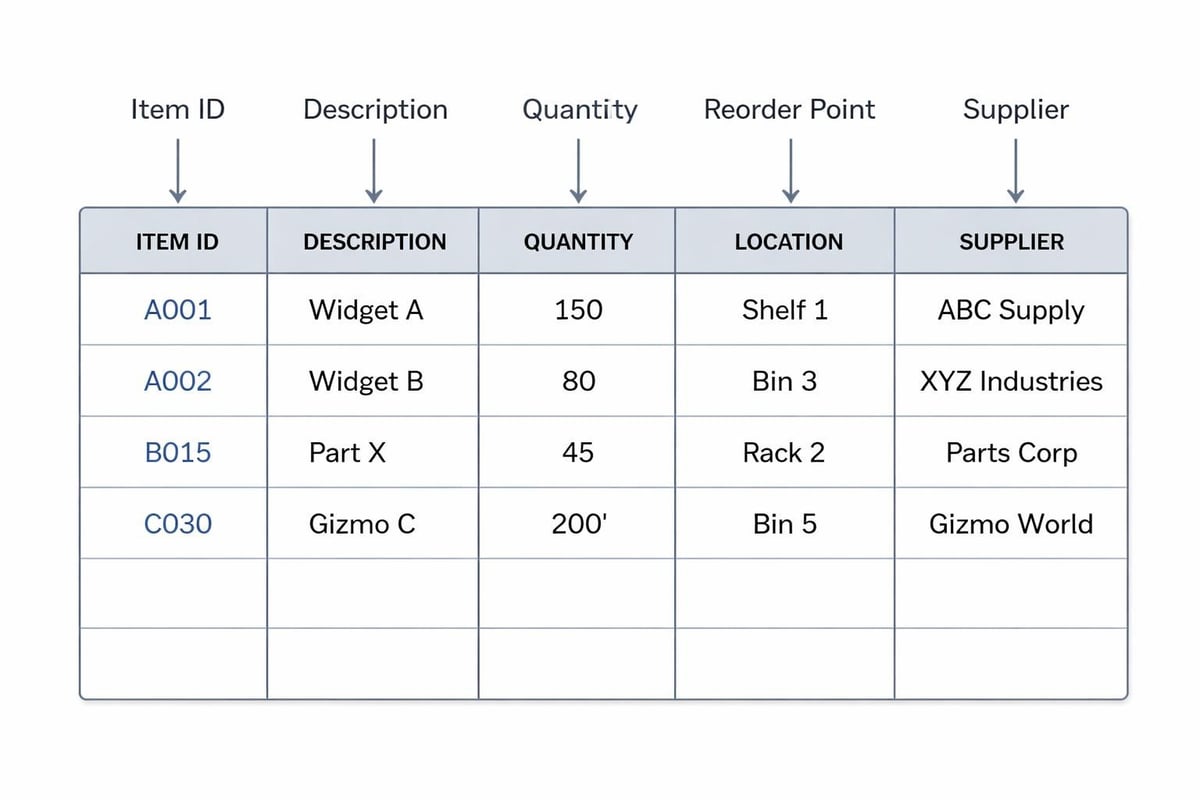
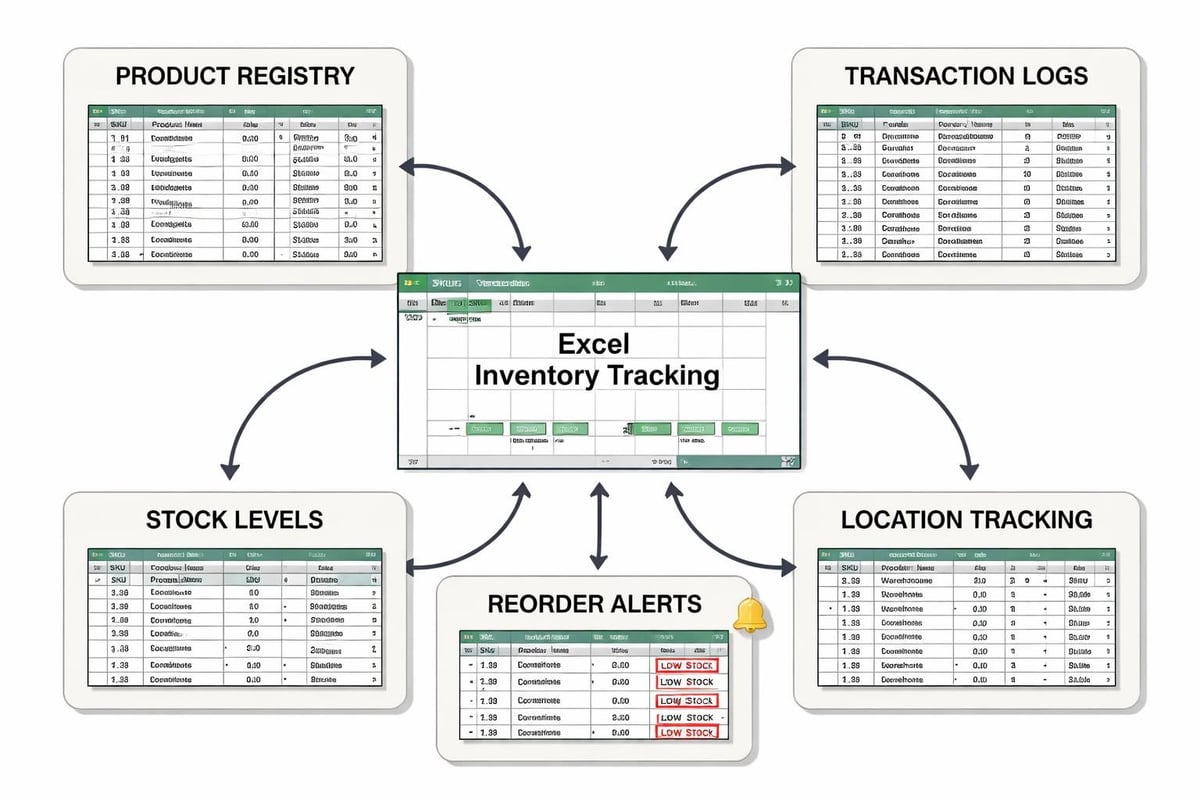
Building an effective inventory tracking system excel starts with proper structure. The core components include item identification, current quantities, location data, supplier information, and transaction history. Microsoft provides official templates and guidance that demonstrate proven column configurations and formula approaches.

Essential Column Structure and Data Fields

Your base inventory sheet should include these fundamental columns:

This structure scales from simple stock lists to more sophisticated systems. The key is consistency-every entry must follow the same format to enable reliable formulas and reporting.

Excel inventory template structure

Formula Architecture for Automated Calculations

Formulas transform static data into dynamic tracking. Begin with SUM functions to calculate total inventory value by multiplying quantity by unit cost. IF statements create conditional alerts when stock drops below reorder points, automatically flagging items requiring attention.

The VLOOKUP function connects related data across multiple sheets. For example, when recording a transaction, VLOOKUP can pull the current quantity from your master inventory sheet, enabling automatic stock level updates. COUNTIF helps analyze how many items fall into specific categories or locations.

For businesses managing stock across multiple sites, SUMIF and SUMIFS aggregate quantities based on location criteria. This becomes essential when coordinating inventory between warehouses, service vehicles, or field operation bases.

Formula Type Primary Use Case Business Benefit
SUM Total inventory value calculation Financial visibility and reporting
IF/IFS Reorder alerts and status flags Proactive stock management
VLOOKUP Cross-reference item details Reduced data entry errors
SUMIF/SUMIFS Location-based quantity totals Multi-site coordination
COUNTIF Category analysis Strategic purchasing insights

Advanced Excel Inventory Management Techniques

Beyond basic tracking, advanced techniques extend Excel's capabilities for growing operations. These methods address common pain points around data entry speed, reporting accuracy, and analytical depth.

Data Validation and Drop-Down Lists

Data validation prevents entry errors that corrupt inventory accuracy. By creating drop-down lists for categories, locations, and suppliers, you enforce consistency while speeding up data input. This is particularly valuable when multiple team members update the same spreadsheet.

Excel inventory management best practices emphasize validation rules that reject invalid entries-negative quantities, unrecognized item codes, or dates in improper formats. These constraints protect data integrity before errors compound.

Conditional Formatting for Visual Management

Conditional formatting transforms rows and cells into visual alerts. Configure rules that highlight low-stock items in red, adequate inventory in green, and approaching reorder points in yellow. This immediate visual feedback enables faster decision-making during daily operations.

Apply formatting to entire rows based on multiple criteria. For instance, items that are both below reorder point and from suppliers with long lead times could receive high-priority color coding. This layered visual logic helps teams prioritize restocking actions.

Pivot Tables for Inventory Analysis

Pivot tables unlock analytical capabilities that flat lists cannot provide. Summarize total inventory value by category, identify slow-moving items by location, or track consumption patterns over time. Comprehensive Excel inventory tutorials demonstrate how pivot tables reveal trends that inform purchasing strategies and capacity planning.

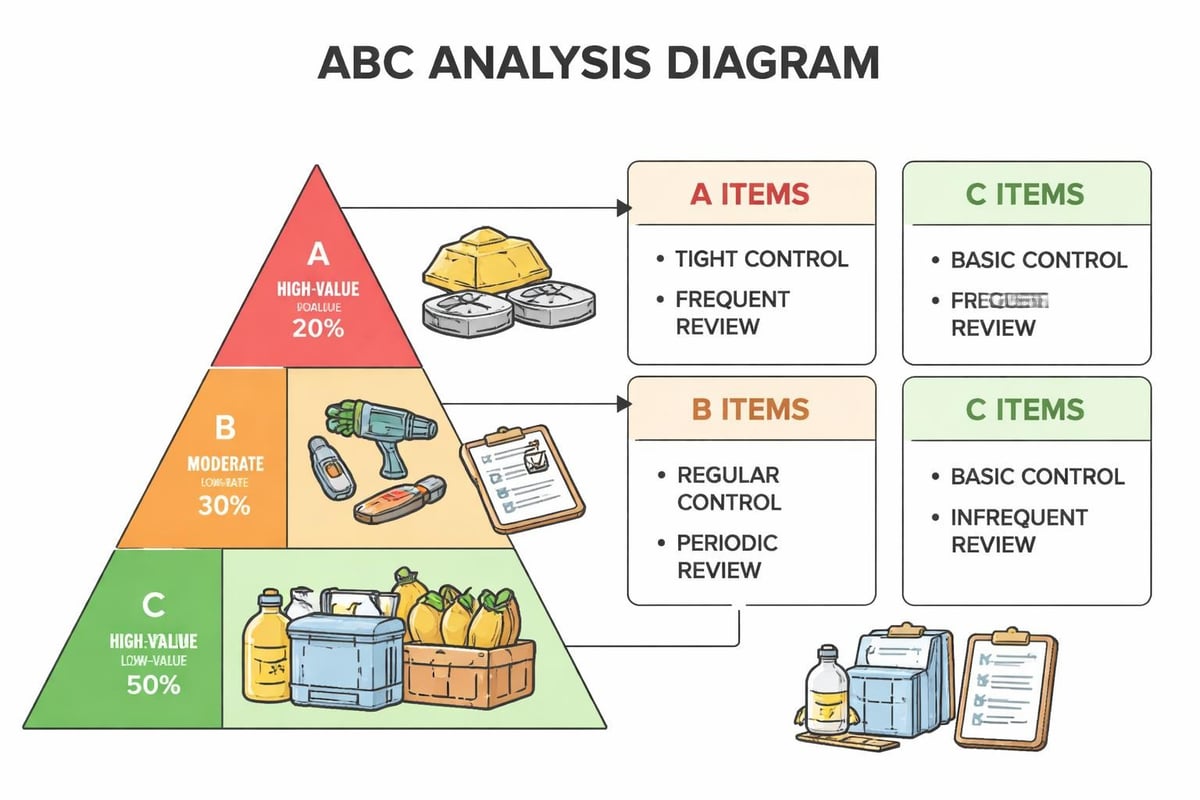
ABC analysis becomes practical with pivot tables. This inventory categorization technique, detailed in established inventory methodology, divides items into three priority groups based on value and movement velocity. Category A items (high value, frequent movement) receive tighter control, while Category C items (low value, slow movement) follow simplified tracking.

The analysis process involves:

  1. Calculate total annual value for each item (quantity × cost × annual usage)
  2. Sort items by total value in descending order
  3. Calculate cumulative percentage of total inventory value
  4. Assign categories: A (top 20% of items, ~80% of value), B (next 30%, ~15% of value), C (remaining 50%, ~5% of value)
  5. Apply differentiated management policies to each category
ABC inventory analysis

Transaction Tracking and Stock Movement

An inventory tracking system excel must record not just current quantities but also the complete transaction history that explains how those quantities changed. Without transaction logs, discrepancies become impossible to trace and inventory accuracy steadily deteriorates.

Stock-In and Stock-Out Recording

Create a dedicated transactions sheet that logs every inventory movement. Each row should capture the date, item ID, transaction type (receipt, sale, transfer, adjustment), quantity change, location, and responsible person. Automated stock tracking methods use formulas that update main inventory quantities whenever new transactions are recorded.

The formula approach links your transactions sheet to the master inventory sheet. When you enter a new stock-in transaction, a SUMIFS formula on the master sheet recalculates the current quantity by summing all transactions for that item. This method maintains a complete audit trail while keeping current quantities automatically updated.

Handling Multi-Location Inventory

Businesses operating across multiple warehouses, service vehicles, or field sites face the challenge of tracking inventory location as precisely as quantity. This requires location columns on both master inventory and transaction sheets, plus formulas that calculate quantities per location.

A location summary sheet uses SUMIFS to show how much of each item exists at each site. This becomes critical for operations that need to locate available inventory quickly-rental companies checking equipment availability, service businesses verifying parts stock at technician locations, or logistics operations coordinating shipments from multiple facilities.

Transfer transactions between locations require careful recording: one stock-out entry for the source location and one stock-in entry for the destination, both referencing the same transfer ID to maintain the connection.

Limitations of Spreadsheet-Based Inventory Management

While an inventory tracking system excel provides accessible starting functionality, operational realities expose constraints that impact accuracy, efficiency, and growth potential. Understanding these limitations helps businesses recognize when spreadsheet complexity outweighs spreadsheet benefits.

Real-Time Accuracy and Concurrent Access

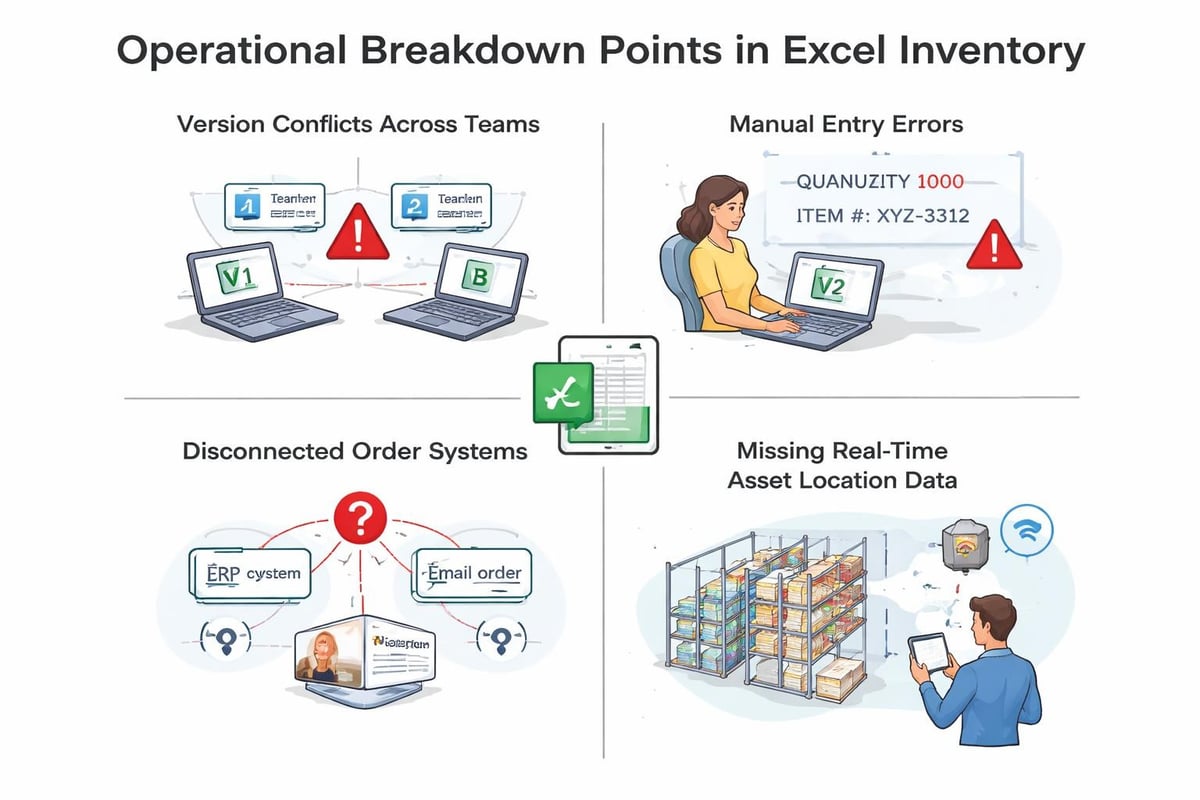
Excel files operate as static documents rather than live databases. When multiple team members need simultaneous access to update inventory, conflicts arise. Cloud-based spreadsheets improve concurrent editing but still create confusion when two people modify related data simultaneously-one person records a sale while another schedules that same item for a different customer.

The lack of real-time synchronization means inventory availability shown in the spreadsheet may not reflect reality. A warehouse worker pulls items for Order A while customer service commits the same items to Order B, creating overselling that surfaces only later as exceptions and customer disappointment.

Manual Process Dependencies and Error Risk

Every data entry point represents an error opportunity. Recording a transaction requires manual typing of item codes, quantities, dates, and locations. Transposing digits, selecting wrong items from lists, or forgetting to log movements all corrupt inventory accuracy. Comprehensive inventory management systems attempt to minimize this through validation, but cannot eliminate the fundamental manual dependency.

Formulas break when users insert rows improperly, delete referenced cells, or paste values over formulas. These structural errors often go unnoticed until reports show impossible values or alerts stop functioning. Fixing broken formulas requires Excel expertise that may not be available when problems surface.

Scaling Challenges and Integration Gaps

As inventory grows from dozens to hundreds or thousands of SKUs, spreadsheet performance degrades. File sizes balloon, calculations slow, and finding specific items becomes cumbersome. Advanced features like pivot tables and complex formulas further reduce responsiveness, creating frustrating delays during daily operations.

Integration represents the critical gap. Inventory does not exist in isolation-it connects to quotes, orders, customer commitments, service schedules, and financial reporting. An inventory tracking system excel operates as a standalone tool, requiring manual bridges to other business systems. Sales teams check spreadsheet availability before quoting, manually reserve inventory, then separately enter orders into another system. This fragmentation creates delays, duplicate entry, and synchronization failures.

Limitation Category Operational Impact Business Consequence
Concurrent access conflicts Overselling, double-allocation Customer service failures, revenue loss
Manual entry errors Inaccurate quantities, mislocated items Unnecessary purchases, fulfillment delays
Formula fragility Broken calculations, unreliable alerts Poor decision-making, stock-outs
Performance degradation Slow searches, calculation delays Reduced staff productivity
Integration absence Disconnected quote-to-delivery flow Manual handoffs, coordination overhead

Transitioning Beyond Spreadsheets

Recognizing the right time to evolve from an inventory tracking system excel to integrated operational platforms prevents the compounding costs of spreadsheet limitations. Certain operational patterns signal that spreadsheet complexity now hinders rather than helps.

Clear Indicators for Platform Transition

Multiple simultaneous users needing real-time inventory visibility indicate that static spreadsheets cannot support coordination needs. When customer commitments depend on accurate availability across locations, the manual refresh cycle of Excel creates unacceptable risk.

Frequent inventory discrepancies requiring physical counts and reconciliation suggest that transaction recording has become unreliable. If your team spends significant time investigating "where did these items go" or "why doesn't the count match," the tracking method itself has failed.

Integration needs across sales, operations, and service functions reveal spreadsheet isolation as the constraint. When teams maintain parallel systems-one for quotes, another for orders, a third for inventory, separate sheets for service parts-the manual coordination overhead exceeds the cost of unified platforms.

Unified Operations Platform Advantages

Modern operational platforms address Excel's fundamental limitations through purpose-built architecture. Real-time databases provide instant synchronization across all users and functions. When a warehouse confirms an order pickup, sales teams immediately see reduced availability. When service schedules asset deployment, planning automatically adjusts available capacity.

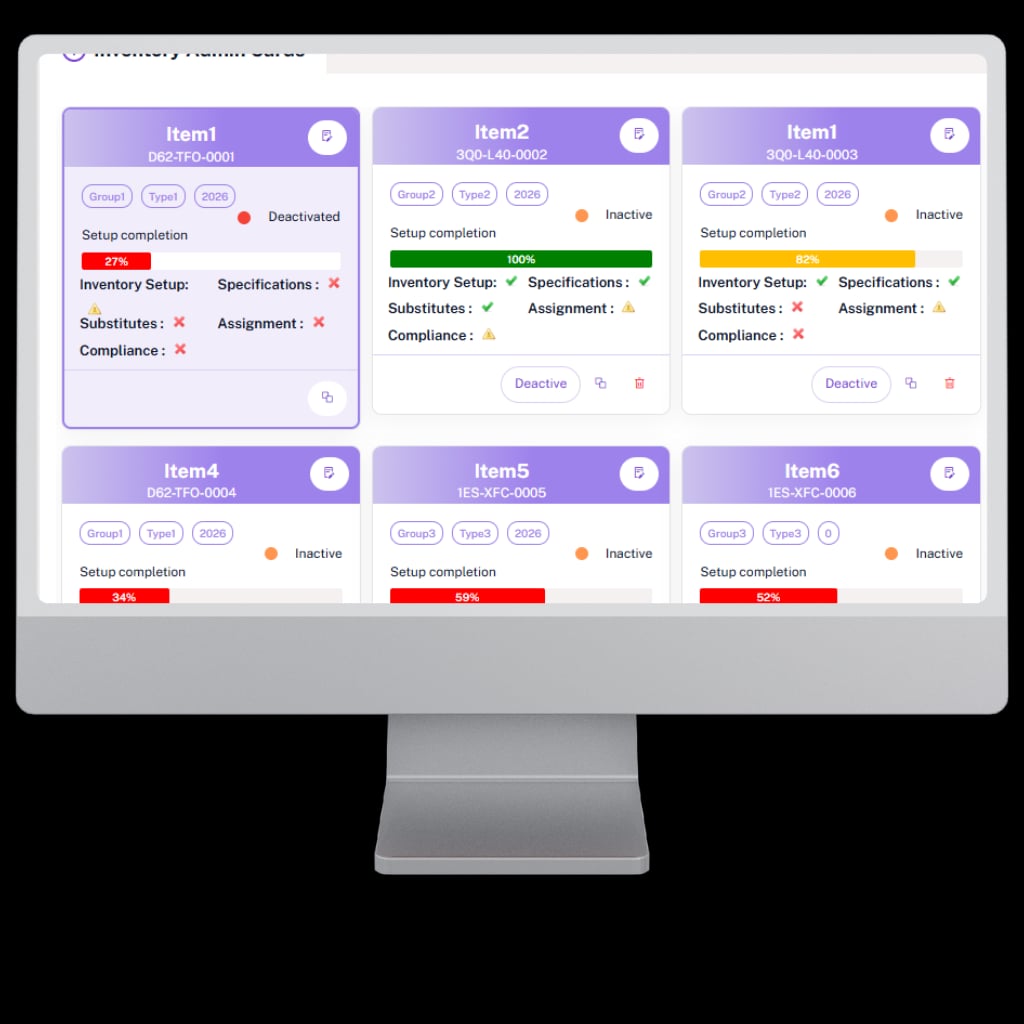
Automated transaction recording eliminates manual entry. Barcode scanning, mobile confirmation, and system-integrated movements record inventory changes as they happen, ensuring accuracy without depending on human data entry discipline. Integrated platforms like the Organic Asset Center track location, status, availability, and readiness across the full lifecycle, automatically updating as assets move, are reserved, serviced, or consumed-keeping planning and customer commitments aligned.

Organic Asset Center - Neovara Operations Center

Workflow automation connects inventory to the broader operational flow. Available quantities inform quote generation, confirmed orders trigger allocation and planning, execution updates status in real-time, and reporting reflects current reality without manual data gathering. This end-to-end integration eliminates the handoffs and delays inherent in spreadsheet-based approaches.

Modular Implementation Strategy

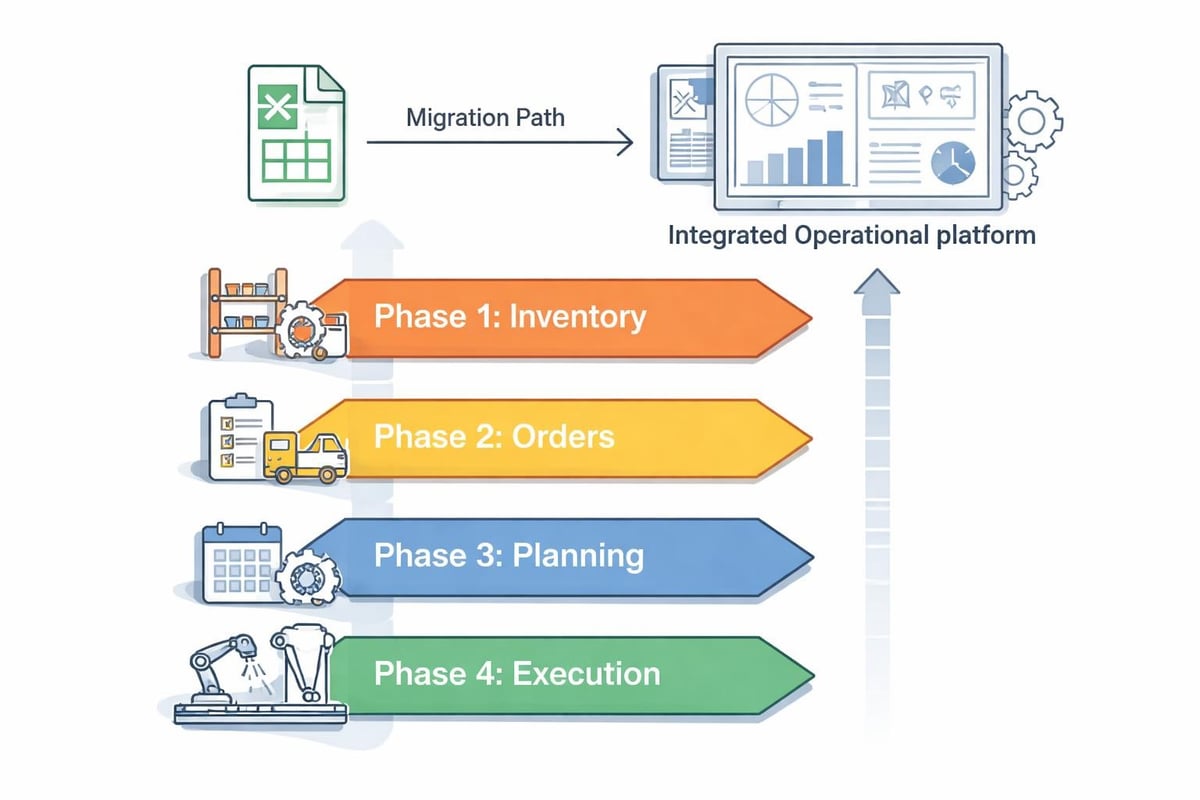
Transitioning away from spreadsheets does not require replacing all systems simultaneously. Modular platforms enable focused implementation that addresses the highest-pain areas first while maintaining existing processes elsewhere. Organizations might begin with unified asset and inventory management, connecting that to existing order systems through APIs, then expand to integrated planning and execution as value proves itself.

This phased approach reduces disruption, allows teams to build competency progressively, and demonstrates ROI before expanding scope. Operational platforms designed for business coordination support this evolution through flexible module activation and integration capabilities.

Platform transition strategy

Template Resources and Implementation Support

For businesses committed to optimizing their current inventory tracking system excel or building a robust foundation before platform transition, quality templates and structured implementation guidance accelerate results while avoiding common pitfalls.

Free Template Options and Customization

Several providers offer pre-built Excel inventory templates that incorporate best-practice structures, formulas, and formatting. Free inventory management templates with implementation guides provide ready-to-use starting points that you can adapt to specific business needs without building from scratch.

Templates typically include:

Customization involves adding business-specific categories, location codes, supplier lists, and any specialized fields relevant to your industry. Property service companies might add equipment condition ratings, rental businesses include daily rate columns, and transport operations integrate vehicle assignment fields.

Training and Skill Development

Effective use of an inventory tracking system excel requires competency beyond basic spreadsheet skills. Comprehensive Excel inventory system courses cover customization techniques, formula application for automation, and dynamic dashboard design. These educational resources help teams maximize Excel capabilities while understanding the boundaries where spreadsheet solutions become impractical.

Key skill areas include:

  1. Data validation setup to prevent entry errors and enforce consistency
  2. Formula construction for automated calculations and cross-sheet references
  3. Pivot table creation for analytical reporting and trend identification
  4. Conditional formatting rules for visual management and prioritization
  5. Dashboard design combining charts, summaries, and key metric displays

Regular team training ensures that everyone updating inventory follows consistent processes, reducing the coordination overhead that multi-user spreadsheets create.

Inventory Visibility Across Operational Functions

Inventory accuracy serves purposes beyond knowing quantities on shelves. The data feeds critical business functions that depend on reliable availability information to coordinate effectively and deliver customer commitments.

Sales and Customer Commitment Accuracy

Sales teams quoting delivery timelines or service availability need current inventory data to set realistic expectations. An inventory tracking system excel provides this when properly maintained, but the manual refresh requirement creates gaps. A sales representative checking inventory at 9 AM bases quotes on that snapshot, unaware that warehouse operations depleted that stock at 10 AM for a different order.

This disconnect leads to overcommitments, delayed deliveries, and customer dissatisfaction. The coordination cost-verifying availability before every quote, manually reserving inventory, confirming again before order entry-compounds as transaction volume grows.

Planning and Resource Allocation

Operations planning depends on knowing what inventory, equipment, and assets are available, where they're located, and when they become free. Transport and logistics businesses planning delivery routes need accurate vehicle and equipment availability. Field service operations scheduling maintenance jobs require parts inventory visibility at technician locations.

Spreadsheet-based tracking forces planners to manually verify current status, call locations to confirm quantities, and hope nothing changes between planning and execution. Integrated operational systems eliminate this friction through shared real-time visibility that keeps planning synchronized with inventory reality.

Financial Reporting and Valuation

Inventory represents significant asset value on financial statements. Accurate quantity and cost data enable proper valuation for monthly closings, annual audits, and management reporting. An inventory tracking system excel calculates total inventory value through quantity-times-cost formulas, but accuracy depends entirely on transaction recording discipline.

Discrepancies between physical counts and spreadsheet quantities require adjustment entries that flow through financial statements as shrinkage, obsolescence, or error corrections. Frequent significant adjustments signal tracking method failure that impacts financial accuracy and audit costs.

Maintaining Long-Term Spreadsheet Accuracy

If operational requirements and growth trajectory support continued use of an inventory tracking system excel, implementing rigorous maintenance practices prevents the gradual accuracy degradation that typically undermines spreadsheet reliability.

Regular Physical Count Reconciliation

Monthly or quarterly physical inventory counts verify spreadsheet accuracy and identify discrepancies requiring investigation. Cycle counting-validating a portion of inventory on a rotating schedule rather than stopping operations for full counts-provides continuous accuracy verification with less disruption.

When physical counts reveal discrepancies, record adjustment transactions that document the correction reason: damage, theft, miscounts, recording errors, or unexplained shrinkage. This creates an audit trail and helps identify patterns suggesting process improvements.

Version Control and Backup Procedures

Excel files risk corruption, accidental deletion, or destructive edits. Daily automated backups to cloud storage or network drives protect against data loss. Version control practices-dating file names, preserving major versions before significant changes-enable recovery when errors appear.

Cloud-based spreadsheet platforms provide automatic version history, allowing rollback to previous states when problems surface. However, the multi-user editing these platforms enable can create conflicting changes that corrupt data relationships, requiring the same backup discipline.

Process Documentation and Standards

Document your inventory tracking procedures so that all team members follow consistent practices. Written standards should specify:

These standards reduce variability that introduces errors and enable consistent training as team members change.


Excel inventory tracking provides accessible functionality for basic stock management, but operational complexity, real-time coordination needs, and cross-functional integration requirements often expose spreadsheet limitations that impact accuracy, efficiency, and customer service. Whether optimizing your current spreadsheet approach or recognizing signals that indicate platform transition timing, the goal remains clear: reliable inventory visibility that supports operational excellence without creating unsustainable manual overhead. Neovara Operations Center replaces fragmented spreadsheets and disconnected tools with unified real-time visibility across inventory, orders, planning, and execution-enabling teams to coordinate from accurate shared data rather than juggling manual updates across siloed systems. Start with the modules addressing your highest-priority gaps and expand as operational value demonstrates itself.

2026-03-10T11:21:15.578Z
Operations Hub: Streamline Your Business Workflows

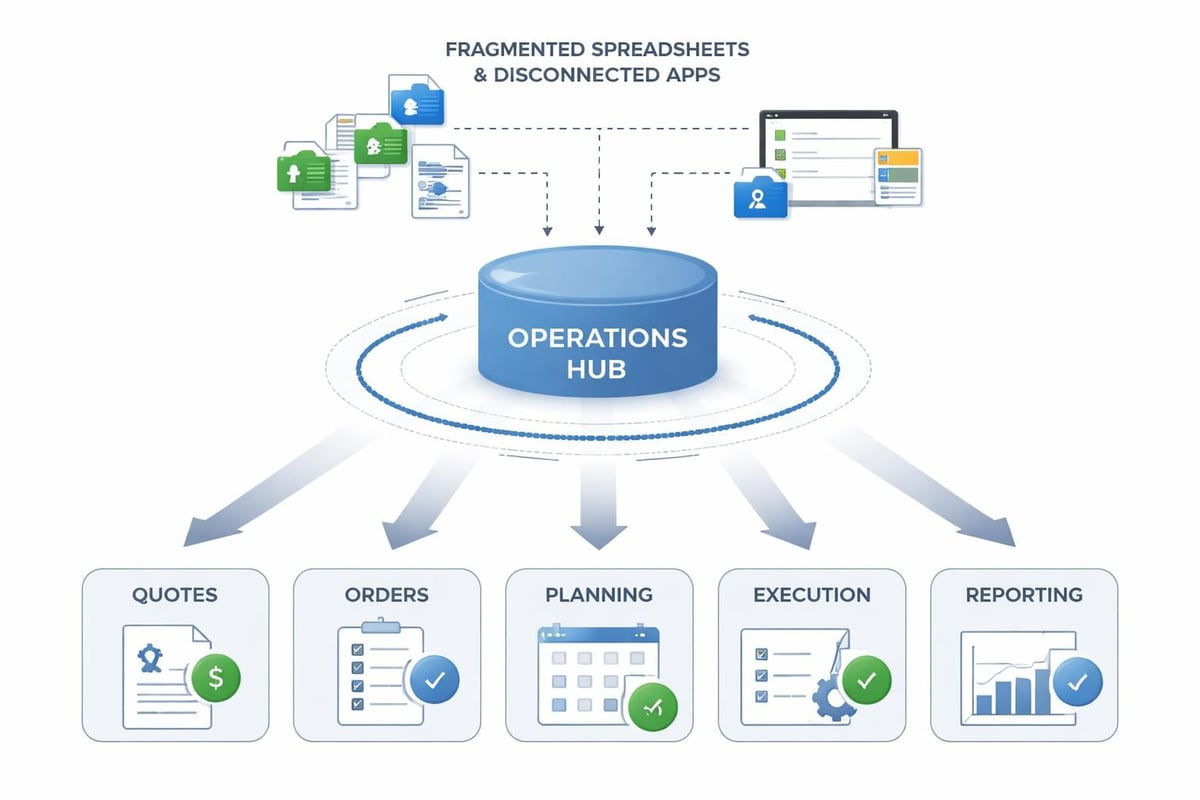
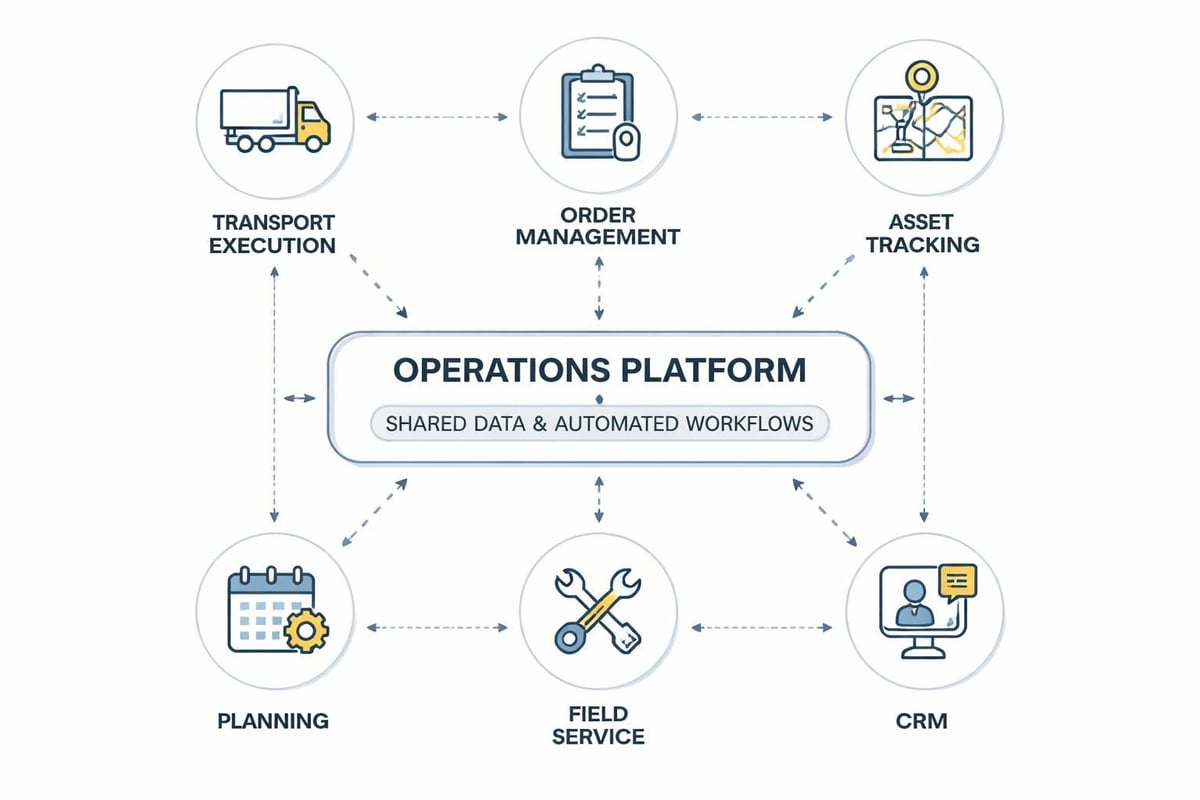
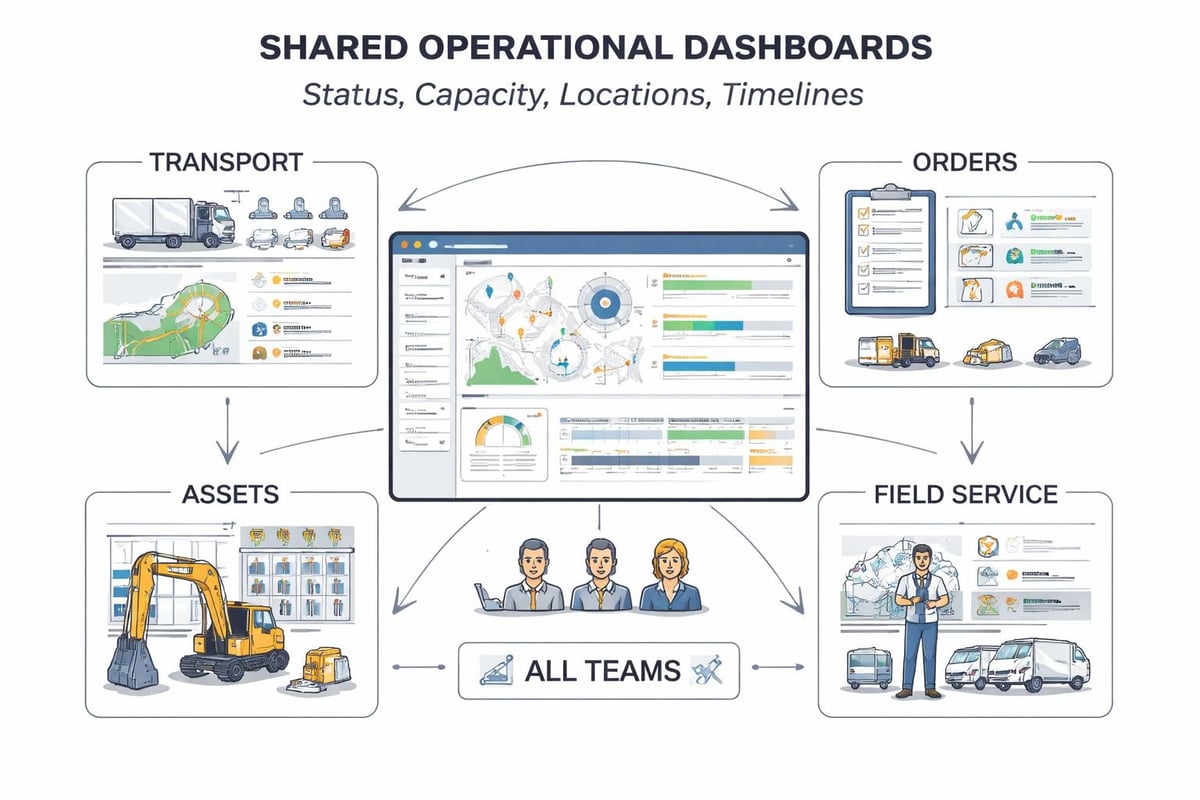
Modern businesses manage complex operational ecosystems that span sales, fulfillment, asset management, field teams, and customer service. As organizations scale, they accumulate disconnected software tools that create data silos, manual handovers, and workflow bottlenecks. An operations hub addresses this fragmentation by serving as a unified command layer where teams share real-time visibility into status, capacity, locations, and timelines across all business functions. Rather than forcing teams to toggle between systems and reconcile conflicting data, the operations hub becomes the single source of truth that keeps work moving when reality changes.

The Core Function of an Operations Hub

An operations hub consolidates disparate business processes into one integrated platform that orchestrates information flow across departments. Unlike traditional enterprise software that focuses on a single function, the operations hub connects multiple workflows-from quote creation to order fulfillment, asset allocation to field service execution-within a shared operational environment.

Key characteristics include:

The strategic advantage emerges from replacing point solutions with interconnected modules. When a sales team creates an order, the operations hub immediately validates availability against current asset status, capacity constraints, and scheduling commitments. Confirmed orders flow directly into planning and dispatch without rework or exceptions.

Breaking Down Data Silos

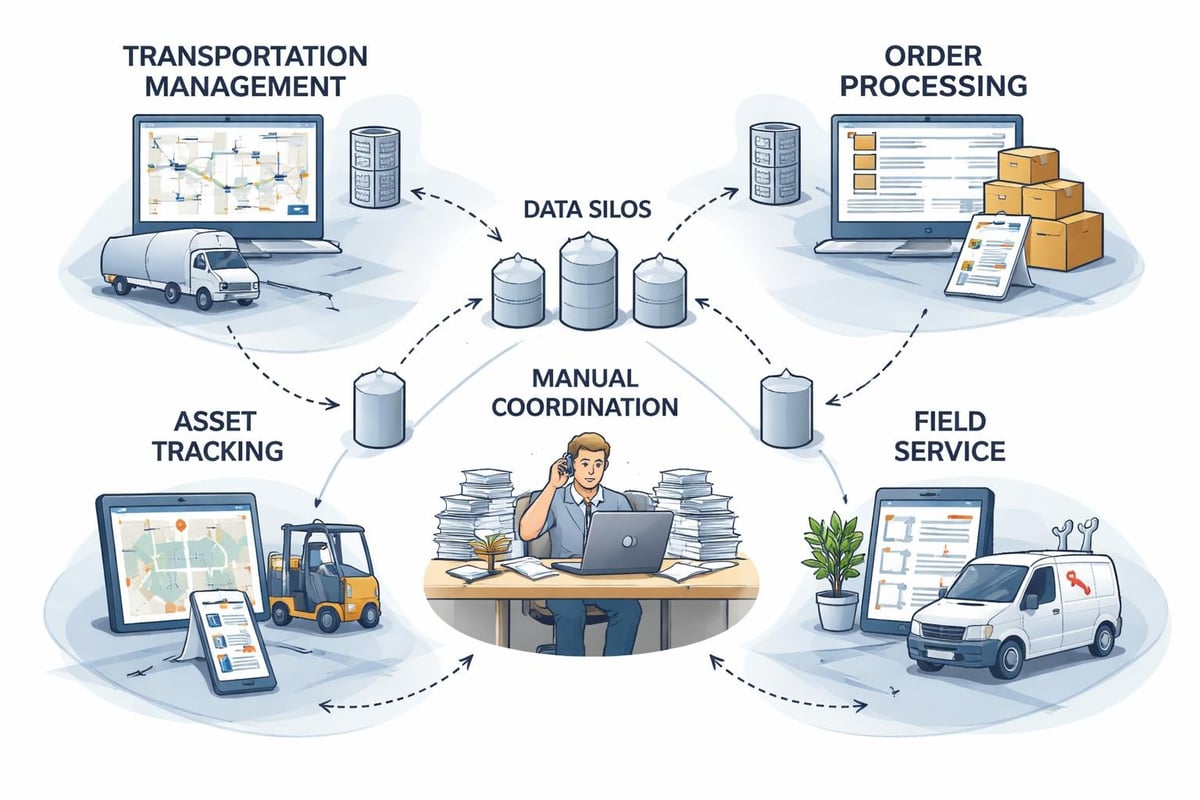
Traditional business software creates isolated information pockets. Sales tools don't communicate with fleet management systems. Spreadsheets tracking availability diverge from actual asset locations. Field teams work from outdated job details because updates don't sync in real time.

HubSpot's Operations Hub pioneered the concept of centralizing operational data within the CRM ecosystem, demonstrating how unified platforms reduce friction. An operations hub extends this philosophy beyond marketing and sales to encompass the full operational lifecycle.

Operations hub data flow

Automation That Responds to Operational Reality

The operations hub transforms static workflows into adaptive processes. Rather than following rigid sequences that break when exceptions occur, automation responds dynamically to current conditions.

Consider a transport business managing deliveries across multiple sites. When a driver completes a job early, the operations hub can automatically:

  1. Update asset availability in real time
  2. Check pending orders that match the driver's location and capacity
  3. Suggest optimal next assignments based on route efficiency
  4. Notify planning teams of capacity changes
  5. Adjust customer ETAs based on actual progress

This level of responsiveness requires integration across modules. The operations hub maintains connections between customer orders, asset locations, resource schedules, and execution status so that workflow automation has access to complete, current information.

Programmable Automation Beyond Templates

While standard automation handles routine sequences, programmable automation within operations platforms enables businesses to encode their specific operational logic. Custom rules can validate complex constraints, trigger multi-step processes, and handle edge cases that generic workflows miss.

For rental operations, this might mean automatically checking asset condition reports before confirming return receipts, updating maintenance schedules based on usage patterns, and reallocating equipment to waiting orders based on priority scoring.

Automation Type Traditional Workflow Tools Operations Hub Approach
Scope Single department Cross-functional coordination
Data Access Limited to tool's database Full operational context
Trigger Complexity Simple if/then rules Multi-condition logic with constraint validation
Adaptation Manual intervention required Self-adjusting based on real-time status

Modular Architecture for Scalable Growth

An effective operations hub supports incremental adoption. Businesses start with core modules addressing immediate pain points, then expand functionality as operational needs evolve. This modularity prevents the all-or-nothing risk of monolithic enterprise systems that require complete organizational transformation.

Common starting configurations include:

Each module functions independently while maintaining data connections to other components. When a business adds field service management to an existing order and transport system, historical data remains intact and workflows automatically extend to include the new capabilities.

The modular platform architecture enables businesses to configure their operations hub around actual workflows rather than forcing processes to conform to rigid software structures.

Integration with Existing Systems

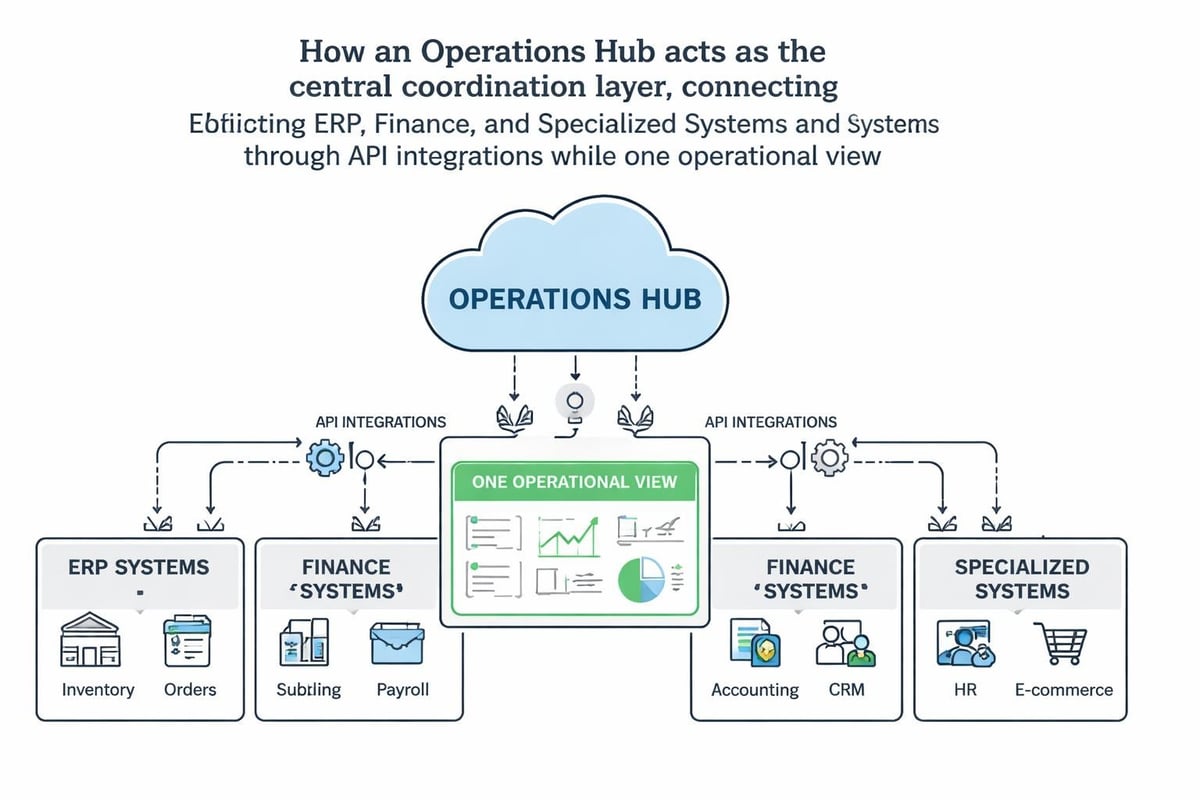
Most businesses can't replace every operational tool simultaneously. The operations hub serves as the coordination layer that connects with existing ERP, finance, and specialized systems through API integrations.

This hybrid approach preserves investments in established platforms while eliminating the manual data transfer and reconciliation that creates errors. Financial data stays in the accounting system of record, but order status, asset utilization, and service completion flow from the operations hub to ensure accurate invoicing and reporting.

Operations hub integration

Real-Time Visibility Across Multi-Site Operations

Businesses operating across multiple locations face unique coordination challenges. Regional teams work from local information that quickly becomes outdated. Central planning lacks visibility into site-specific capacity and constraints. Customer commitments made in one location impact resource availability elsewhere.

The operations hub creates a shared operational view that spans sites while respecting local autonomy. Managers see real-time status across all locations, track inter-site transfers and shared resources, monitor performance metrics consistently, and coordinate cross-location workflows without manual check-ins.

Industrial operations platforms demonstrate how role-based views within a centralized hub enable different teams to access relevant operational data without overwhelming users with unnecessary information.

Capacity Planning with Live Data

Effective capacity management requires knowing what's available, where it's located, what's already committed, and when resources become free. Spreadsheet-based planning relies on periodic updates that become stale within hours.

An operations hub maintains live capacity tracking by monitoring:

Sales and planning teams work from the same current data, preventing double-booking and enabling confident commitment to customer timelines. For businesses managing transport and logistics, the Transport Command Center provides real-time control over orders, assets, routes, and frontline resources so teams can plan, dispatch, monitor, and adapt quickly as operational conditions change.

Transport Command Center - Neovara Operations Center

Data Quality and Exception Management

Operational efficiency depends on data accuracy. When team members enter information inconsistently, skip required fields, or create duplicate records, downstream processes fail. The operations hub enforces data quality through validation rules, standardized entry workflows, and automated cleanup.

Quality mechanisms include:

Rather than discovering data problems when reports don't balance or customer communications fail, the operations hub prevents quality issues at the point of entry. Best practices for operational excellence emphasize proactive data management as foundational to process automation.

Customer Communication Aligned with Execution

Customer expectations in 2026 center on transparency and accurate updates. Generic status messages ("your order is being processed") no longer satisfy clients who expect real-time tracking and proactive exception notifications.

The operations hub enables precise customer communication because it knows actual execution status, not planned timelines. When field teams complete work, customer portals update immediately. When delays occur, automated notifications explain the impact and provide revised ETAs based on current conditions.

Communication Approach Disconnected Systems Operations Hub
Update Frequency Scheduled/manual Real-time automatic
Accuracy Based on plans Based on execution
Exception Handling Reactive notifications Proactive alerts with alternatives
Customer Access Email/phone requests Self-service portal with live data

This alignment between communication and operational reality builds trust and reduces support overhead. Customers receive meaningful updates without requiring status inquiries, and service teams spend less time fielding "where's my order" calls.

Scalability for Growing Operations

As businesses expand, operational complexity grows faster than headcount. The operations hub scales by standardizing processes, reducing manual coordination overhead, and enabling automation to handle increasing transaction volumes.

Digital transformation in operational hubs focuses on leveraging technology to maintain efficiency at scale without proportional increases in administrative staff.

Scaling advantages include:

The modular design supports growth by adding capacity within existing modules or activating new functional areas without disrupting established workflows. A rental business might start with asset and order management, then add field service coordination as the maintenance team expands.

Onboarding and Training Integration

Scaling operations requires bringing new team members up to speed quickly. When operational tools are fragmented, training involves learning multiple systems with different interfaces and logic. The operations hub simplifies onboarding by providing a consistent environment across all functions.

Guided workflows reduce the learning curve for complex processes. New users follow structured paths that prompt for required information and validate entries against operational constraints. Rather than memorizing business rules, team members work within a system that enforces standards automatically.

Reporting and Analytics from Operational Data

The operations hub generates actionable insights because it possesses complete operational context. Traditional reporting pulls from isolated databases that require manual correlation. The integrated nature of the operations hub means that reports can trace end-to-end workflows, connect cause and effect across departments, and measure performance with accurate attribution.

Standard reports track metrics like order cycle time, asset utilization rates, on-time completion percentages, and revenue per operational resource. Custom analytics explore specific business questions: Which service types generate the most repeat orders? What factors correlate with delivery delays? How do capacity constraints impact sales conversion?

Advanced visualization platforms demonstrate how role-based dashboards present relevant operational metrics to different stakeholders without requiring technical expertise.

Forecasting with Historical Patterns

Accumulated operational data enables predictive analytics. The operations hub identifies seasonal demand patterns, typical order lead times, average asset lifecycle costs, and resource productivity trends. These patterns inform capacity planning, inventory decisions, hiring needs, and pricing strategies.

Machine learning models can suggest optimal resource allocation, predict maintenance requirements before failures occur, and identify early warning signs of customer churn based on service patterns. The quality of predictions improves as the operations hub accumulates more historical execution data.

Mobile Execution and Field Team Coordination

Office-based planning means nothing if field teams can't execute efficiently. The operations hub extends to mobile tools that guide frontline work while maintaining real-time sync with central coordination.

Field execution apps show assigned tasks, customer details, asset locations, and completion checklists. Team members capture signatures, photos, notes, and completion confirmations that immediately update central status. Dispatchers see live progress and can reassign work or communicate changes without phone calls.

This mobile integration closes the feedback loop. Planning teams make decisions based on current field status, and field teams work from up-to-date assignments that reflect latest priorities. The elimination of delayed status updates and manual reporting reduces administrative overhead while improving coordination accuracy.

Implementation Strategies for Operations Hubs

Successful operations hub adoption follows a phased approach that delivers value incrementally while building organizational capability.

Recommended implementation sequence:

  1. Assess current state by mapping existing tools, workflows, and data flows
  2. Identify pain points where fragmentation creates the most operational friction
  3. Select core modules that address high-impact problems first
  4. Configure workflows to match actual business processes with appropriate automation
  5. Migrate essential data ensuring quality and completeness before go-live
  6. Train power users who become internal experts and support champions
  7. Launch with pilot teams to validate configuration and refine processes
  8. Expand gradually adding modules and users as adoption succeeds

Implementation guidance for operational platforms emphasizes the importance of securing stakeholder alignment and maintaining focus on measurable business outcomes rather than feature adoption.

Businesses should plan for iterative refinement. Initial configurations rarely capture every edge case or workflow variation. The operations hub should support ongoing adjustment as teams discover opportunities for improved automation and coordination.

Technology Architecture Considerations

The underlying technology stack determines the operations hub's reliability, performance, and extensibility. Modern platforms leverage cloud-native architectures that provide scalability, security, and accessibility advantages over legacy on-premise systems.

Critical technical factors include:

The technology foundation determines how easily the operations hub adapts to changing business needs and integrates with evolving software ecosystems.

AI and Machine Learning Enhancement

Artificial intelligence augments operations hub functionality by automating complex decisions that traditionally required human judgment. AI capabilities include intelligent routing that optimizes delivery sequences, predictive maintenance scheduling based on usage patterns, dynamic pricing recommendations responding to demand and capacity, and automated exception resolution for routine operational deviations.

These enhancements reduce manual workload while improving decision quality. AI systems process more variables and historical patterns than human operators can consider simultaneously, leading to more efficient resource allocation and faster response to changing conditions.

Cost and ROI Considerations

Operations hub implementation requires investment in software licensing, configuration services, data migration, training, and change management. Organizations should evaluate total cost of ownership against quantifiable operational improvements.

Typical ROI drivers include:

Measuring ROI requires establishing baseline metrics before implementation and tracking improvements over time. Pricing models for operations platforms often scale with usage, allowing businesses to align costs with value realization.

The financial case strengthens as operational complexity increases. Businesses managing multiple workflow types, geographically distributed operations, and high transaction volumes see faster payback from consolidation and automation benefits.


An operations hub eliminates the fragmentation, manual handovers, and data inconsistencies that slow multi-workflow businesses. By centralizing transport, quotes, orders, assets, field service, and planning in one real-time system, teams gain the visibility and coordination needed to execute efficiently as conditions change. Neovara Operations Center delivers this unified command layer through modular architecture that starts with your most pressing needs and expands as your operations grow, replacing disconnected tools with cleaner data, faster coordination, and better customer communication across all teams and sites.

2026-03-09T16:40:50.636Z
Taxi Dispatch System Prices: Complete Guide for 2026

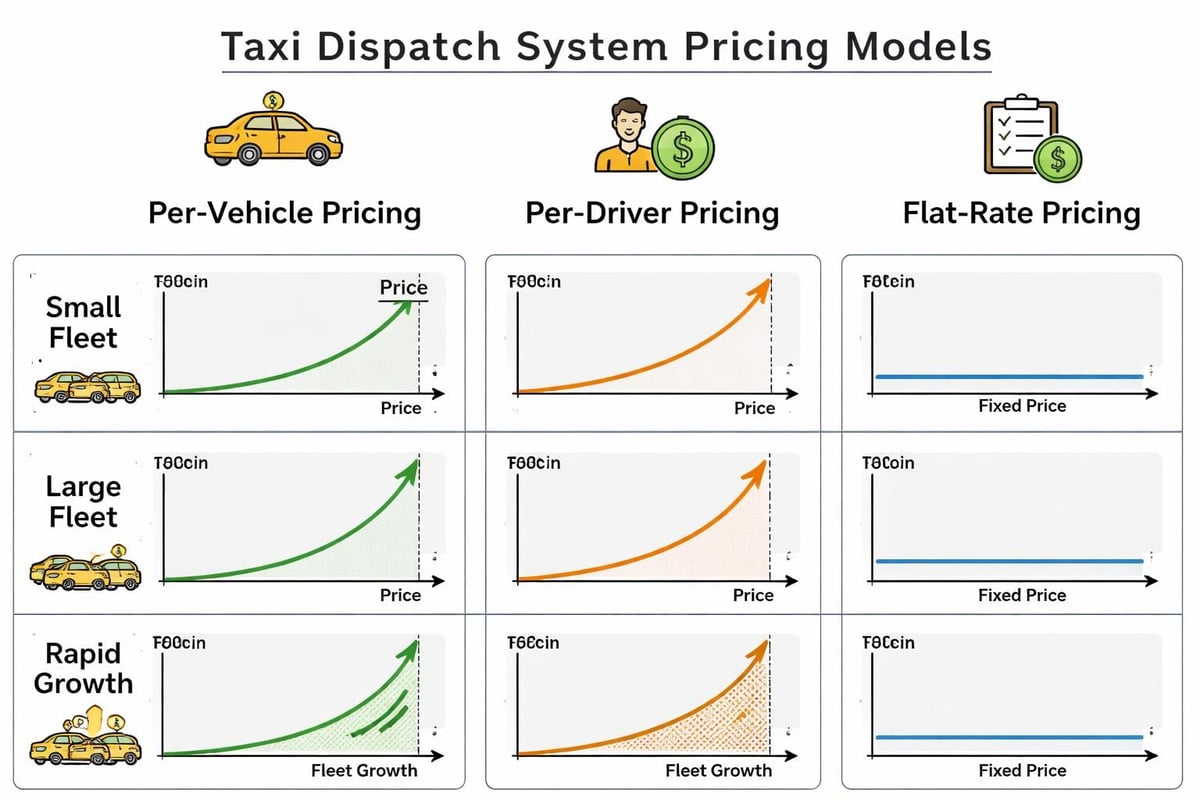
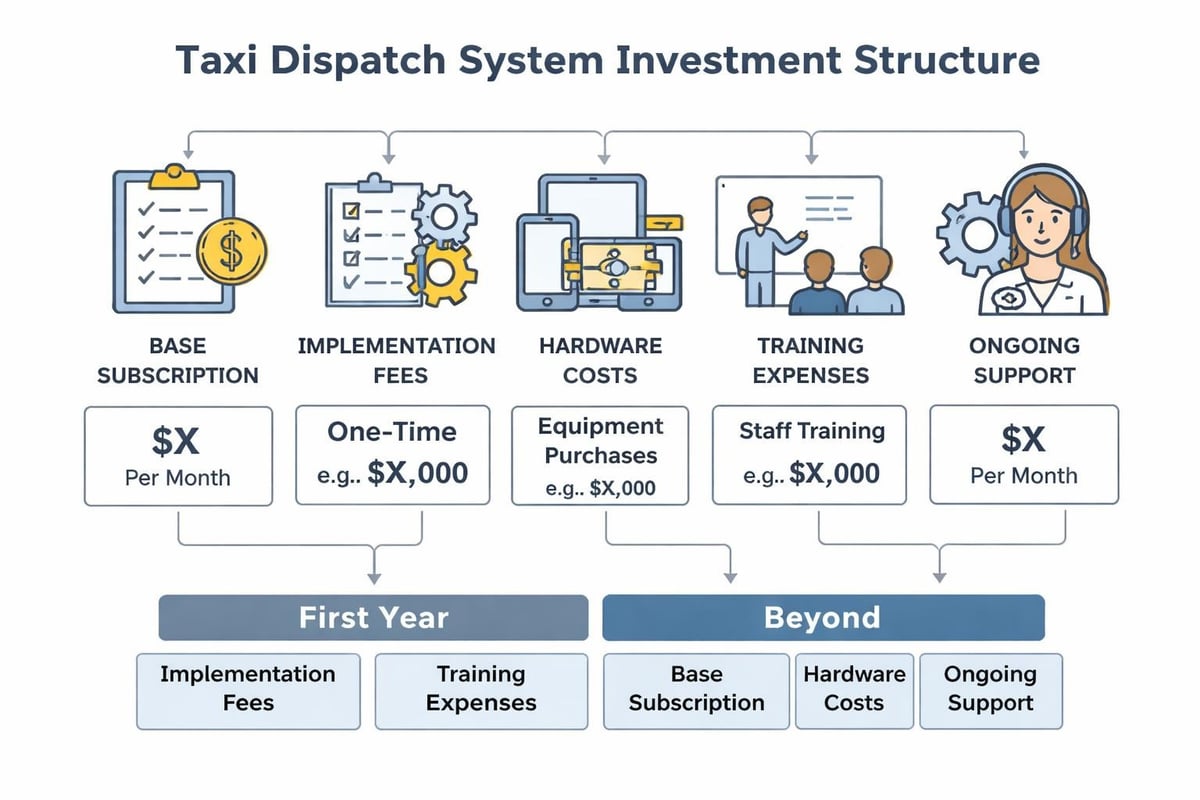
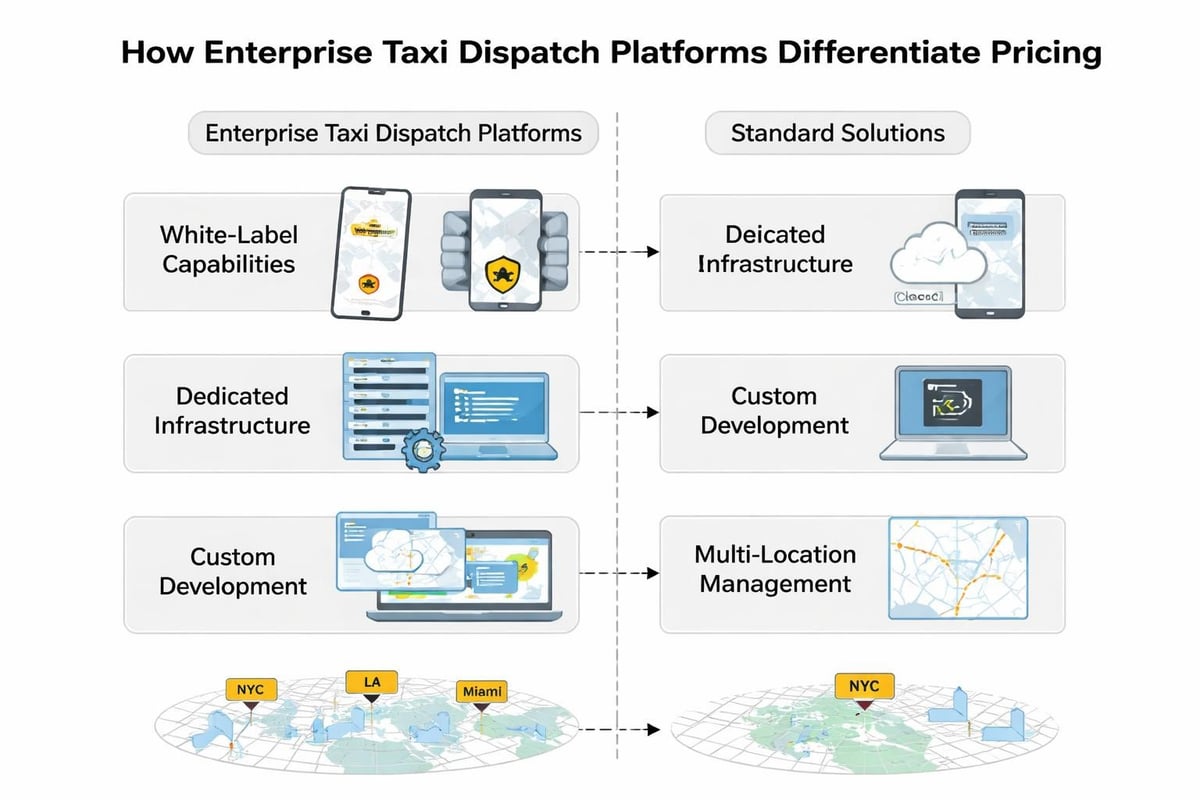
Understanding taxi dispatch system prices represents one of the most critical decisions for fleet operators planning to modernize their operations in 2026. The market offers a wide range of pricing structures, from entry-level packages for small fleets to enterprise solutions with advanced automation and integration capabilities. Making an informed investment requires examining not just the headline price but also the ongoing costs, feature sets, scalability options, and total cost of ownership over the system's lifecycle. This guide breaks down the pricing landscape, helping operators match budget realities with operational requirements.

Understanding Taxi Dispatch System Pricing Models

The pricing landscape for dispatch systems has evolved significantly, with vendors adopting various models to serve different market segments. Most providers now offer subscription-based pricing, perpetual licenses, or hybrid approaches that combine upfront fees with ongoing support costs.

Subscription-based models have become the dominant structure, particularly for cloud-hosted solutions. Operators pay a recurring monthly or annual fee, typically calculated per vehicle, per driver, or per booking. This approach minimizes upfront capital expenditure and includes automatic updates, cloud hosting, and technical support within the subscription fee.

Perpetual license models require a larger initial investment but can prove more economical over extended periods. Operators purchase the software outright and pay separate annual maintenance fees, usually ranging from 15-20% of the license cost. This model appeals to established fleets with predictable growth trajectories and in-house IT capabilities.

The pricing models vary significantly based on fleet size, with vendors structuring tiers to match operational complexity:

Fleet Size Typical Monthly Range Pricing Structure Common Features
1-10 vehicles $50-$200 Per-fleet flat rate Basic dispatch, GPS tracking, driver app
11-50 vehicles $200-$800 Per-vehicle or tiered Automated dispatch, route optimization, reporting
51-200 vehicles $800-$3,000 Volume-based tiers Multi-site support, API access, advanced analytics
200+ vehicles $3,000+ Custom enterprise White-label options, dedicated infrastructure, SLA guarantees

Per-Vehicle vs. Per-Driver Pricing

Two primary subscription calculations dominate the market. Per-vehicle pricing charges based on active fleet count, regardless of utilization or driver shifts. This straightforward approach works well for owner-operator fleets where vehicle and driver counts align closely.

Per-driver pricing calculates costs based on active driver accounts, making it attractive for fleets with driver rotation, part-time operators, or multiple drivers per vehicle. Some vendors count only drivers who logged activity within the billing period, while others charge for all registered accounts.

Dispatch pricing models comparison

Understanding the calculation method prevents budget surprises. A 30-vehicle fleet operating three daily shifts might face dramatically different costs under per-driver pricing (potentially 90 driver accounts) versus per-vehicle pricing (30 units). According to detailed cost breakdowns from industry analysts, mid-sized fleets typically spend between $1,200 and $4,500 monthly on dispatch software when factoring in all active resources.

Core Features That Drive Taxi Dispatch System Prices

The feature set directly correlates with pricing tiers. Entry-level systems provide fundamental dispatch capabilities, while premium tiers add automation, integration, and intelligence layers that reduce manual coordination.

Essential features included in base pricing typically encompass:

Mid-tier additions that increase taxi dispatch system prices include:

Premium capabilities that command higher pricing tiers:

The features that impact pricing most significantly typically involve real-time processing demands, data storage requirements, and the sophistication of automation algorithms. Systems handling 500+ concurrent bookings require different infrastructure than those managing 50 daily trips, and vendors price accordingly.

Integration Capabilities and API Access

Integration requirements substantially affect total investment. Basic systems operate as standalone tools, requiring manual data entry when connecting to accounting, CRM, or fleet management platforms. This fragmentation creates inefficiencies that undermine the dispatch system's value.

API access fees represent a common pricing add-on. Vendors may charge:

For transport businesses managing multiple operational workflows beyond dispatch, platforms offering unified operational modules eliminate integration complexity by housing dispatch, orders, assets, and planning within a single system architecture.

Hidden Costs Beyond Base Subscription Prices

Taxi dispatch system prices advertised by vendors rarely represent the complete investment required for successful deployment and ongoing operation. Smart budgeting accounts for implementation, training, hardware, and support costs that extend beyond monthly subscription fees.

Implementation and Onboarding Expenses

Most vendors charge separate fees for system setup, data migration, and initial configuration. These one-time costs typically range from $500 for basic cloud implementations to $10,000+ for enterprise deployments requiring custom workflows and extensive data migration.

Common implementation cost components include:

  1. Initial system configuration and business rule setup
  2. Historical data import and cleansing
  3. Integration development with existing systems
  4. Custom report template creation
  5. User account setup and role configuration
  6. Initial training sessions for dispatchers and drivers

Training investments often prove more substantial than operators anticipate. Comprehensive onboarding ensures teams maximize system capabilities rather than reverting to manual workarounds. Budget considerations should include:

Total cost breakdown

According to comprehensive pricing analyses, implementation and first-year training costs can equal 40-60% of annual subscription fees for mid-sized fleets, making these expenses critical to budget planning.

Hardware and Infrastructure Requirements

Cloud-based systems minimize infrastructure investment, but operators still need appropriate hardware for effective system utilization:

Hardware Component Typical Cost Range Notes
Dispatch workstation computers $600-$1,200 each Multiple monitors recommended
Driver smartphones or tablets $150-$600 per device Android typically lower cost than iOS
Vehicle mount hardware $30-$80 per vehicle Secure mounting for driver devices
Backup internet connectivity $50-$150 monthly Cellular failover for dispatch center
In-vehicle tablets (optional) $200-$500 each Passenger-facing displays or driver workflow

Network reliability represents another ongoing cost. Dispatch operations require consistent internet connectivity, and downtime directly impacts revenue. Most professional operations invest in redundant connections, cellular backup, or dedicated business-grade internet with SLA guarantees, adding $100-$300 monthly to operational costs.

Comparing Pricing Across Market Segments

The taxi dispatch system market serves distinct segments, each with characteristic pricing structures and value propositions. Understanding where your operation fits helps narrow vendor selection and set realistic budget expectations.

Small Fleet Solutions (1-20 Vehicles)

Small fleet operators benefit from simplified pricing and lean feature sets. Dedicated small fleet solutions typically offer flat monthly rates between $50 and $300, providing essential dispatch capabilities without enterprise complexity.

These systems prioritize ease of use over configurability, allowing owner-operators to manage dispatch operations without dedicated IT staff. Common limitations include:

For fleets expecting rapid growth, evaluate upgrade paths carefully. Some vendors impose significant price jumps or migration complexity when graduating from small fleet to mid-market tiers.

Mid-Market Fleet Solutions (20-100 Vehicles)

This segment represents the sweet spot for taxi dispatch system pricing competition. Mid-market pricing models balance comprehensive features with accessible pricing, typically ranging from $500 to $2,500 monthly depending on exact fleet size and selected capabilities.

Operators in this range should prioritize:

Many mid-market systems offer modular pricing, allowing operators to start with core dispatch and add premium features like advanced analytics, passenger apps, or corporate account management as business needs evolve.

Enterprise and Fleet Management Platforms

Large fleets operating 100+ vehicles or managing multiple locations require enterprise-grade platforms with corresponding pricing structures. These solutions typically start at $3,000 monthly and scale based on vehicle count, transaction volume, and customization requirements.

Enterprise taxi dispatch system prices reflect capabilities like:

Some enterprise vendors offer transparent per-driver pricing that scales linearly, while others provide custom quotes based on specific requirements. Request detailed proposals from multiple vendors, ensuring quotes include implementation, training, and first-year support to enable accurate comparison.

Enterprise feature comparison

Evaluating Total Cost of Ownership

Smart investment decisions look beyond monthly subscription fees to calculate total cost of ownership across a multi-year period. This comprehensive view reveals the true financial impact and helps identify solutions offering the best long-term value.

Year one costs typically include:

Ongoing annual costs encompass:

Calculating ROI and Payback Period

The investment in modern dispatch systems delivers measurable returns through operational efficiency gains. According to industry research on dispatch costs, traditional dispatch operations involve significant labor expenses, with dispatchers handling 30-50 bookings hourly at peak efficiency.

Quantifiable benefits that offset taxi dispatch system prices include:

  1. Reduced dispatcher labor: Automation handles routine assignments, allowing fewer dispatchers to manage larger fleets
  2. Improved vehicle utilization: Optimal routing and faster turnaround increase daily trips per vehicle
  3. Decreased no-shows: Automated confirmations and tracking reduce customer cancellations
  4. Lower fuel costs: Route optimization minimizes unnecessary mileage
  5. Enhanced customer retention: Better service reliability and communication increase repeat business

A mid-sized fleet spending $1,500 monthly on dispatch software might achieve payback within 6-12 months if the system enables one fewer dispatcher position ($3,000-$4,000 monthly savings) while maintaining or improving service quality.

Negotiating Better Pricing and Contract Terms

Taxi dispatch system prices rarely represent final numbers. Vendors expect negotiation, particularly for multi-year commitments, larger fleets, or competitive bid situations. Strategic approaches can reduce costs by 15-30% while securing better terms.

Effective Negotiation Strategies

Annual vs. monthly commitment: Vendors typically offer 10-20% discounts for annual prepayment versus month-to-month subscriptions. Evaluate your cash flow situation against the savings opportunity.

Multi-year agreements: Locking in pricing for 2-3 years protects against annual price increases while securing additional discounts. Ensure contracts include clear exit clauses if the vendor fails to meet performance commitments.

Feature bundling: Rather than paying à la carte for individual modules, negotiate comprehensive packages. Vendors often discount bundled features more aggressively than individual add-ons.

Competitive leverage: Obtain detailed quotes from 3-4 vendors and use them as leverage. Vendors reduce pricing when they know you're evaluating alternatives, particularly if you're transparent about your decision timeline.

Growth commitments: If you're planning fleet expansion, negotiate volume-based pricing that reduces per-unit costs as you add vehicles. This approach rewards vendors for your growth while controlling your marginal costs.

Key Contract Terms to Negotiate

Beyond headline pricing, focus negotiation energy on terms that affect total value:

Operators managing transport workflows alongside dispatch operations benefit from platforms that unite these functions natively rather than requiring multiple vendors and integration points. The Transport Command Center approach consolidates dispatch, route management, asset tracking, and driver coordination into a single real-time control hub, eliminating integration complexity while providing transparent, scalable pricing across operational modules.

Transport Command Center - Neovara Operations Center

Budgeting for Growth and System Expansion

Initial taxi dispatch system prices represent just the starting point. Successful operators plan budgets that accommodate fleet growth, feature expansion, and evolving operational requirements over 3-5 year horizons.

Planning for Fleet Expansion

Per-vehicle and per-driver pricing models scale automatically as fleets grow, but the rate of cost increase varies significantly across vendors. Some offer:

Linear scaling: Each additional vehicle costs the same marginal amount. A system charging $30 per vehicle monthly costs $3,000 for 100 vehicles and $6,000 for 200 vehicles.

Volume tiers: Per-unit costs decrease at specific thresholds. The first 50 vehicles might cost $30 each, vehicles 51-100 cost $25 each, and 100+ cost $20 each.

Custom enterprise pricing: Beyond certain fleet sizes (typically 150-200 vehicles), vendors offer negotiated rates based on total volume and expected growth trajectory.

Understanding your growth projections helps select pricing structures that remain economical as you scale. A fleet planning to double from 50 to 100 vehicles within two years should prioritize systems with volume-tier pricing rather than linear scaling.

Modular Expansion Strategies

Modern dispatch platforms increasingly offer modular architectures, allowing operators to start with core capabilities and add functionality as operational maturity and budget allow. This approach controls initial investment while providing clear expansion paths.

Common expansion modules available beyond base dispatch include:

Evaluate modular pricing transparency when selecting vendors. Some providers charge substantial premiums for feature additions, while others offer bundled expansion pricing that rewards long-term platform investment.

Technology Considerations That Affect Pricing

The underlying technology architecture influences both initial taxi dispatch system prices and long-term operational costs. Understanding these technical factors helps evaluate whether premium pricing delivers corresponding value.

Cloud vs. On-Premises Deployment

Cloud-hosted solutions dominate the current market, offering advantages that justify their subscription-based pricing:

On-premises deployments still serve specific use cases, particularly for large fleets with existing IT infrastructure and data sovereignty requirements. These installations require:

For most operators, cloud deployment offers superior total cost of ownership despite higher ongoing subscription fees.

Mobile Application Architecture

The driver and passenger mobile applications represent critical system components with direct pricing implications. Vendors offering native iOS and Android applications typically charge premium pricing compared to progressive web app (PWA) solutions.

Native mobile apps provide:

Progressive web apps reduce development costs for vendors, sometimes translating to lower taxi dispatch system prices for operators, but sacrifice some user experience polish and offline functionality.

Evaluate mobile application quality during vendor demonstrations. Poor driver app design increases training time, reduces driver adoption, and undermines the dispatch system's operational efficiency regardless of the subscription price paid.

Making the Final Selection Decision

After analyzing pricing models, calculating total cost of ownership, and evaluating features across multiple vendors, the selection decision should balance financial considerations with operational fit and long-term partnership potential.

Essential Evaluation Criteria

Create a weighted scorecard that reflects your operational priorities:

Criterion Weight Evaluation Approach
Base pricing fit 20% Falls within budget parameters
Total cost of ownership 25% 3-year projection includes all costs
Feature completeness 20% Meets current and 2-year projected needs
Scalability 15% Pricing and architecture support growth
Support quality 10% Response times and expertise demonstrated
Implementation timeline 10% Matches business requirements and season

Request detailed proposals from finalists that specify all costs, implementation timelines, training commitments, and support terms. Flexible pricing structures that adapt to your specific operational requirements often deliver better long-term value than rigid tier-based models.

The Pilot Program Approach

For larger investments, negotiate pilot programs that allow limited deployment before full commitment. A 30-90 day pilot with 10-20% of your fleet provides real operational experience while limiting financial risk.

Effective pilot programs should:

Vendors confident in their solutions welcome pilot opportunities, while those resistant may indicate product limitations or support inadequacies that justify their hesitation.


Selecting the right dispatch system requires balancing taxi dispatch system prices against operational requirements, growth projections, and total cost of ownership across multiple years. The investment represents more than software subscription fees-it determines your operational efficiency, service quality, and competitive positioning for years ahead. For transport businesses managing multiple operational workflows beyond dispatch, Neovara Operations Center eliminates the fragmentation of juggling separate dispatch, order management, asset tracking, and planning tools by uniting these functions in one real-time command layer with transparent, modular pricing that scales with your business.

2026-03-05T08:00:43.518Z
Hospital Inventory Management Software Guide 2026

Modern healthcare facilities face unprecedented challenges managing thousands of medical items, from surgical instruments to pharmaceuticals, across multiple departments and locations. Hospital inventory management software has evolved from simple tracking systems into sophisticated platforms that integrate with clinical workflows, reduce waste, prevent stockouts, and ensure regulatory compliance. These specialized systems provide real-time visibility into supply levels, automate reordering processes, and generate actionable insights that help hospital administrators make data-driven decisions about resource allocation. As healthcare costs continue rising and patient expectations increase, implementing robust inventory management technology has become essential for operational excellence.

The Critical Role of Inventory Management in Healthcare Settings

Healthcare inventory represents one of the largest expense categories for hospitals, typically accounting for 30-40% of total operating budgets. Unlike other industries, inventory shortages in healthcare settings can directly impact patient outcomes and safety. When critical supplies are unavailable at the point of care, procedures get delayed, staff productivity suffers, and patient satisfaction declines.

Traditional manual tracking methods create significant operational risks. Paper-based systems and disconnected spreadsheets make it nearly impossible to maintain accurate real-time counts across multiple storage locations. Staff spend valuable time searching for items, conducting physical counts, and reconciling discrepancies instead of focusing on patient care.

Regulatory Compliance and Documentation Requirements

Hospitals must maintain detailed records for controlled substances, lot numbers, expiration dates, and usage patterns to satisfy regulatory bodies. Hospital inventory management software automates compliance documentation, creating audit trails that track every item from receipt through consumption or disposal. This capability proves invaluable during inspections and recalls.

The Agency for Healthcare Research and Quality's report examines the integration of health IT systems, highlighting how inventory platforms connect with electronic health records and clinical systems to improve care coordination.

Healthcare compliance tracking

Essential Features That Define Modern Inventory Platforms

Hospital inventory management software must address unique healthcare requirements that distinguish it from general warehouse management systems. The right platform combines clinical knowledge with operational efficiency to support care delivery.

Real-Time Visibility Across All Locations

Comprehensive tracking extends beyond central warehouses to include:

Modern systems use barcode scanning, RFID technology, and automated dispensing cabinets to maintain accurate counts without manual intervention. When supplies move between locations, the system updates instantly, giving staff complete visibility into what's available and where to find it.

Automated Reordering and Par Level Management

Setting appropriate par levels for each location ensures adequate stock without tying up excessive capital in inventory. Hospital inventory management software monitors consumption patterns, identifies trends, and generates purchase orders automatically when quantities fall below predetermined thresholds.

Feature Benefit Impact
Consumption analytics Identifies usage patterns by department, procedure, physician Optimizes stock levels
Vendor integration Sends orders directly to suppliers electronically Reduces lead time
Budget controls Enforces spending limits and approval workflows Prevents overordering
Seasonal adjustments Modifies par levels based on historical demand Accommodates fluctuations

Expiration Date Management and Waste Reduction

Healthcare facilities waste millions annually on expired products. Advanced platforms track expiration dates at the item level and alert staff when products approach their expiration. First-expired, first-out (FEFO) protocols ensure older stock gets used before newer inventory.

The system can automatically:

  1. Generate alerts for items nearing expiration
  2. Suggest alternative locations where items could be transferred
  3. Calculate write-off values for financial reporting
  4. Document disposal for compliance purposes
  5. Analyze waste patterns to optimize future ordering

Integration Capabilities That Extend Platform Value

Hospital inventory management software delivers maximum value when it connects seamlessly with other critical systems. Integration eliminates duplicate data entry, reduces errors, and creates a unified operational view.

Electronic Health Record (EHR) Synchronization

Linking inventory systems with EHRs enables automatic charge capture when clinicians use supplies during patient care. This integration ensures accurate billing, eliminates revenue leakage, and provides insights into procedure costs. Clinical documentation triggers inventory depletion in real-time, maintaining accurate counts without requiring separate manual entries.

Enterprise Resource Planning (ERP) Connections

Financial systems need current inventory data for accurate reporting and budgeting. Hospital inventory management software should push updates to ERP platforms, maintaining synchronized general ledger accounts, cost centers, and purchase order statuses. This connection supports better financial planning and variance analysis.

For organizations managing multiple operational workflows beyond clinical supplies, modular platforms offer the flexibility to integrate inventory management with transport logistics, service scheduling, and customer relationship tools within a single command layer.

System integration workflow

Analytics and Business Intelligence

Data-driven decision-making requires robust reporting capabilities. Modern platforms include built-in analytics that transform raw inventory data into actionable insights:

These insights help supply chain leaders negotiate better contracts, identify standardization opportunities, and optimize inventory investments.

Selection Criteria for Choosing the Right Platform

Evaluating hospital inventory management software requires careful consideration of both immediate needs and long-term strategic objectives. The selection process should involve stakeholders from clinical, financial, and operational departments to ensure the chosen solution addresses diverse requirements.

Scalability and Flexibility Considerations

Healthcare organizations change constantly through mergers, expansions, and service line additions. The inventory platform must scale to accommodate growth without requiring complete reimplementation. Cloud-based solutions typically offer greater flexibility than on-premise installations, supporting multiple facilities from a single instance.

Key scalability factors include:

User Experience and Adoption Factors

Even the most feature-rich platform fails if staff won't use it consistently. Evaluate systems based on intuitive interfaces, mobile accessibility, and minimal training requirements. Frontline users (nurses, technicians, warehouse staff) need quick access to essential functions without navigating complex menus.

Role-based permissions ensure each user sees only relevant information and functions. A nurse checking supply availability needs a different interface than a purchasing manager analyzing vendor performance.

Implementation Timeline and Change Management

Software implementation in active healthcare environments presents unique challenges. Patient care cannot stop while new systems get installed. Successful deployments require phased rollouts, extensive testing, and comprehensive training programs.

Implementation Phase Duration Critical Activities
Planning & discovery 4-6 weeks Requirements gathering, workflow mapping, team formation
Configuration & setup 6-8 weeks System configuration, data migration, integration testing
Pilot deployment 4-6 weeks Single-unit rollout, feedback collection, refinement
Full deployment 8-12 weeks Phased rollout, training, go-live support
Optimization Ongoing Performance monitoring, process improvement, expansion

Advanced Capabilities Driving Future Innovation

Hospital inventory management software continues evolving with emerging technologies that promise even greater efficiency and accuracy. Forward-thinking organizations should evaluate how platforms incorporate these innovations.

Artificial Intelligence and Predictive Analytics

AI-powered systems analyze historical consumption data, seasonal trends, and external factors (flu season, local events, population demographics) to predict future demand with remarkable accuracy. These predictions enable proactive ordering that balances availability with minimal carrying costs.

Machine learning algorithms identify unusual patterns that might indicate theft, waste, or process inefficiencies. Automated anomaly detection alerts managers to investigate discrepancies before they become significant problems.

Supply Chain Visibility and Vendor Collaboration

Modern platforms extend beyond hospital walls to provide visibility into supplier inventory levels, manufacturing schedules, and shipping status. This transparency enables more accurate planning and faster response when disruptions occur.

Vendor-managed inventory (VMI) programs leverage shared data to let suppliers monitor usage and automatically replenish stock. This approach reduces hospital administrative burden while maintaining optimal availability.

Mobile Technology and Point-of-Use Solutions

Mobile applications bring inventory management directly to the point of care. Clinicians can check availability, request items, and document usage from smartphones or tablets without leaving the patient's side. Barcode scanning via mobile devices streamlines receiving, transfers, and cycle counting.

Automated dispensing cabinets connected to the central inventory system provide secure access to medications and supplies while capturing real-time usage data. Integration eliminates the gap between clinical documentation and inventory depletion.

Cost-Benefit Analysis and Return on Investment

Implementing hospital inventory management software requires significant investment in software licenses, hardware, implementation services, and training. However, the financial returns typically exceed costs within 18-24 months through multiple value streams.

Quantifiable Financial Benefits

Organizations commonly achieve measurable savings in these areas:

  1. Reduced inventory carrying costs through optimized stock levels (15-30% reduction)
  2. Decreased expired product waste via automated monitoring (40-60% reduction)
  3. Eliminated stockouts reducing emergency purchases at premium prices
  4. Labor savings from automated reordering and streamlined processes
  5. Improved contract compliance ensuring negotiated prices are honored

Operational and Clinical Improvements

Beyond direct cost savings, hospital inventory management software delivers operational benefits that enhance overall performance:

Organizations managing complex operational workflows often benefit from platforms that extend beyond inventory to coordinate multiple business processes. The Organic Asset Center manages internal and external inventory, fleet, and assets across their full lifecycle, showing real-time location, status, availability, and readiness so planning, allocation, and customer commitments stay aligned.

Organic Asset Center - Neovara Operations Center

Implementation Best Practices for Maximum Success

Successful hospital inventory management software deployments follow proven methodologies that minimize disruption while accelerating time-to-value. Organizations that invest adequate resources in planning and change management achieve better outcomes than those rushing through implementation.

Building the Right Project Team

Effective implementation requires diverse perspectives and dedicated resources. Assemble a team including:

This cross-functional team ensures the solution addresses real operational needs rather than theoretical requirements.

Data Migration and System Configuration

Accurate master data forms the foundation for effective inventory management. Invest time cleaning and standardizing item descriptions, unit of measure definitions, vendor information, and location hierarchies before migration. Poor data quality undermines system performance and user confidence.

Configuration should reflect actual workflows rather than forcing process changes to match software limitations. Work with vendors to customize fields, screens, and reports that support your specific operational needs.

Training and Adoption Strategies

Comprehensive training programs accommodate different learning styles and technical competencies. Combine multiple approaches:

Schedule training close to go-live dates so users retain knowledge when the system becomes active. Plan for ongoing education as the platform expands and new features become available.

Training and implementation

Measuring Performance and Continuous Improvement

Hospital inventory management software implementation isn't a one-time project but an ongoing journey toward operational excellence. Establish key performance indicators (KPIs) that track progress and identify optimization opportunities.

Critical Metrics to Monitor

Category Metric Target
Availability Stockout frequency <2% of requests
Efficiency Inventory turnover ratio 8-12 times/year
Financial Days of inventory on hand 20-30 days
Quality Expiration waste rate <1% of purchases
Compliance Audit finding resolution 100% within 30 days

Regular performance reviews with departmental stakeholders keep everyone focused on shared objectives. Celebrate wins when metrics improve and investigate root causes when targets are missed.

Leveraging System Capabilities Over Time

Most organizations initially use only a fraction of their inventory platform's capabilities. As users become comfortable with core functions, gradually introduce advanced features that drive additional value. Explore technology advances that enable automation, AI-driven insights, and integrated workflows across operational modules.

Vendor partnerships should include regular business reviews where suppliers demonstrate new features, share industry best practices, and discuss roadmap developments. Staying current with platform evolution ensures continued return on investment.

Strategic Alignment with Broader Operational Goals

Hospital inventory management software should support enterprise-wide objectives beyond supply chain efficiency. Consider how inventory data and processes connect to strategic priorities like patient experience, financial sustainability, and competitive positioning.

Supporting Value-Based Care Models

As healthcare payment shifts from fee-for-service to value-based reimbursement, understanding true procedure costs becomes critical. Accurate inventory consumption data feeds activity-based costing models that reveal profitability by service line, payer, and physician. These insights inform strategic decisions about which services to expand or modify.

Enabling Growth and Service Expansion

Reliable inventory management creates operational capacity for growth. When supply chain processes run efficiently with minimal manual intervention, organizations can add new service lines, expand facilities, or increase procedure volumes without proportional increases in administrative staff.

For businesses managing multiple operational workflows beyond healthcare inventory, integrated platforms that coordinate assets, transport, field service, and customer relationships within a unified system provide the scalability needed for sustainable growth.


Hospital inventory management software has transformed from basic tracking tools into strategic platforms that drive operational excellence, financial performance, and clinical quality. Organizations that invest in robust solutions, implement them thoughtfully, and continuously optimize their use gain significant competitive advantages through reduced costs, improved availability, and better decision-making capabilities. Whether you're managing medical supplies, coordinating complex logistics, or overseeing multi-site operations, Neovara Operations Center replaces fragmented tools with one modular system that brings inventory, transport, orders, assets, and planning together in a single command layer, delivering cleaner data, faster coordination, and better outcomes across your entire operation.

2026-03-04T08:21:33.064Z
Operations Platform: A Complete Guide for 2026

Modern businesses operate across multiple workflows, teams, and locations, yet most still rely on disconnected tools that create silos, manual handovers, and visibility gaps. An operations platform addresses this challenge by consolidating essential business functions into a unified system that provides real-time coordination, automation, and a single source of truth. As organizations scale and customer expectations rise, the traditional approach of juggling spreadsheets, siloed applications, and fragmented data becomes unsustainable. The shift toward integrated operations platforms represents a fundamental change in how businesses manage complexity while maintaining agility and operational excellence.

Understanding the Operations Platform Architecture

An operations platform serves as a centralized command layer that brings together previously disconnected business functions. Unlike traditional enterprise software that focuses on individual departments, a business operations platform unifies multiple data sources and workflows into a cohesive ecosystem where information flows automatically between processes.

Operations platform architecture

Core Components of Modern Platforms

The foundation of an effective operations platform includes several interconnected elements that work together to streamline business operations. Workflow automation eliminates repetitive manual tasks and ensures consistency across processes. Real-time data synchronization keeps all teams aligned with current status, capacity, and timelines. Modular architecture allows businesses to start with essential functions and expand as needs evolve.

Key architectural elements include:

The platform approach differs fundamentally from point solutions by prioritizing integration and data consistency over feature breadth in isolated applications. This architectural decision drives measurable improvements in operational efficiency because teams spend less time on data entry, status updates, and cross-functional coordination.

Modular vs. Monolithic Design Philosophy

Organizations face a critical decision when selecting an operations platform: whether to implement a comprehensive monolithic system or adopt a modular approach. Modular platforms allow businesses to deploy specific capabilities as needed, reducing initial complexity and implementation time. Teams can start with high-impact modules like order management or transport coordination, then add complementary functions when they deliver clear value.

Approach Implementation Speed Flexibility Total Cost Risk Level
Modular Fast (weeks) High Lower initial Lower
Monolithic Slow (months) Limited Higher upfront Higher
Best-of-Breed Variable Highest Highest long-term Medium

This architectural flexibility proves especially valuable for mid-market businesses that need enterprise capabilities without enterprise-scale disruption during deployment.

Workflow Integration and Process Automation

One of the most significant advantages of an operations platform is its ability to automate end-to-end workflows that traditionally required manual intervention at multiple handoff points. When quotes convert to orders, when orders trigger planning activities, when plans generate field assignments, and when completion updates flow back to customers-these transitions happen automatically within an integrated system.

Quote-to-Cash Automation

The journey from initial customer inquiry to final payment involves numerous steps across different teams. Traditional systems create bottlenecks at each transition point where data must be re-entered, verified, or manually transferred. An operations platform connects these steps into a continuous flow.

Order entry teams check real-time availability across capacity, inventory, and assets during the quote process. This constraint validation happens instantly rather than requiring back-and-forth communication with operations teams. When customers accept quotes, the system automatically creates orders with all necessary details already populated. Planning teams receive immediate notification with complete context, eliminating the research phase that typically delays scheduling.

The automation extends through execution as well:

  1. Confirmed orders automatically appear in planning boards with constraint information
  2. Planners assign resources and create schedules that sync to field team mobile apps
  3. Drivers receive assignments with all necessary details and customer information
  4. Completion data flows back to update order status and trigger billing
  5. Customer communication happens automatically at key milestones

This seamless flow reduces cycle time, eliminates transcription errors, and ensures customers receive accurate updates without manual coordination across teams.

Field Service and Transport Coordination

For businesses managing field operations, transport, or service delivery, coordination between office planning and frontline execution represents a persistent challenge. An operations platform bridges this gap through mobile tools that connect directly to central planning systems.

Field teams benefit from guided workflows that show exactly what needs to happen for each assignment. Rather than deciphering complex work orders or calling dispatchers for clarification, drivers and technicians follow step-by-step instructions with all relevant information in context. Photos, signatures, notes, and exception logging happen within the same tool, ensuring documentation completeness without additional administrative burden.

The Transport Command Center exemplifies this integration by unifying orders, assets, routes, tasks, and frontline resources in a single control hub. Teams can plan, dispatch, monitor, and adapt in real-time as conditions change, while live driver data provides complete visibility without constant status calls.

Transport Command Center - Neovara Operations Center

Real-time synchronization means office teams see current status across all active work without requiring field personnel to stop and provide updates. This visibility enables proactive exception management, better customer communication, and more accurate ETAs based on actual progress rather than scheduled estimates.

Data Visibility and Decision-Making

Operational excellence depends on having accurate, timely information accessible to the right people at the right moment. Traditional systems create information asymmetry where different teams work from different versions of truth, leading to conflicting decisions and coordination failures.

Single Source of Truth Benefits

When all operational data resides in a unified system, businesses eliminate the reconciliation overhead that consumes significant time in fragmented environments. Status accuracy improves because updates happen once and propagate everywhere instantly. Capacity planning becomes reliable because the system knows actual availability across assets, personnel, and inventory. Customer communication gains credibility because promises are based on real constraints rather than optimistic estimates.

Organizations implementing centralized operations platforms typically observe several measurable improvements:

These gains compound over time as teams develop confidence in system data and reduce defensive behaviors like maintaining shadow spreadsheets or requiring multiple confirmations.

Real-time operational visibility

Observability and Performance Monitoring

Beyond basic status visibility, sophisticated operations platforms incorporate observability best practices that enable continuous performance improvement. Real-time metrics track key operational indicators like on-time performance, exception rates, resource utilization, and cycle times. Trend analysis reveals patterns that indicate emerging issues before they become critical problems.

Dashboard customization allows different roles to focus on relevant metrics without information overload. Executives see high-level performance across locations and workflows. Operations managers monitor daily execution details and exception queues. Planners track capacity utilization and constraint violations. This role-based information architecture ensures teams can act on insights without drowning in irrelevant data.

Platform Operations and Team Enablement

Implementing an operations platform requires more than technical deployment-it demands organizational change management and ongoing operational excellence. The concept of platform operations has emerged as organizations recognize that managing the platform itself becomes a critical capability.

Implementation Methodology

Successful platform adoption follows a structured approach that balances comprehensive functionality with manageable change. Phased deployment starts with high-value workflows that demonstrate immediate benefits, building momentum and organizational confidence before expanding to additional modules.

The implementation sequence typically prioritizes:

  1. Core operational workflows that create the most manual work currently
  2. Data migration and validation to establish trust in system accuracy
  3. User training focused on daily tasks rather than comprehensive feature education
  4. Parallel operation period where teams can verify outputs before full commitment
  5. Gradual expansion into adjacent workflows as comfort and competency increase

This measured approach reduces implementation risk while delivering tangible value throughout the deployment process. Teams see benefits within weeks rather than waiting months for comprehensive rollout completion.

Change Management and User Adoption

Technology deployment succeeds or fails based on user adoption, which depends on demonstrating clear value to frontline teams. An operations platform must make daily work easier, not add complexity disguised as efficiency. Intuitive interfaces reduce training requirements and minimize resistance. Mobile-first design for field tools respects that drivers and technicians work in vehicles and on-site, not at desks.

Effective change management includes:

Organizations that invest in change management alongside technical implementation achieve adoption rates 60-80% higher than those treating deployment as purely technical exercise.

Integration with Existing Systems

Few businesses operate on completely blank slates-most have existing systems for accounting, finance, customer databases, or specialized industry applications. An operations platform must coexist and integrate with these systems rather than requiring complete replacement.

API Connectivity and Data Exchange

Modern platforms expose robust APIs that enable bidirectional data exchange with external systems. Financial integration ensures order data, billing information, and payment status synchronize between operations and accounting systems without manual export-import cycles. CRM connectivity allows sales teams to work in familiar tools while accessing real-time operational data about order status, capacity, and delivery timelines.

The integration architecture should support:

Integration Type Data Flow Update Frequency Typical Use Cases
Real-time sync Bidirectional Immediate Order status, inventory levels
Scheduled batch Unidirectional Hourly/daily Financial transactions, reporting
On-demand query Pull from platform As needed Customer service lookups
Event-triggered Push from platform When events occur Status notifications, alerts

Well-designed APIs reduce custom development requirements and enable businesses to leverage specialized tools where they add value while maintaining operational coherence through platform integration.

Legacy System Migration Strategies

Complete replacement of established systems carries significant risk and often proves unnecessary. An operations platform can gradually absorb functionality from legacy tools through a systematic migration approach. Parallel operation allows teams to validate platform outputs against existing systems before full cutover. Incremental data migration moves historical information in phases rather than requiring perfect one-time conversion.

Organizations following IT operations management best practices prioritize maintaining business continuity throughout transitions. This means identifying critical workflows that absolutely cannot fail, ensuring platform capabilities match or exceed current functionality before migration, and maintaining fallback procedures during initial deployment phases.

Advanced Capabilities and Future Trends

The operations platform category continues evolving rapidly as artificial intelligence, automation, and connectivity technologies mature. Forward-thinking platforms incorporate these capabilities to deliver progressively greater value as organizations grow more sophisticated in their usage.

AI-Assisted Operations

Artificial intelligence applications in operations platforms extend beyond simple automation into intelligent decision support and predictive capabilities. Routing optimization uses machine learning to suggest efficient delivery sequences based on historical traffic patterns, customer preferences, and constraint combinations too complex for manual planning. Demand forecasting analyzes historical patterns to anticipate capacity requirements and resource needs before demand materializes.

AI also reduces operational friction through natural language interfaces and automated report generation. Instead of learning complex query tools, users describe what information they need and receive relevant analysis. Exception pattern recognition identifies recurring issues that indicate systemic problems requiring process improvements rather than individual firefighting.

The NoOps concept represents an aspirational endpoint where automation handles routine operations so completely that dedicated operations oversight becomes unnecessary. While full NoOps remains theoretical for most businesses, progressive automation through intelligent platforms moves organizations in that direction by eliminating manual intervention from increasingly complex workflows.

Scalability and Multi-Site Coordination

Growing businesses need platforms that scale gracefully across locations, teams, and transaction volumes. Multi-tenant architecture allows organizations to segment operations by division, region, or business unit while maintaining centralized visibility and standards. Capacity modeling helps businesses understand operational limits and plan infrastructure investments before constraints become performance bottlenecks.

For organizations operating across multiple sites, an operations platform provides the coordination layer that traditional systems cannot deliver. Shared asset pools, cross-location resource allocation, and consolidated capacity planning become possible when all sites operate within a unified system. Customer service improves because any location can provide accurate status regardless of which site handles execution.

How operations platforms coordinate resources, orders, and capacity across multiple locations while providing centralized visibility and decentralized execution

Industry-Specific Applications

While operations platforms provide value across industries, certain sectors benefit particularly from integrated coordination systems. Businesses managing physical assets, mobile workforces, and time-sensitive delivery commitments find that platform advantages compound across their operational complexity.

Transport and Logistics Operations

Transport businesses juggle vehicles, drivers, customer orders, delivery windows, and route optimization simultaneously. An operations platform connects these elements so planners can make informed decisions based on complete context. Driver assignment considers location, availability, equipment certification, and historical performance. Route planning incorporates delivery windows, vehicle capacity, traffic patterns, and customer accessibility requirements.

Real-time tracking provides continuous visibility as execution unfolds, enabling proactive exception management when delays occur or conditions change. Customer communication automation sends arrival notifications, delay explanations, and completion confirmations without dispatcher intervention, improving service quality while reducing administrative workload.

Field Service and Maintenance

Organizations managing field service operations-whether maintaining equipment, performing installations, or delivering on-site services-struggle with coordination between planning, execution, and customer communication. Technician skills, parts availability, equipment requirements, and access scheduling must align for successful completion.

An operations platform connects these dependencies so planners can create feasible schedules rather than optimistic ones that generate exceptions. Mobile field tools guide technicians through standardized processes while capturing completion documentation that flows directly into billing and customer records. The resulting efficiency improvements typically enable 20-30% more completed work orders with the same workforce.

Rental and Asset Management

Businesses renting equipment, vehicles, or other assets face constant challenges tracking availability, location, maintenance status, and customer commitments. Traditional systems create gaps where assets appear available in one system but are actually committed, in maintenance, or in transit. These disconnects lead to customer disappointment, revenue loss, and operational chaos.

A unified operations platform maintains single-version truth about every asset, updating status automatically as reservations are made, equipment moves between locations, maintenance activities complete, and customer returns occur. Planners see real-time availability that accounts for all constraints, enabling confident commitments and maximum utilization without double-booking disasters.

Selecting the Right Operations Platform

Choosing an operations platform represents a significant strategic decision that affects organizational efficiency for years. Businesses should evaluate options systematically based on their specific operational complexity, growth trajectory, and existing technology landscape.

Evaluation Criteria

Critical selection factors include modular flexibility that allows starting with core needs and expanding incrementally rather than requiring comprehensive deployment. Industry alignment ensures the platform understands sector-specific workflows without requiring extensive customization. Integration capabilities determine how well the platform coexists with existing systems and future technology additions.

Additional considerations:

Organizations benefit from involving operational teams in evaluation rather than treating platform selection as purely technical decision. The people who will use the system daily provide invaluable perspective on interface usability, workflow logic, and practical functionality versus impressive demonstrations.

Build vs. Buy Considerations

Some organizations consider building custom operations platforms rather than purchasing commercial solutions. This decision typically proves more expensive and time-consuming than anticipated. Development resources focus on building features that vendors provide standard, delaying work on truly differentiating capabilities. Maintenance burden compounds over time as the organization must support, upgrade, and enhance the platform indefinitely.

Commercial platforms benefit from continuous investment across many customers, delivering capabilities that single organizations cannot justify developing internally. The vendor's product roadmap incorporates learnings from diverse implementations, regulatory changes, and technology evolution that custom solutions must fund individually.

Implementation Planning

Successful platform deployment requires clear planning around scope, timing, resources, and success metrics. Scope definition identifies which workflows and modules deploy in which sequence based on business impact and implementation complexity. Resource allocation ensures adequate internal capacity for data preparation, testing, training, and parallel operation periods.

Realistic timeline expectations recognize that meaningful operational change takes months, not weeks. Organizations achieving best results typically plan:

  1. Months 1-2: Requirements validation, data preparation, system configuration
  2. Months 3-4: Initial module deployment, user training, parallel operation
  3. Months 5-6: Performance validation, process refinement, second module addition
  4. Months 7-12: Expanded deployment, automation activation, integration completion

This measured approach delivers progressive value while maintaining operational stability throughout the transition period.

Measuring Platform Success

Implementing an operations platform justifies investment through measurable operational improvements. Organizations should establish clear metrics before deployment to track progress and demonstrate value across the organization.

Operational Efficiency Metrics

Process cycle time measures how long complete workflows take from initiation to completion. Platform implementations typically reduce cycle time 25-40% by eliminating manual handoffs and data re-entry. Exception rates track how often processes fail to complete normally, requiring intervention. Integrated systems with built-in constraint validation reduce exceptions 30-50% by preventing infeasible plans from reaching execution.

Resource utilization improves when planners have accurate visibility into capacity and availability. Organizations commonly see 15-25% utilization gains from better coordination and reduced conflicts. Data accuracy increases substantially when single-entry workflows replace manual transfers between systems, with error rates typically dropping 60-80%.

Customer Experience Improvements

Beyond internal efficiency, operations platforms drive better customer experiences through improved reliability and communication. On-time performance increases when plans account for real constraints and execution adapts to changing conditions. Communication accuracy improves when customer updates reflect actual status rather than scheduled estimates.

Customer satisfaction metrics-like Net Promoter Score and service ratings-typically show measurable improvement within six months of platform deployment as operational improvements translate into better customer experiences. Reduced service failures, more accurate delivery windows, and proactive exception communication all contribute to customer perception improvements.

Financial Impact Analysis

The ultimate success measure comes through financial performance. Revenue growth becomes possible when operational capacity constraints no longer limit customer commitments. Cost reduction results from automation, better resource utilization, and reduced exception handling. Working capital improvement follows from better inventory management and faster cash conversion cycles.

Organizations should track total cost of ownership including licensing, implementation, training, and ongoing support against these financial benefits. Well-implemented platforms typically achieve positive ROI within 12-18 months, with benefits accelerating as organizations expand usage and optimize processes around platform capabilities.


Modern business operations demand coordination across multiple workflows, teams, and locations that fragmented tools simply cannot deliver. An operations platform provides the unified command layer that transforms disconnected processes into seamless automation, giving organizations the real-time visibility and coordination required for operational excellence. Neovara Operations Center delivers this integration through a modular platform that brings Transport, Quotes, Orders, CRM, Assets, Field Service, and Planning together in one system. Replace spreadsheets and siloed apps with real-time operational clarity that keeps teams aligned, reduces errors, and improves customer communication. Start with the modules that address your highest-impact workflows today and expand as your needs evolve.

2026-03-03T08:21:47.457Z
Fixed Asset Manager Software: Complete Guide for 2026

Managing physical assets across multiple locations, teams, and workflows creates complexity that spreadsheets and disconnected tools cannot handle effectively. Fixed asset manager software has evolved from basic tracking systems into comprehensive platforms that connect asset data with operational planning, financial compliance, and field execution. Organizations in transport, logistics, rental operations, and field services need visibility into where assets are, what condition they're in, and whether they're available for the next job-without manual updates or data reconciliation between departments.

Why Traditional Asset Tracking Falls Short

Many businesses still rely on spreadsheets, manual logs, or departmental databases to track equipment, vehicles, and inventory. This approach breaks down when teams need real-time visibility across sites.

Common pain points include:

When assets move between jobs, locations, or service states, fragmented systems require constant manual updates. Teams waste time reconciling data instead of focusing on execution. Fixed asset manager software addresses these challenges by creating a single source of truth that updates automatically as assets change status.

Asset lifecycle stages

Core Capabilities of Fixed Asset Manager Software

Modern platforms extend beyond simple inventory lists. They integrate asset data into operational workflows, ensuring planning decisions reflect actual availability and readiness.

Centralized Asset Registry

A unified registry captures every detail about each asset: identification numbers, specifications, purchase dates, locations, assigned users, service history, and current status. This eliminates duplicate records and gives all teams access to the same information.

Feature Benefit
Unique asset identifiers Prevents confusion across similar equipment
Hierarchical categorization Groups assets by type, location, or function
Custom fields Adapts to industry-specific requirements
Document attachments Stores manuals, certifications, and warranties

Real-Time Location and Status Tracking

Knowing where assets are and whether they're ready for deployment drives better utilization. Fixed asset manager software updates location data automatically when assets move between jobs, sites, or service centers. Best practices for fixed asset tracking emphasize the importance of real-time data for reducing idle time and preventing asset loss.

Status tracking goes beyond simple "in use" or "available" flags. Modern systems capture maintenance states, readiness conditions, and constraint information that affects allocation decisions.

Depreciation and Financial Compliance

Finance teams need accurate depreciation calculations for reporting and tax purposes. Fixed asset manager software automates these calculations using predefined methods-straight-line, declining balance, or custom schedules-and generates audit trails that satisfy regulatory requirements.

According to fixed asset management best practices, automated data validation reduces errors and ensures compliance across complex asset portfolios.

Maintenance and Service Scheduling

Preventive maintenance extends asset life and reduces unexpected failures. Fixed asset manager software schedules inspections, service intervals, and certification renewals based on usage hours, calendar dates, or operational triggers.

Work orders generate automatically and route to the appropriate technicians or service providers. When maintenance tasks complete, the system updates asset status and readiness, ensuring planning teams work with current information.

Maintenance workflow automation

Integration with Operational Workflows

Standalone asset tracking provides visibility, but integration creates value. Fixed asset manager software should connect with planning, order management, and field execution tools to ensure asset data influences decisions in real time.

Availability Checking During Order Entry

When sales teams create quotes or accept orders, they need to know whether required assets are available for the promised timeframe. Integrated systems check constraints-location, maintenance schedules, existing reservations-before committing to customers.

This prevents overselling, reduces exceptions, and improves customer communication. Orders flow into planning with confidence that required resources are accessible.

The Organic Asset Center manages internal and external inventory, fleet, and assets across their full lifecycle, showing real-time location, status, availability, and readiness. Assets update as they move, are reserved, serviced, or consumed-so planning, allocation, and customer commitments stay aligned.

Organic Asset Center - Neovara Operations Center

Dynamic Allocation and Substitution

When preferred assets are unavailable, fixed asset manager software suggests alternatives based on specifications, location, and capability. This reduces manual searching and keeps fulfillment moving.

Substitution logic considers:

Field Team Coordination

Technicians and drivers need asset information accessible in the field. Mobile integration allows teams to confirm asset condition, log usage, report damage, and update status without returning to the office.

Data syncs back to the central system immediately, keeping office teams informed and preventing stale information from affecting downstream decisions.

Choosing the Right Fixed Asset Manager Software

Selection criteria depend on operational complexity, industry requirements, and integration needs. Key capabilities to expect from a fixed asset tracking system include data migration tools, integration flexibility, and customizable workflows.

Scalability and Modular Growth

Businesses change, and software should adapt. Some organizations need basic tracking today but anticipate adding maintenance management, field service coordination, or advanced analytics later.

Modular platforms let teams start with essential functions and expand when added capabilities deliver measurable value. This approach avoids paying for unused features while ensuring a growth path exists.

Integration Architecture

Fixed asset manager software must connect with existing systems-ERP, accounting, CRM, and operational planning tools. APIs, pre-built connectors, and data synchronization capabilities determine how smoothly information flows between platforms.

Consider whether the system offers:

User Adoption and Interface Design

Complex software that requires extensive training limits adoption. Interface design should match how teams actually work, presenting relevant data without unnecessary steps.

Role-based views ensure technicians see different information than finance analysts. Guided workflows reduce errors and speed up routine tasks.

Implementation Best Practices

Deploying fixed asset manager software involves more than technical configuration. Implementation guidance for fixed asset management recommends structured approaches that align system setup with business processes.

Data Migration and Cleansing

Legacy data often contains duplicates, outdated records, and inconsistent formatting. Before migration, clean and validate data to establish a reliable foundation.

Migration steps include:

  1. Inventorying current asset records across all systems
  2. Identifying duplicates and resolving conflicts
  3. Standardizing naming conventions and categorization
  4. Verifying financial data aligns with accounting records
  5. Testing migration batches before full deployment

Defining Asset Hierarchies and Categories

Organizing assets logically improves reporting and simplifies management. Hierarchies might reflect location structures, operational divisions, or asset types.

Clear categorization supports automation. For example, all vehicles in a specific category might follow the same maintenance schedule, depreciation method, and allocation rules.

Establishing Governance and Ownership

Assign responsibility for data accuracy and process adherence. Without clear ownership, asset records deteriorate as teams skip updates or bypass workflows.

Governance includes:

ISO-grade governance practices ensure asset management processes scale reliably across growing organizations.

Advanced Features Shaping 2026 Solutions

Fixed asset manager software continues evolving with technologies that reduce manual effort and improve decision quality.

AI-Assisted Depreciation and Forecasting

Artificial intelligence analyzes historical data to recommend optimal depreciation methods and predict future asset needs. Machine learning models identify patterns in maintenance costs, helping teams decide when to repair versus replace.

Trends in fixed asset management highlight AI's role in automating complex calculations and surfacing insights from operational data.

IoT Integration for Condition Monitoring

Connected sensors provide real-time data on asset health, usage intensity, and environmental conditions. IoT integration transforms reactive maintenance into predictive interventions, reducing downtime and extending asset life.

Sensor data flows directly into fixed asset manager software, triggering alerts or work orders when thresholds are exceeded.

Sustainability and Lifecycle Optimization

Organizations increasingly track carbon footprint, energy consumption, and circular economy metrics. Modern platforms incorporate sustainability features that measure environmental impact and support responsible disposal or reuse.

Sustainability Feature Application
Energy consumption tracking Identifies inefficient assets for replacement
Carbon footprint calculation Supports ESG reporting requirements
Circular economy workflows Facilitates refurbishment and resale
Disposal documentation Ensures regulatory compliance for hazardous materials

Cloud-Based Accessibility

Cloud deployment eliminates infrastructure management and enables access from any location. Teams working across multiple sites benefit from consistent data without VPN complexity or local server dependencies.

Cloud platforms also simplify vendor updates, ensuring organizations always run current versions with the latest security patches and features.

Measuring ROI and Operational Impact

Implementing fixed asset manager software requires investment, and stakeholders expect measurable returns. Best practices for managing fixed assets emphasize defining KPIs before deployment to track improvement.

Key Performance Indicators

Financial metrics:

Operational metrics:

Customer-facing metrics:

Calculating Total Cost of Ownership

Evaluate software cost against operational savings. Include licensing fees, implementation expenses, training time, and integration costs. Compare these to reduced labor, fewer asset losses, improved utilization, and compliance risk mitigation.

Most organizations see payback within 12-18 months when they accurately quantify time savings and error reduction.

Industry-Specific Considerations

Different sectors face unique asset management challenges that influence software requirements.

Transport and Logistics

Fleet management demands integration with route planning, driver assignment, and vehicle diagnostics. Fixed asset manager software must track vehicles, trailers, containers, and handling equipment across distributed networks.

Compliance tracking for DOT regulations, emissions standards, and safety certifications adds complexity. Automated alerts prevent vehicles from operating with expired inspections or overdue maintenance.

Rental Operations

Rental businesses need granular availability tracking with reservation management. Assets move frequently between customers, maintenance, and storage locations.

Damage tracking, cleaning schedules, and customer billing integration distinguish rental-focused platforms. The ability to substitute assets during shortages while maintaining customer commitments is essential.

Field Service and Property Management

Service organizations track tools, equipment, and parts across mobile teams. Fixed asset manager software coordinates asset allocation with work order scheduling, ensuring technicians have required resources.

Property management adds facilities and building systems to the asset mix, with maintenance tracking for HVAC, elevators, and infrastructure components.

Building an Integrated Operations Platform

Fixed asset manager software delivers maximum value when it connects with broader operational systems. Organizations benefit from modular platforms that unify assets with order management, planning, field execution, and customer engagement.

The goal is eliminating manual handoffs between departments. When a sales team creates an order, asset availability checks happen automatically. When planning schedules work, required assets reserve instantly. When field teams complete jobs, asset status updates flow back to make resources available for the next assignment.

This level of integration requires more than data export and import. Systems must share real-time state, enforce business rules consistently, and maintain data integrity across modules.

Software asset management principles apply

Software asset management best practices remind us that even digital assets require depreciation tracking and lifecycle management. Organizations that manage both physical and software assets benefit from platforms that handle both within unified workflows.

Automation Reduces Manual Workload

Manual asset tracking consumes hours that could focus on strategic work. Fixed asset manager software automates routine tasks:

Teams shift from data entry to exception handling, intervening only when automated processes flag issues requiring decisions.

Tips for building a flawless fixed asset management system include automating preventive maintenance and integrating with accounting systems to reduce duplicate effort.

Training and Change Management

Technology alone doesn't improve operations. Teams must understand how to use fixed asset manager software and why new processes matter.

Role-Based Training

Different users need different knowledge. Finance teams learn depreciation configuration and reporting. Operations staff focus on availability checking and allocation. Field teams master mobile updates and exception logging.

Tailored training improves retention and speeds adoption.

Process Documentation

Document new workflows before go-live. Clear procedures help teams transition from old methods and provide reference material for future hires.

Include decision trees for common scenarios: what to do when assets are unavailable, how to handle damage reports, when to escalate maintenance issues.

Continuous Improvement

Review asset management processes regularly. User feedback identifies friction points and improvement opportunities. Analytics reveal which assets underperform, where processes create bottlenecks, and how utilization patterns change.

Adjust configurations, refine workflows, and expand automation based on operational learning.


Modern operations demand real-time visibility into asset status, location, and availability across distributed teams and workflows. Fixed asset manager software transforms fragmented tracking into integrated operational intelligence that drives better planning, faster execution, and clearer customer communication. Neovara Operations Center replaces disconnected tools with a modular platform that unifies assets, orders, planning, and field execution in one real-time command layer-so teams coordinate faster, reduce errors, and keep work moving when reality changes.

2026-03-02T08:41:18.450Z
Fleet Route Optimization: Complete Guide for 2026

Modern transport operations face mounting pressure to deliver faster, cut costs, and adapt to real-time changes while maintaining customer satisfaction. Fleet route optimization has evolved from simple mapping exercises into sophisticated systems that balance vehicle capacity, driver schedules, fuel efficiency, customer time windows, and dynamic disruptions. Companies that master these optimization strategies reduce operational expenses by 15-30% while improving on-time delivery rates and driver satisfaction. This comprehensive guide explores the strategies, technologies, and implementation approaches that define successful fleet route optimization in 2026.

Understanding Fleet Route Optimization Fundamentals

Fleet route optimization is the strategic process of determining the most efficient paths and schedules for multiple vehicles to complete deliveries, service calls, or transportation tasks. Unlike basic GPS navigation for a single vehicle, optimization considers the entire fleet as an interconnected system where decisions about one route impact capacity, timing, and efficiency across all operations.

The complexity multiplies when real-world constraints enter the equation. Vehicle capacity limits, driver hours of service regulations, customer delivery windows, vehicle maintenance schedules, and traffic patterns all create variables that transform simple point-to-point navigation into a multi-dimensional planning challenge.

Core Components of Effective Route Optimization

Successful implementations balance several interconnected elements:

Best practices for fleet route optimization emphasize the importance of integrating GPS and telematics systems with planning tools to maintain visibility throughout the execution cycle.

Route optimization components

Strategic Approaches to Route Planning

Organizations implement fleet route optimization through various methodologies, each suited to different operational models and business requirements. The choice between static, dynamic, and hybrid approaches determines how teams balance planning efficiency with operational flexibility.

Static vs. Dynamic Route Optimization

Static route planning creates optimized routes before the operational day begins, using known stop locations and requirements. This approach works well for predictable operations with consistent daily patterns, such as regular delivery routes or scheduled service visits. Planning teams can dedicate time to thorough optimization, considering all constraints and creating the most efficient possible routes given the information available.

Dynamic route optimization continuously adjusts routes throughout the day as new orders arrive, conditions change, or exceptions occur. This real-time approach maximizes responsiveness and efficiency when operations face high variability. Research on AI-powered route optimization systems demonstrates that companies achieve 18% reductions in fuel costs and 70% faster route planning by implementing dynamic algorithms that respond to changing conditions.

Approach Best For Advantages Limitations
Static Planning Predictable routes, subscription services Thorough optimization, driver familiarity Can't adapt to changes during execution
Dynamic Optimization On-demand delivery, service calls Responds to real-time events, maximizes utilization Requires robust technology, can disrupt driver expectations
Hybrid Model Mixed operations Balances stability and flexibility More complex to implement and manage

Territory-Based vs. Consolidated Routing

Territory-based routing assigns drivers to specific geographic zones, building customer relationships and driver expertise in local conditions. Consolidated routing treats the entire service area as a shared resource, assigning stops based purely on optimization algorithms without fixed territories.

The implementation of modern fleet route planners shows that companies often achieve the best results by combining approaches, using territories for routine operations while allowing cross-territory assignments when optimization identifies significant efficiency gains or when handling capacity constraints.

Technology Infrastructure for Route Optimization

Modern fleet route optimization depends on integrated technology platforms that connect planning systems with execution tools, real-time data sources, and operational management interfaces. The technology stack determines how quickly teams can plan, how effectively they can respond to changes, and how completely they capture performance data for continuous improvement.

Essential Data Sources and Integrations

Effective optimization requires accurate, timely data from multiple sources:

The comprehensive software guide for fleet route optimization emphasizes that accurate stop data and proper system integration deliver far greater value than sophisticated algorithms working with incomplete information.

Automation and AI in Route Planning

Artificial intelligence transforms route optimization from a manual planning exercise into an automated workflow that runs continuously. Machine learning algorithms analyze historical performance to improve travel time predictions, identify patterns in service duration, and recognize which route characteristics correlate with successful execution.

AI-powered systems can process far more variables and scenarios than human planners, testing thousands of potential route combinations in seconds to identify the optimal configuration. These systems also learn from outcomes, adjusting their optimization logic based on which planned routes performed best in actual execution.

Modern platforms combine AI optimization with human oversight, allowing planners to review automated route proposals, make adjustments based on knowledge the system hasn't captured, and provide feedback that improves future optimization. This hybrid approach delivers superior results compared to fully manual or fully automated extremes.

Implementation Best Practices

Successful fleet route optimization implementation requires careful attention to data quality, pilot testing, and change management. Organizations that rush deployment without addressing these foundational elements often achieve disappointing results despite investing in sophisticated technology.

Data Preparation and Validation

Optimization quality depends entirely on data accuracy. Incorrect customer locations, unrealistic service time estimates, outdated vehicle capacities, and incomplete constraint definitions all degrade route quality and erode driver trust in the system.

Before full deployment, teams should:

  1. Audit and correct customer location data, verifying addresses and geocodes against actual site locations
  2. Analyze historical service times to establish realistic duration estimates for different stop types
  3. Document vehicle specifications completely, including capacity limits, equipment, and operational restrictions
  4. Define time window requirements accurately, balancing customer preferences with operational efficiency
  5. Validate constraint logic by testing edge cases and unusual scenarios

Research on flash delivery fleet optimization demonstrates that even small improvements in data accuracy produce measurable gains in route efficiency and operational performance.

Route optimization implementation steps

Pilot Programs and Gradual Rollout

The most successful implementations begin with pilot programs on a subset of routes or territories. This approach allows teams to validate technology performance, refine optimization parameters, train drivers in controlled settings, and build confidence before full deployment.

Pilot selection criteria should identify routes that represent typical operational challenges without including the most complex edge cases. Choose routes where improvements will be visible and measurable, creating momentum for broader adoption.

During pilot phases, collect detailed feedback from drivers and dispatchers about route quality, practical execution challenges, and system usability. This input identifies gaps between theoretical optimization and real-world constraints that data alone might miss.

Driver Engagement and Training

Driver buy-in determines whether optimized routes translate into actual performance improvements. When drivers trust the system and understand the logic behind route assignments, they execute plans as designed. When they doubt route quality, they deviate from assigned routes, undermining optimization benefits.

Effective training programs:

Measuring Optimization Performance

Organizations need clear metrics to evaluate route optimization effectiveness, identify improvement opportunities, and justify ongoing investment in technology and process refinement. The right measurement framework balances efficiency metrics with service quality and driver satisfaction indicators.

Key Performance Indicators

Metric Category Key Indicators Target Impact
Efficiency Miles per stop, fuel consumption, vehicle utilization 15-25% reduction in operating costs
Service Quality On-time delivery rate, customer satisfaction, delivery window compliance 20-30% improvement in on-time performance
Driver Performance Hours of service compliance, route adherence, stops per day 10-20% increase in productivity
Environmental Carbon emissions, fuel efficiency, route miles 15-30% reduction in environmental impact

Strategies for optimizing fleet routes and reducing fuel expenses include monitoring tire pressure, avoiding vehicle overloading, and implementing smart dispatching that considers fuel efficiency alongside delivery schedules.

Continuous Improvement Cycles

Fleet route optimization isn't a one-time implementation but an ongoing process of measurement, analysis, and refinement. High-performing organizations establish quarterly or monthly review cycles that examine performance data, identify patterns, and adjust optimization parameters to improve results.

Performance review sessions should involve planners, dispatchers, drivers, and customer service teams to capture diverse perspectives on route quality and identify improvement opportunities that data alone might miss. These cross-functional reviews often reveal systemic issues or constraint definitions that need adjustment.

Advanced Optimization Scenarios

As organizations mature their route optimization capabilities, they tackle increasingly complex scenarios that require sophisticated planning logic and tight integration across operational systems. These advanced use cases deliver substantial value but demand careful implementation and strong data foundations.

Multi-Depot and Cross-Dock Operations

Organizations operating multiple depots or distribution centers face route optimization challenges that transcend single-location planning. Multi-depot optimization determines which facility should serve each customer, how to allocate vehicle fleets across locations, and when to implement cross-dock operations where loads transfer between vehicles to improve overall efficiency.

Academic research on heterogeneous fleet vehicle routing problems presents advanced algorithms that handle diverse vehicle types, multiple depots, and complex constraint sets, demonstrating the mathematical complexity behind real-world optimization scenarios.

Service Route Optimization with Time Dependencies

Field service operations introduce unique optimization challenges where service duration depends on the specific work required, technician skills, parts availability, and customer site conditions. Unlike delivery routes with relatively predictable stop times, service routes demand dynamic time estimates that update based on job complexity.

Transportation and logistics operations benefit from unified platforms that connect route planning with real-time execution monitoring. The Transport Command Center provides this integrated approach, combining order management, asset tracking, route optimization, and driver coordination in a single operational view. This eliminates the handoffs and data gaps that occur when planning systems operate separately from execution tools, enabling teams to plan routes with confidence and adjust dynamically when reality changes.

Transport Command Center - Neovara Operations Center

Integrated Fleet Sizing and Route Optimization

The most sophisticated implementations optimize fleet size alongside route planning, determining the ideal number and type of vehicles needed to serve demand efficiently. This integrated approach considers whether adding vehicles, shifting to different capacity configurations, or adjusting service levels produces better overall economics.

Studies on fleet sizing in delivery services show that combining sizing decisions with route optimization creates operational plans that significantly outperform sequential approaches where fleet decisions happen independently from routing.

Common Implementation Challenges

Even well-planned fleet route optimization initiatives encounter obstacles that can delay benefits or undermine adoption. Understanding these common challenges and their solutions helps organizations navigate implementation more successfully.

Data Quality and Maintenance

Poor data quality remains the most common barrier to optimization success. Inaccurate customer locations cause drivers to waste time finding correct addresses, unrealistic time windows create routes that can't be executed as planned, and outdated vehicle specifications lead to capacity overruns and failed deliveries.

Organizations solve data quality challenges by:

Balancing Optimization with Other Priorities

Pure mathematical optimization sometimes conflicts with other business priorities like driver preferences, customer relationships, or operational stability. Routes that minimize miles might create driver dissatisfaction if they eliminate preferred territories or familiar customers.

The solution lies in constraint-based optimization where the system respects defined business rules while optimizing within those boundaries. Rather than seeking absolute mathematical efficiency, teams define acceptable ranges for territory consistency, driver assignments, and route stability, allowing the system to optimize while maintaining operational priorities.

Technology Integration Complexity

Fleet route optimization rarely exists in isolation. The system must integrate with order management, customer relationship management, asset tracking, driver mobile apps, and often external ERP or accounting systems. These integration points create technical complexity and potential failure modes.

Organizations managing multiple operational workflows benefit from exploring modular operations platforms that provide integrated planning, execution, and asset management rather than forcing point-to-point integrations between specialized tools.

Real-World Applications Across Industries

Fleet route optimization principles apply across diverse industries, though implementation details vary based on operational characteristics, customer requirements, and regulatory constraints.

Logistics and Parcel Delivery

Package delivery operations face high stop density, tight delivery windows, and dynamic order volumes that change throughout the day. Route optimization software implementations in nonprofit meal delivery demonstrate time savings and cost reductions even in complex urban environments with varied customer needs.

Optimization focuses on maximizing stops per route, minimizing total miles, and meeting delivery commitments while adapting to real-time order additions and traffic conditions. The best systems update routes dynamically as new packages enter the network, finding optimal insertion points that minimize distance deviation.

Field Service Operations

Service organizations optimize routes for technicians visiting customer sites for maintenance, repairs, or installations. Unlike delivery routes with brief stops, service calls involve longer, more variable duration based on job complexity.

Optimization must balance technician skill requirements with parts availability, customer time preferences, and first-time fix rates. The system should prioritize routes that match technician expertise to job requirements while minimizing drive time between appointments.

Rental and Equipment Transport

Companies delivering rental equipment face unique optimization challenges where return pickups must coordinate with delivery drops, vehicles carry specific equipment types, and routes must accommodate setup time at customer locations.

Route optimization in this sector emphasizes round-trip efficiency, equipment availability alignment, and delivery window compliance while managing the complexity of mixed loads with deliveries and pickups on the same route.

Future Trends in Fleet Route Optimization

The field continues evolving rapidly as new technologies, data sources, and algorithmic approaches emerge. Organizations building optimization capabilities should understand these trends to make technology investments that remain relevant as the landscape changes.

Predictive Analytics and Machine Learning

Next-generation systems use machine learning to predict traffic patterns, estimate service durations more accurately, and forecast demand volumes that inform capacity planning. These predictive capabilities enable proactive optimization that anticipates problems before they occur rather than reacting to disruptions.

Predictive maintenance integration ensures route assignments consider upcoming vehicle maintenance needs, preventing mid-route breakdowns and optimizing maintenance scheduling around operational demand.

Electric and Alternative Fuel Vehicles

The transition to electric vehicles introduces new optimization variables including charging time requirements, range limitations, charging station locations, and battery performance variations based on route characteristics. Route optimization must evolve to incorporate these factors while maintaining service quality.

Research on maritime fleet deployment and speed optimization demonstrates how speed optimization principles transfer across transportation modes, suggesting similar approaches will prove valuable as electric vehicle adoption accelerates in ground fleets.

Autonomous Vehicle Integration

As autonomous vehicle technology matures, route optimization will expand to handle mixed fleets of human-driven and autonomous vehicles with different operational characteristics, regulatory requirements, and cost structures. Optimization logic must determine optimal vehicle type assignment alongside route planning.

Sustainability and Carbon Optimization

Growing regulatory requirements and corporate sustainability commitments are shifting optimization objectives beyond pure cost minimization toward carbon reduction goals. Modern systems increasingly offer multi-objective optimization that balances traditional efficiency metrics with environmental impact measures.

Organizations can access insights on operational technology approaches that support sustainability goals while maintaining efficiency and profitability across transport and logistics workflows.


Fleet route optimization represents one of the highest-value opportunities for transport, logistics, and field service operations to reduce costs, improve customer service, and enhance driver satisfaction simultaneously. Success requires the right combination of accurate data, appropriate technology, engaged drivers, and continuous improvement processes that refine optimization over time. Neovara Operations Center eliminates the fragmented tools and manual handoffs that prevent teams from achieving optimization benefits, providing a unified platform where planning, execution, asset management, and customer communication work together seamlessly. Explore how modular operations software can transform your route optimization results while providing the flexibility to expand into adjacent operational workflows as your needs evolve.

2026-03-01T10:41:17.708Z
Free Inventory Management Software in Excel

Managing inventory efficiently remains one of the most critical challenges for businesses handling physical goods, fleet assets, or rental equipment. Many organizations start their journey with free inventory management software in Excel because it offers immediate accessibility, zero upfront cost, and familiar interfaces. Excel templates provide a practical first step for small teams tracking stock levels, managing reorder points, and recording basic transactions. However, as operational complexity increases, understanding both the capabilities and limitations of spreadsheet-based inventory systems becomes essential for sustainable growth.

Understanding Free Inventory Management Software in Excel

Free inventory management software in Excel refers to customizable spreadsheet templates designed to track stock quantities, monitor asset locations, record transactions, and maintain product details. These templates range from simple stock lists to more sophisticated workbooks with built-in formulas, automated calculations, and basic reporting capabilities.

Excel inventory template structure

Most Excel inventory templates include several core worksheets that work together. A product master sheet stores item details including SKU codes, descriptions, unit costs, and supplier information. Transaction logs record all movements in and out of inventory with timestamps and reference numbers. Stock level sheets calculate current quantities using formulas that reference transaction data. Alert systems flag items approaching reorder points or experiencing unusual activity patterns.

Key Components of Excel Inventory Systems

Essential data fields form the foundation of any inventory tracking system:

Calculation formulas automate basic inventory mathematics. SUMIF functions total quantities by category or location. VLOOKUP formulas retrieve product details for transaction entries. IF statements trigger reorder alerts when stock falls below thresholds. Conditional formatting highlights critical situations requiring immediate attention.

Microsoft offers inventory templates with pre-built formulas and layouts that reduce initial setup time. These templates provide starting frameworks that businesses can customize based on specific operational requirements.

When Excel Inventory Management Makes Sense

Free inventory management software in Excel serves specific business situations effectively. Startup and pilot phases benefit from Excel's zero cost and rapid deployment. New ventures testing product-market fit can track initial inventory without software investment. Pilot programs validating new service lines use spreadsheets to gather data before committing to permanent systems.

Single-location operations with straightforward workflows find Excel sufficient for daily needs. A small warehouse shipping direct to customers can maintain accurate records when one person manages all transactions. Retail stores with limited SKU counts track stock movements effectively using templates.

Low transaction volumes keep manual entry workload manageable. Businesses processing fewer than fifty daily inventory movements can maintain current data without overwhelming administrative burden. Seasonal operations with concentrated activity periods use Excel during peak months without year-round system overhead.

Business Profile Excel Suitability Typical Limitations
Single warehouse, <100 SKUs High Manual entry only
Multiple sites, shared stock Low No real-time sync
Integrated order/delivery Low Disconnected systems
High-volume transactions Low Error-prone data entry

HubSpot provides free inventory templates designed for small businesses managing straightforward stock tracking requirements without complex integrations.

Setting Up Your Excel Inventory Template

Building effective free inventory management software in Excel requires structured planning before entering any data. Start by defining your product hierarchy and categorization scheme. Establish consistent naming conventions for locations, suppliers, and transaction types that all team members will follow.

Step-by-Step Template Configuration

  1. Create your product master list on a dedicated worksheet with one row per SKU. Include all identifying information, standard costs, and supplier details. Lock this sheet after initial setup to prevent accidental modifications during daily operations.

  2. Build transaction logging sheets that capture every inventory movement. Design entry forms with dropdown lists for product selection, movement types, and locations to minimize typing errors. Add timestamp formulas that automatically record when entries occur.

  3. Design calculation worksheets that aggregate transaction data into current stock levels. Use array formulas or pivot tables to summarize quantities by location, category, or status. Build separate sheets for different time periods to maintain historical records.

  4. Implement alert mechanisms using conditional formatting and status columns. Highlight rows where available quantity falls below reorder points. Flag items with no recent movement that may represent obsolete inventory requiring action.

  5. Create reporting dashboards that visualize key metrics. Use charts showing inventory value trends, turnover rates by category, and stock-out frequencies. Design print-friendly formats for weekly management reviews.

Qoblex offers a free Excel template specifically designed for small eCommerce businesses tracking both inventory and sales integration points.

Critical Limitations of Spreadsheet Inventory Systems

Free inventory management software in Excel encounters fundamental constraints as business complexity increases. Real-time visibility disappears when multiple users maintain separate file copies. Team members working from different versions create data conflicts that require manual reconciliation. Email-based file sharing introduces version control chaos where the "current" inventory status becomes ambiguous.

Manual data entry drives error rates higher as transaction volumes grow. A single mistyped quantity cascades through calculations, creating discrepancies between physical stock and system records. Copy-paste operations duplicate data incorrectly. Formula deletion during routine edits breaks calculation chains without obvious warning signs.

Operational Risks in Excel-Based Inventory

Disconnected systems force redundant data entry across multiple tools. Sales teams enter order details into one system while warehouse staff duplicate the same information into inventory spreadsheets. Customer service representatives lack visibility into actual stock availability when promising delivery dates. Finance teams reconcile inventory values using different data sources than operations uses for daily decisions.

Scalability barriers emerge quickly:

Audit and compliance challenges multiply in spreadsheet environments. Change tracking captures individual cell modifications but lacks context about why changes occurred. No approval workflows exist for critical adjustments like write-offs or revaluations. Historical reconstruction proves difficult when formulas overwrite previous calculations.

Business.org provides inventory templates with built-in formulas, though users should understand these automation limits as operations scale.

Spreadsheet limitations diagram

Advanced Excel Features for Inventory Management

Power users extend free inventory management software in Excel through advanced functionality. Pivot tables transform transaction logs into dynamic reports showing inventory movement patterns by product, location, or time period. Slicers enable interactive filtering that helps identify trends without modifying underlying data structures.

Data validation rules constrain entry options to prevent invalid data. Dropdown lists force transaction type selection from predefined categories. Custom validation formulas reject quantity entries exceeding logical maximums. Error messages guide users toward correct input formats during data entry sessions.

Feature Application Benefit Complexity
Pivot Tables Movement analysis Pattern identification Medium
VLOOKUP/XLOOKUP Product lookup Entry speed Low
Conditional Formatting Visual alerts Quick problem spotting Low
Macros/VBA Process automation Reduced repetition High
Power Query Data consolidation Multi-source integration High

Macro automation eliminates repetitive tasks through recorded sequences or VBA programming. Automated import routines pull data from other systems into inventory worksheets. Custom forms guide users through complex entry procedures with validation checks. Report generation macros produce formatted outputs with single button clicks.

Knack offers free templates that demonstrate effective use of Excel formulas for automated reorder calculations and stock level monitoring.

However, these advanced features introduce new challenges. Macros create security concerns and break when file formats change. Complex formulas become difficult for new team members to understand or modify. Power Query connections fail when source data structures change without coordination.

Integration Requirements Beyond Excel

Growing businesses discover that free inventory management software in Excel cannot connect operational workflows that need real-time coordination. Order fulfillment requires immediate inventory allocation when sales teams commit to customers. Spreadsheets lack the ability to reserve stock automatically, leading to overselling situations where multiple orders claim the same units.

Fleet and asset management demands location tracking that updates as equipment moves between sites, customers, or service centers. Excel cannot receive automatic position updates from mobile resources. Maintenance scheduling disconnects from operational availability when asset status lives in separate systems.

Multi-Workflow Coordination Gaps

Transportation and logistics operations struggle most with spreadsheet limitations. Dispatch planning needs current asset locations, driver availability, and customer delivery windows simultaneously. Route optimization requires real-time traffic data and dynamic rescheduling capabilities that static worksheets cannot provide.

Field service businesses face similar challenges coordinating work orders, technician schedules, parts inventory, and customer communication. When these elements exist in disconnected tools, coordination happens through manual phone calls and email updates rather than automated workflow triggers.

For businesses managing assets and inventory across integrated operations, Neovara's Organic Asset Center provides real-time visibility into location, status, and availability. The system automatically updates as assets move, are reserved, or require service, keeping planning and customer commitments aligned without manual spreadsheet reconciliation.

Organic Asset Center - Neovara Operations Center

Quote-to-delivery workflows break down when inventory data doesn't flow automatically into subsequent operational stages. Sales quotes based on spreadsheet stock checks become invalid if warehouse staff allocate inventory to other orders first. Manual handoffs between departments introduce delays and transcription errors at each transition point.

Building Hybrid Approaches

Some organizations maintain free inventory management software in Excel while connecting it to other operational systems through manual or semi-automated processes. Export-import routines transfer data between tools on scheduled intervals. End-of-day inventory snapshots move from Excel into accounting systems for financial reconciliation. Order summaries export from eCommerce platforms into spreadsheet import zones.

Reference data synchronization keeps product catalogs consistent across platforms. Master item lists export from inventory spreadsheets into quotation tools. Pricing updates flow back from ERP systems into Excel for margin calculations. These batch processes reduce duplicate manual entry while preserving existing workflows.

RetailOps provides templates with dashboard features that help visualize data trends, though true real-time updates still require integrated platforms beyond spreadsheets.

However, hybrid approaches accumulate technical debt. Each integration point requires maintenance when either system changes. Batch update delays mean operational decisions rely on stale information. Error handling becomes complex when data fails validation rules during transfer processes.

Cost-Benefit Analysis of Free Excel Systems

Free inventory management software in Excel appears cost-free initially, but hidden expenses accumulate over time. Labor overhead from manual data entry, reconciliation, and error correction represents significant ongoing cost. Time spent searching for information across multiple spreadsheet versions reduces productive capacity.

Error costs extend beyond the immediate correction effort. Inventory discrepancies drive safety stock higher to buffer against data uncertainty. Stock-outs from inaccurate availability data lose sales and damage customer relationships. Overstock situations from poor visibility tie up working capital in excess inventory.

Total Cost Considerations

  1. Personnel time dedicated to spreadsheet maintenance and update activities
  2. Error remediation costs from inventory discrepancies and operational disruptions
  3. Opportunity costs from delayed decision-making waiting for manual data compilation
  4. Customer impact from inaccurate commitments based on outdated inventory data
  5. Growth constraints when spreadsheet limitations prevent operational scaling

Decision frameworks help evaluate when Excel costs exceed integrated system benefits. Calculate total hours monthly that staff spend on inventory data entry, reconciliation, and reporting. Multiply by loaded labor rates to establish baseline costs. Compare against subscription fees for purpose-built inventory platforms that automate these activities.

Track error frequencies and their downstream impacts. Count monthly occurrences of stock-outs, overshipments, and order delays attributable to inventory data issues. Estimate revenue impact from lost sales and customer satisfaction effects. Project how integrated systems with real-time data would reduce these incidents.

Xero offers free inventory templates designed to simplify basic tracking, though businesses should assess total ownership costs including manual processes beyond the template itself.

Alternative Platforms and When to Transition

Recognizing transition timing prevents Excel limitations from constraining business growth. Volume thresholds signal when manual entry becomes unsustainable. Processing more than one hundred daily inventory transactions typically overwhelms spreadsheet workflows. Multi-location operations sharing inventory pools need real-time coordination that files cannot provide.

Complexity indicators suggest integrated platforms deliver better value:

Integration requirements emerge when inventory connects to broader operational processes. Businesses that need automatic order fulfillment workflows benefit from systems where quote acceptance immediately allocates inventory and triggers pick lists. Organizations coordinating delivery schedules with asset availability require unified visibility that spreadsheets cannot maintain.

Companies exploring modular operations platforms can start with core modules addressing immediate needs, then expand functionality as operations grow. This approach avoids both the limitations of free inventory management software in Excel and the complexity of implementing comprehensive systems before business processes justify them.

Industry-Specific Inventory Management Needs

Different sectors face unique inventory challenges that generic Excel templates struggle to address. Rental operations track assets through customer delivery, usage periods, returns, and maintenance cycles. Status transitions happen multiple times daily requiring real-time visibility. GearChain provides industry-specific templates for equipment rental, though these still face manual update limitations.

Transport and logistics businesses manage inventory that moves constantly between facilities, vehicles, and customer locations. Traditional stock-counting approaches fail when physical inventory rarely occupies fixed warehouse positions. Route optimization and delivery confirmation need integration with inventory allocation that Excel cannot coordinate.

Field service organizations consume parts and materials at customer sites, requiring mobile inventory transactions and automatic replenishment triggers. Technicians need immediate visibility into parts availability before traveling to service locations. Stock tracking must connect with work order systems and service scheduling platforms.

Industry Sector Unique Inventory Requirements Excel Limitations
Equipment Rental Asset utilization tracking, maintenance scheduling No mobile updates, manual status changes
Transportation Vehicle loading, route inventory, delivery confirmation Cannot coordinate with dispatch, GPS tracking
Field Service Technician stock, job-based consumption, van inventory No mobile transactions, disconnected from work orders
Property Services Multi-site materials, project allocation, consumption tracking Manual cross-site coordination, no project integration

Property service businesses managing maintenance across multiple buildings coordinate inventory with scheduled work, emergency response, and vendor deliveries. Materials allocation must align with project timelines and team assignments that change daily based on priority shifts.

These operational patterns require platforms that unify inventory visibility with workflow execution, resource coordination, and customer communication in ways that spreadsheet tools fundamentally cannot deliver regardless of formula sophistication.

Making the Right Choice for Your Operations

Evaluating free inventory management software in Excel against integrated platforms requires honest assessment of current and anticipated operational complexity. Small businesses with straightforward tracking needs gain value from Excel's immediate availability and zero licensing cost. Organizations experiencing growth signals should plan transition paths before spreadsheet limitations create operational disruptions.

Assessment questions guide decision-making:

When answers trend toward integrated needs, exploring operational platforms designed for multi-workflow coordination prevents accumulating technical debt from spreadsheet workarounds. Purpose-built systems deliver automation, real-time visibility, and workflow integration that transform inventory from a tracking exercise into strategic operational advantage.

The transition from free inventory management software in Excel to integrated platforms doesn't require immediate wholesale replacement. Modular approaches let businesses implement core functionality addressing critical pain points while maintaining familiar tools for less complex processes. This evolutionary path balances immediate operational needs against long-term scalability requirements without forcing premature commitments to comprehensive systems.


Free inventory management software in Excel provides accessible starting points for businesses tracking stock, but operational complexity quickly reveals fundamental limitations in real-time visibility, workflow integration, and multi-team coordination. When your operations demand unified command across inventory, assets, transport, orders, and field execution, Neovara Operations Center replaces fragmented spreadsheets with one real-time operational view that keeps teams aligned, reduces errors, and enables automated workflows from quote through delivery and reporting.

2026-02-28T11:01:03.805Z
How to Book a Transport: Modern Workflow Guide

The ability to book a transport efficiently determines whether your operations run smoothly or spiral into costly delays and customer frustration. In 2026, businesses managing logistics, rental fleets, property services, and field operations face mounting pressure to coordinate multiple moving parts while maintaining visibility and control. Traditional methods-spreadsheets, phone calls, and disconnected software-create bottlenecks that slow decision-making and increase errors. Modern transport booking requires real-time data, automated workflows, and integrated systems that connect planning, execution, and customer communication in one unified view.

The Transport Booking Challenge in Multi-Workflow Operations

Transport booking extends far beyond simply assigning a vehicle to a route. Operations teams must validate capacity, check asset availability, coordinate driver schedules, confirm customer requirements, calculate costs, and communicate accurate ETAs-all while managing exceptions and last-minute changes.

When these activities occur across separate tools, critical information gets lost in translation. A dispatcher might book a transport without knowing a vehicle is scheduled for maintenance. Customer service might promise a delivery time that conflicts with existing commitments. Field teams receive incomplete job details because data didn't sync between systems.

Transport booking workflow complexity

Common Bottlenecks That Slow Booking Workflows

Manual data entry creates the first friction point. When staff must re-enter customer details, vehicle specifications, or job requirements into multiple systems, each handoff introduces delay and potential errors. A single transport booking might require updating five different tools before the driver receives assignment details.

Disconnected availability data forces teams to check multiple sources before confirming a booking. Is the vehicle available? Does it have the right specifications? Is a qualified driver on shift? Can the route fit within service windows? Best practices for transport booking emphasize the importance of centralized visibility to answer these questions instantly.

Static planning tools cannot adapt when reality changes. A breakdown, traffic delay, or priority customer request requires replanning-but if your booking system lacks real-time data, you're coordinating changes through phone calls and status emails rather than automated updates.

Bottleneck Type Impact on Booking Cost to Operations
Manual data entry 15-30 min per booking Labor cost + error correction
Availability checking 10-20 min verification Delayed confirmations
Static planning 30-60 min replanning Missed commitments
Siloed communication Multiple touchpoints Customer dissatisfaction

How Modern Systems Transform the Booking Process

Organizations that successfully book a transport at scale share common characteristics: unified data, automated workflows, and real-time coordination between planning and execution teams.

Real-Time Capacity and Constraint Validation

Modern transport booking begins with instant visibility into what's actually available. When a customer request arrives, the system should automatically check vehicle capacity, driver schedules, maintenance windows, and existing commitments-then present only viable options.

This approach eliminates the back-and-forth that traditionally delays confirmations. Instead of promising a delivery date and later discovering conflicts, teams commit with confidence because the booking workflow validates constraints in real-time.

The integration of AI into transportation systems enables automated route optimization, predictive maintenance scheduling, and intelligent resource allocation-capabilities that make constraint checking instantaneous rather than manual.

Automated Flow from Quote to Execution

This continuous flow eliminates the manual handovers that slow traditional booking processes. Data moves from customer request to driver execution without leaving the system, preserving accuracy and reducing cycle time.

When teams can book a transport using workflows that connect every operational function, the entire business moves faster. Customer service provides accurate ETAs because they see the same planning data as dispatch. Finance receives complete job costs because pricing and execution connect. Management tracks performance metrics because operational data flows into reporting without extraction and transformation.

Automated transport booking workflow

Mobile Integration for Field Execution

The transport booking process doesn't end when dispatch assigns a job. Field teams need clear instructions, navigation support, and the ability to update status without phone calls or paper forms. Mobile tools that sync with the central booking system ensure drivers receive:

Emerging trends in ride-hailing and transport apps demonstrate how cloud integration and AI chatbots are creating more responsive, user-friendly mobile experiences-concepts that apply equally to commercial transport operations.

Building a Scalable Transport Booking System

Organizations ready to modernize how they book a transport face an important architectural decision: build custom software, adopt disconnected best-of-breed tools, or implement an integrated operations platform.

The Modular Platform Approach

Rather than forcing businesses to replace every operational system simultaneously, modular platforms allow teams to start with core booking capabilities and expand functionality as needs evolve.

Transport Command Center serves as the foundation, providing the real-time control hub for booking, dispatch, and execution. Teams gain customizable dashboards, live tracking, automated dispatch workflows, and AI routing that adapt to actual operational patterns. When combined with mobile execution through field tools, the system connects planning decisions directly to frontline resources.

This modular architecture means you can book a transport using sophisticated automation while maintaining existing finance, HR, or other specialized systems. API integrations connect the operations platform to ERP systems, ensuring data flows where needed without requiring wholesale replacement.

Transport Command Center - Neovara Operations Center

Key Capabilities for Efficient Booking

Capability Business Value Technical Requirement
Real-time asset tracking Accurate availability data GPS integration + status sync
Constraint validation Confident customer commitments Rules engine + capacity database
Automated dispatch Faster booking-to-execution Workflow automation + mobile sync
Route optimization Reduced fuel costs + better ETAs AI routing + traffic data
Exception handling Adaptive replanning Real-time data + notification system

Organizations exploring modern airline reservation architecture will find similar principles apply to transport booking: microservices architecture, cloud scalability, and AI integration create systems that handle complexity while remaining responsive to change.

Operational Benefits of Streamlined Transport Booking

When teams replace fragmented booking processes with integrated workflows, measurable improvements appear across multiple dimensions.

Reduced Booking Cycle Time

Manual booking processes that once required 20-30 minutes compress to under five minutes when systems validate availability, calculate pricing, and generate quotes automatically. Customer service teams handle more requests without adding headcount. Dispatch coordinators spend less time on administrative tasks and more time managing exceptions.

Improved First-Time Accuracy

Automated constraint checking eliminates the common scenario where teams book a transport, then discover conflicts that require rescheduling. When the system validates vehicle availability, driver schedules, and customer requirements before confirming the booking, commitments stick.

This accuracy cascades through operations. Fewer last-minute changes mean more efficient routes. More efficient routes mean lower fuel costs and better asset utilization. Better utilization means increased capacity without additional capital investment.

Enhanced Customer Communication

Customers expect transparency about their transport bookings. When will the vehicle arrive? What's the current status? Has anything changed? Integrated systems provide automatic updates without requiring staff to manually check status and send messages.

Business travel trends for 2025 highlight how AI-assisted planning and real-time notifications have become table stakes in passenger transport-expectations that extend to commercial logistics and delivery operations.

Data Quality and Decision Support

The way organizations book a transport determines the quality of data available for analysis and improvement. Disconnected systems create data silos where booking information lives separately from execution data, financial records, and customer history.

Unified Operational Data Model

Modern platforms maintain a single source of truth where all transport-related information-quotes, confirmed bookings, assigned resources, execution status, completion details, and costs-connect within one database structure.

This architecture supports powerful analysis:

Teams can answer these questions because the data exists in context rather than scattered across separate tools. The evolution of online ticketing systems demonstrates how machine learning applied to unified booking data optimizes everything from pricing to resource allocation.

Forecasting and Capacity Planning

Historical booking data becomes the foundation for predictive planning. When systems track seasonal patterns, customer behavior, and service delivery performance, AI models can forecast demand and recommend capacity adjustments.

This forward-looking capability helps operations teams book a transport confidently even during peak periods, knowing they have adequate resources staged to meet commitments. It also identifies opportunities to reduce capacity during slow periods without risking service quality.

Integration with Broader Business Processes

Transport booking doesn't occur in isolation. It connects to sales processes that generate customer commitments, asset management systems that track vehicle condition and availability, field service operations that coordinate technician dispatch, and financial systems that process invoicing and cost accounting.

Order-to-Execution Workflows

Organizations that sell products requiring delivery or provide services at customer sites need booking workflows that connect commercial commitments to operational execution. When sales teams create quotes, the system should check transport capacity alongside inventory and service availability.

The modular overview of integrated operations platforms illustrates how transport booking, order management, asset tracking, and field service coordination work together within unified workflows rather than requiring manual coordination between departments.

Asset Lifecycle Management

Every time teams book a transport, they commit specific assets-vehicles, equipment, tools-to customer jobs. Effective booking systems track asset location, maintenance status, and availability in real-time, preventing situations where dispatchers assign equipment that's unavailable or overdue for service.

This integration ensures that when you book a transport, the system accounts for:

Financial and Reporting Connections

Transport bookings generate financial transactions: customer charges, driver compensation, fuel costs, maintenance expenses, and overhead allocation. When booking systems connect to financial platforms through API integrations, these transactions flow automatically without manual journal entries.

Similarly, operational reporting depends on complete booking data. Management needs visibility into booking volume, conversion rates, average cycle times, resource utilization, and profitability by customer segment. Integrated systems deliver this intelligence without requiring data exports and manual consolidation.

Transport booking business integration

Implementation Considerations for Modern Booking Systems

Organizations ready to transform how they book a transport should approach implementation strategically, balancing quick wins with long-term scalability.

Assessing Current State and Pain Points

Map existing workflows to understand where delays and errors concentrate. Which handoffs consume the most time? Where do booking confirmations most often require revision? Which customer segments experience the longest wait times?

Quantify inefficiency costs by calculating labor hours spent on manual booking tasks, revenue lost to errors and delays, and customer churn attributable to poor transport coordination. These metrics establish the business case and help prioritize improvements.

Identify integration requirements by listing all systems that currently touch transport data: CRM platforms, accounting software, maintenance management tools, customer portals, and reporting databases. Understanding these connections ensures the new booking system fits within your broader technology ecosystem.

Phased Rollout Strategy

Rather than attempting to replace every operational system simultaneously, successful implementations typically follow a phased approach:

  1. Core transport booking: Implement the foundational capabilities for validating availability, creating bookings, and dispatching resources
  2. Mobile execution: Connect field teams through driver apps that sync with central planning and enable real-time status updates
  3. Customer-facing features: Add automated notifications, estimated time updates, and self-service booking portals
  4. Advanced automation: Layer in AI routing, predictive analytics, and proactive exception management
  5. Extended integrations: Connect ERP systems, specialized asset management tools, and business intelligence platforms

This approach delivers value quickly while building toward comprehensive operational transformation. Teams can book a transport more efficiently after phase one, then continuously improve the process as additional capabilities come online.

Training and Change Management

Technology alone doesn't transform operations-people and processes must evolve alongside systems. Effective implementations include:

The Neovara platform's approach to technology emphasizes making complex operations simple through intuitive interfaces and guided workflows-reducing the training burden while increasing user adoption.

Emerging Technologies Shaping Transport Booking

The way organizations book a transport continues to evolve as new technologies mature and customer expectations rise.

Artificial Intelligence and Machine Learning

AI capabilities now extend beyond basic automation into predictive and adaptive functions that fundamentally improve booking outcomes:

Research into microservices architecture for travel booking systems demonstrates how modern technical approaches enhance resilience and scalability-capabilities that matter when booking volumes spike unexpectedly or systems must adapt to changing business requirements.

Internet of Things and Real-Time Tracking

Connected vehicles and assets provide continuous location and status data that transforms booking from a point-in-time commitment into a dynamic process that adapts as conditions change. When teams can book a transport knowing they'll receive immediate notification of delays or exceptions, they can proactively manage customer expectations and adjust plans.

Blockchain for Transparency and Verification

Emerging applications explore using distributed ledger technology to create immutable records of transport bookings, execution, and delivery confirmation-particularly valuable in multi-party logistics where trust and verification matter.

Measuring Success in Transport Booking Operations

Organizations that modernize booking processes should track specific metrics that indicate whether improvements deliver intended value.

Operational Efficiency Metrics

Customer Experience Indicators

Financial Performance

Building Competitive Advantage Through Booking Excellence

In industries where transport capability determines service delivery, the efficiency with which organizations book a transport directly impacts competitive position.

Companies that confirm bookings faster win more business. Teams that deliver accurate ETAs build stronger customer relationships. Operations that adapt quickly to disruptions maintain service levels while competitors scramble.

These advantages compound over time. Better booking data enables smarter capacity planning. Smarter planning reduces waste and improves margins. Better margins fund technology investments that further widen the operational gap.

Neovara's pricing approach reflects the understanding that operational platforms should deliver measurable value quickly-not require years of implementation before teams see improvements in how they book a transport, coordinate resources, and serve customers.


Modern transport booking demands unified systems that connect planning, execution, and communication in real-time workflows. When teams replace fragmented tools with integrated platforms, they reduce errors, accelerate confirmations, and deliver better customer experiences. Neovara Operations Center brings transport, quotes, orders, assets, and field service together in one command layer, automating the end-to-end flow so teams can book a transport with confidence and adapt quickly when reality changes. Start with the modules that address your most pressing operational challenges and expand as your business grows.

2026-02-27T11:20:16.608Z
Customer Engagement Center: Unified Platform Guide

Modern operations teams face a persistent challenge: customer interactions scatter across phone calls, emails, web portals, field updates, and ticketing systems, making it nearly impossible to maintain a complete view of each relationship. A customer engagement center solves this fragmentation by unifying every touchpoint, conversation, and transaction into one operational command layer. When transport teams, sales staff, service technicians, and back-office coordinators all access the same real-time customer data, response times shrink, errors disappear, and the entire organization delivers a consistent experience regardless of which channel a customer chooses or which team member responds.

What Defines a Modern Customer Engagement Center

A customer engagement center extends far beyond traditional call center software. It functions as an operational hub where customer communications, service requests, order tracking, asset availability, and field execution data converge into a single source of truth.

The platform captures every interaction-inbound inquiries, outbound updates, service appointments, delivery confirmations, quote requests, and billing questions-then routes them to the right team with full context. No one starts from scratch or asks customers to repeat information already shared with another department.

Core capabilities that distinguish engagement centers from basic CRM tools include:

When a customer calls about a delayed delivery, the agent instantly sees the current vehicle location, estimated arrival time, and any exceptions logged by the driver-without switching systems or placing the caller on hold to investigate.

Customer engagement center workflow

The Shift from Reactive to Proactive Engagement

Traditional contact centers operate in reactive mode: customers report problems, and teams scramble to resolve them. A customer engagement center flips this model by monitoring operational data streams and triggering outbound communication before issues escalate.

If a scheduled delivery window shifts due to traffic or equipment availability, the system automatically notifies the customer with a revised ETA and options to reschedule. Field technicians update job status in real time through mobile tools, and those status changes instantly reflect in customer portals and agent screens.

This proactive approach reduces inbound call volume while simultaneously improving satisfaction. Customers receive timely updates through their preferred channels, and support teams spend less time fielding "where is my order" inquiries and more time handling complex requests that add value.

Building Blocks of an Effective Engagement Architecture

The foundation of any successful customer engagement center rests on three interconnected pillars: unified data, intelligent automation, and channel flexibility.

Unified Customer and Operational Data

Every customer interaction should connect to the full operational context-active orders, asset assignments, service history, pricing agreements, outstanding invoices, and upcoming appointments. This requires breaking down silos between sales, operations, finance, and service departments.

Data Category What It Includes Why It Matters
Customer Profile Contact details, preferences, service tier, communication history Personalizes interactions and maintains continuity across teams
Active Orders Quote status, confirmed bookings, delivery schedules, line items Enables accurate status updates and proactive exception handling
Asset Context Assigned equipment, location, availability, maintenance status Supports informed commitments and prevents double-booking
Service Records Past jobs, recurring maintenance, technician notes, resolution time Identifies patterns and anticipates future needs
Financial Status Payment terms, outstanding balances, billing disputes Prevents service interruptions and streamlines collections

When all teams reference the same data set, contradictory information vanishes. A customer receives consistent answers whether they contact sales, dispatch, or accounts receivable.

Intelligent Workflow Automation

Manual handoffs between departments create delays and errors. Automation ensures that each step in the customer journey triggers the next without human intervention.

For example, when a customer submits a quote request through a web portal, the system can automatically check real-time asset availability, calculate pricing based on current capacity and service agreements, generate a quote document, and send it for approval-all while notifying the sales team. Once approved and converted to an order, planning teams receive immediate notification with all relevant details pre-populated.

Best practices for contact centers emphasize reducing customer effort through self-service and automation. The same principles apply to operations-heavy businesses where customers need visibility into execution, not just order entry.

Automation also handles routine updates: shipment tracking numbers, appointment reminders, completion confirmations, and satisfaction surveys all deploy based on workflow triggers rather than manual task lists.

Omnichannel Flexibility with Context Preservation

Customers start conversations on one channel and continue them on another. A truly effective customer engagement center maintains full context across every touchpoint.

A customer might submit a service request via email, check status through a mobile app, receive an SMS update when the technician is en route, then call with a follow-up question. The agent who takes that call sees the entire timeline-original request, automated confirmations sent, technician assignment, and current job status-without asking the customer to recap.

Channel integration also enables smart routing. High-value customers or complex issues escalate to experienced team members, while routine status checks route to self-service portals or chatbots that pull live data from operations modules.

Omnichannel customer journey

Operational Benefits Beyond Customer Satisfaction

While improved customer experience drives initial interest in engagement centers, operational efficiency often delivers greater long-term ROI. Teams waste less time searching for information, correcting errors, and managing exceptions.

Reduced Coordination Overhead

When customer requests, field updates, and internal planning all happen in disconnected tools, coordinators spend hours reconciling information. They call drivers to confirm status, email customers with updates manually entered from spreadsheets, and hold meetings to align teams on priorities.

A unified customer engagement center eliminates these manual touchpoints. Field teams update job status through mobile apps, those updates instantly reflect in customer portals and agent dashboards, and automated notifications keep everyone informed. Coordination happens through data flows rather than phone calls and emails.

Faster Resolution Through Complete Context

Support teams resolve issues faster when they access complete operational context. Instead of transferring customers between departments or promising callbacks after "checking with dispatch," agents see real-time information and make decisions on the call.

This capability proves especially valuable in industries like transport, field service, and rental operations where customer questions often relate to asset location, technician arrival time, or equipment availability-all dynamic variables that require live data rather than last night's report.

Research shows that AI-powered agent assist tools can reduce handling time while improving satisfaction by surfacing relevant information proactively. The same principle applies when agents access unified operational data without switching between systems.

Data Quality and Reporting Accuracy

Fragmented systems create duplicate records, conflicting information, and incomplete audit trails. A customer might exist in the CRM with one spelling, the order system with another, and field service records under a third variation.

Centralized customer engagement platforms enforce data consistency. One customer record connects to all interactions, orders, assets, and service events. Teams update information once, and it propagates everywhere instantly.

This clean data foundation enables accurate reporting on customer lifetime value, service delivery performance, response time metrics, and revenue by segment-insights that remain hidden when data scatters across disconnected tools.

Integration Requirements for Multi-Workflow Businesses

Businesses that combine sales, transport, field service, and asset management need more than a standalone CRM. The customer engagement center must integrate tightly with operational execution systems.

Connecting Front Office and Back Office

Customer-facing teams need visibility into operational capacity and constraints during every interaction. When a customer requests expedited delivery, the agent should see available vehicles, driver schedules, and route optimization suggestions-not just promise to "check with dispatch" and call back.

This requires real-time integration between the engagement center and modules that manage:

  1. Order processing and capacity validation
  2. Transport planning, routing, and driver assignment
  3. Asset tracking, availability, and maintenance schedules
  4. Field service job scheduling and technician coordination
  5. Inventory levels and procurement workflows

Without these connections, engagement centers devolve into expensive contact management systems that force teams to switch between applications or make commitments without operational confirmation.

The Neovara modular approach demonstrates how customer relationship management, order processing, transport command, and field execution can share a common data layer. Teams access role-appropriate views of the same real-time operational state rather than maintaining separate databases that require manual synchronization.

API Connectivity for Finance and ERP Systems

While operational teams need real-time visibility, financial systems often update on different schedules. Engagement centers should integrate with ERP and accounting platforms to surface customer credit status, payment terms, outstanding invoices, and billing disputes-but without forcing finance teams to adopt operational workflows.

API connections enable bidirectional data exchange: completed jobs flow from operations to finance for invoicing, while payment status and credit holds sync back to the engagement center so customer-facing teams can address billing issues before they impact service delivery.

Implementation Strategy for Operations-Heavy Organizations

Rolling out a customer engagement center across transport, service, and asset-intensive operations requires careful sequencing. Organizations that attempt full-scale replacement of all customer-facing systems simultaneously often struggle with user adoption and data migration complexity.

Starting with High-Impact Workflows

Successful implementations begin by identifying the customer interactions that generate the most friction under current systems. Common starting points include:

Deploying the engagement center for these specific workflows demonstrates value quickly while limiting disruption. Teams experience immediate benefits-fewer manual updates, faster response times, reduced errors-which builds momentum for broader adoption.

Training Teams on Unified Workflows

The shift from departmental tools to a unified engagement platform changes daily work patterns. Sales teams accustomed to standalone CRM systems must learn to check asset availability before committing delivery dates. Dispatchers who managed schedules in spreadsheets need to trust automated routing suggestions and capacity checks.

Effective training goes beyond feature walkthroughs. It demonstrates how the engagement center changes coordination patterns:

Strategies for increasing customer engagement often emphasize employee enablement alongside customer-facing improvements. When internal teams coordinate efficiently through shared data, customer interactions naturally improve.

Team training workflow

Measuring Success Beyond Traditional Metrics

Contact center metrics like average handle time and first-call resolution remain relevant, but operations-heavy businesses should also track:

Metric Category Example Measures Operational Impact
Proactive Communication Percentage of customers receiving automated updates before calling Reduces inbound volume and customer effort
Cross-Team Resolution Issues resolved without transfers or callbacks Indicates data accessibility and team empowerment
Commitment Accuracy Orders delivered within promised windows despite exceptions Reflects integration between customer commitments and execution reality
Self-Service Adoption Customer portal usage for status checks and schedule changes Frees teams for complex interactions requiring expertise
Exception Cycle Time Hours between detection and customer notification of delays or changes Demonstrates operational transparency and responsiveness

These metrics reveal whether the engagement center truly unifies operations or simply centralizes communication without operational integration.

Advanced Capabilities for Continuous Improvement

Once core engagement workflows stabilize, organizations can layer on advanced capabilities that further reduce manual effort and improve decision quality.

AI-Assisted Interaction Handling

Artificial intelligence augments human teams rather than replacing them. Natural language processing can categorize incoming requests, extract key details like order numbers or asset identifiers, and route complex issues to specialists while directing routine inquiries to self-service options.

During active customer interactions, AI surfaces relevant historical context, suggests responses based on similar past cases, and flags potential upsell or cross-sell opportunities based on the customer's operational patterns and upcoming needs.

AI-powered customer engagement strategies increasingly focus on 24/7 support and instant response capabilities that complement human expertise during business hours.

Sentiment Analysis and Satisfaction Prediction

Engagement centers capture rich interaction data that reveals customer sentiment trends before they impact retention. Analysis of communication patterns, response times, exception frequency, and issue escalation rates can predict which accounts face elevated churn risk.

Teams can then intervene proactively-addressing service quality concerns, adjusting pricing or terms, or assigning dedicated account management-before the customer actively seeks alternatives. Customer feedback and sentiment analysis help refine engagement strategies continuously.

Integrated Knowledge Management

As teams resolve diverse customer scenarios, the engagement center should capture solutions and decision patterns in a searchable knowledge base. When similar situations arise, agents receive suggested responses or escalation paths based on what worked previously.

This institutional knowledge remains accessible even as team members change roles or new staff onboard. Help center best practices emphasize reducing customer effort through easily discoverable, accurate information-a principle that applies equally to internal team resources.

For businesses managing complex operations across transport, field service, and asset coordination, the Customer Engagement Center from Neovara provides the operational intelligence layer that connects every customer touchpoint to real-time execution data. When support teams, field technicians, dispatchers, and sales staff all reference the same unified view of customer relationships, order status, asset availability, and service history, coordination becomes effortless and customer communication remains consistently accurate regardless of which team member responds or which channel the customer chooses.

Customer Engagement Center - Neovara Operations Center

Real-World Applications Across Operational Contexts

Different industries adapt customer engagement centers to their specific operational complexity, but common patterns emerge across transport-heavy, field service, and asset-intensive businesses.

Transport and Logistics Operations

Companies managing fleets and delivery schedules face constant customer inquiries about shipment status, estimated arrival times, and exception handling. Traditional approaches require dispatchers to field calls, check vehicle locations manually, and communicate updates through disconnected channels.

An integrated customer engagement center pulls live GPS data, route optimization details, and driver updates into agent screens and customer portals simultaneously. When weather delays a delivery route, the system recalculates ETAs, notifies affected customers automatically, and updates internal dashboards so support teams can handle follow-up questions with current information.

Case studies on advanced engagement centers demonstrate how premium service providers differentiate through superior communication and transparency rather than just operational execution.

Field Service and Maintenance Providers

Organizations dispatching technicians to customer sites juggle appointment scheduling, skill matching, parts availability, and real-time job updates. Customers want to know when technicians will arrive, what work will happen, and how long it will take.

Engagement centers connected to field service modules provide technicians with mobile tools that update job status, capture photos or notes, collect signatures, and log completion in real time. Office teams and customers see the same information simultaneously through their respective interfaces.

When a technician discovers additional work needed during a maintenance visit, they can check parts inventory, update the job scope, and request customer approval-all through the mobile app without calling the office. The engagement center routes the approval request to the appropriate team or directly to the customer portal based on business rules and service agreements.

Equipment Rental and Asset Management

Rental businesses and asset-intensive operations face unique engagement challenges: customers want to know what equipment is available, when it can be delivered, and whether it meets specific requirements. Meanwhile, internal teams need to track asset location, maintenance status, utilization rates, and return schedules.

Customer engagement centers that integrate with asset tracking systems show real-time availability during quote conversations. When a customer requests a specific equipment type, the sales team sees which assets meet the requirement, where they're currently located, when they'll be available, and whether transport capacity exists to meet the requested delivery window.

After rental confirmation, the customer receives automated updates when the asset ships, arrives, requires maintenance, or approaches the scheduled return date. The entire asset lifecycle-from initial inquiry through return and invoicing-flows through coordinated workflows visible to both customers and operational teams.

Multi-Service Operations Combining Transport, Service, and Assets

The most complex implementations serve businesses that combine all these operational modes: they sell products, deliver them via company fleets, install or commission them through field teams, maintain them on recurring schedules, and manage return or replacement cycles.

These organizations benefit most from unified customer engagement centers because customer interactions constantly touch multiple operational domains. A single support call might involve checking order status, confirming delivery schedules, scheduling installation appointments, and addressing billing questions-all requiring data from different operational modules.

Without integration, the customer repeats information to multiple departments and receives inconsistent answers. With a proper engagement center, one team member accesses the complete operational context and resolves all aspects of the inquiry efficiently.

Overcoming Common Implementation Challenges

Organizations transitioning from fragmented tools to unified engagement platforms encounter predictable obstacles. Anticipating these challenges and planning mitigation strategies accelerates time-to-value.

Data Migration and Cleansing

Years of disconnected systems create duplicate customer records, inconsistent naming conventions, incomplete contact details, and orphaned historical data. Simply importing existing records into a new engagement center perpetuates data quality problems.

Successful implementations dedicate time to:

This cleansing work happens iteratively rather than all at once. Teams often migrate current active customers first, achieving clean data for ongoing operations, then backfill historical records as needed for reporting or reference.

Process Standardization Across Sites or Teams

Companies operating multiple locations or service regions often discover that each site developed unique customer interaction processes. One team handles order confirmations via email, another uses phone calls, and a third relies on portal notifications.

Implementing a unified engagement center forces these process differences into the open. Organizations must decide which workflows represent best practices worth standardizing and where legitimate variation makes sense based on customer segments or service types.

This standardization effort often reveals inefficiencies previously hidden by departmental silos. Teams discover they perform duplicate data entry, maintain redundant approval processes, or communicate the same information through multiple channels because no one had visibility into the end-to-end workflow.

Balancing Automation with Personal Touch

Automation reduces manual effort and improves response speed, but excessive automation can make interactions feel impersonal or inflexible. The goal is augmenting human judgment, not replacing it entirely.

Effective engagement centers provide automation for routine scenarios while ensuring complex or sensitive situations escalate smoothly to experienced team members. For example:

Contact center practices that impact customer loyalty emphasize integrating channels into unified frameworks while preserving the human expertise that handles nuanced situations requiring empathy or creative problem-solving.

Maintaining System Adoption Across User Roles

Technology platforms succeed only when teams actually use them consistently. Partial adoption-where some departments embrace the engagement center while others continue using legacy tools-undermines the entire value proposition of unified data and coordinated workflows.

Driving adoption requires:

  1. Demonstrating tangible benefits for each role (not just customers)
  2. Eliminating duplicate data entry between old and new systems
  3. Making the engagement center the easiest path to complete daily work
  4. Providing role-specific training that shows relevant features and workflows
  5. Celebrating early wins and sharing success stories across teams

Leadership commitment proves critical. When executives ask for reports or updates, they should request data from the engagement center rather than accepting information compiled from spreadsheets or legacy systems. This signals that the new platform represents the authoritative operational view.

Future Directions for Engagement Center Technology

Customer engagement platforms continue evolving rapidly, driven by advances in artificial intelligence, real-time data processing, and mobile connectivity. Organizations planning implementations should consider emerging capabilities even if they don't deploy them immediately.

Predictive customer needs analysis will increasingly anticipate requirements before customers articulate them. By analyzing usage patterns, maintenance schedules, seasonal demand, and operational trends, engagement centers can proactively suggest reorders, schedule preventive service, or offer capacity reservations during peak periods.

Voice and natural language interfaces will enable hands-free interaction for field teams and customers. Drivers can report exceptions or request updates verbally without touching devices. Customers can check order status or modify appointments through conversational interfaces that access the same real-time operational data as web portals and agent screens.

Internet of Things integration will bring asset telemetry directly into customer engagement workflows. Equipment sensors report usage hours, maintenance needs, and location automatically, triggering service workflows and updating customer dashboards without human data entry.

Blockchain-based verification may enhance transparency in industries where proof of delivery, service completion, or custody chain matters. Immutable records of customer interactions, asset movements, and service events could integrate with engagement platforms to provide audit trails that satisfy regulatory or contractual requirements.

Organizations evaluating business operations software should prioritize platforms with modular architectures that accommodate these emerging capabilities without requiring complete system replacement.


Effective customer engagement centers transform fragmented communications into coordinated operational workflows where every team accesses the same real-time view of customer relationships, service status, and execution progress. When businesses operating across transport, field service, and asset management unify their customer touchpoints with operational data, they eliminate manual handoffs, reduce errors, and deliver consistently accurate information regardless of which channel customers choose. Neovara Operations Center provides exactly this unified command layer, connecting customer engagement, orders, transport, assets, and field service into one modular platform where teams coordinate through shared data rather than phone calls and spreadsheets, starting with the modules you need today and expanding as your operational complexity grows.

2026-02-26T11:40:53.820Z
RFID Inventory Tracking System: Complete 2026 Guide

Modern inventory management faces mounting pressure from customer expectations, supply chain complexity, and operational scale. Manual counts, barcode scanning, and spreadsheet tracking create bottlenecks that slow fulfillment and erode accuracy. An rfid inventory tracking system addresses these challenges by automating asset visibility, eliminating manual handoffs, and providing real-time location data across warehouses, distribution centers, and field operations. This technology has matured significantly, offering businesses a practical path to operational excellence through radio frequency identification that works continuously without line-of-sight requirements.

Understanding RFID Inventory Tracking Technology

Radio-frequency identification uses electromagnetic fields to automatically identify and track tags attached to objects. Unlike traditional barcode systems, an rfid inventory tracking system reads multiple items simultaneously without requiring visual contact or manual scanning.

Core Components and How They Work

Every RFID solution comprises three essential elements working in concert:

The technology operates through radio frequency communication between tags and readers. When a tagged item enters a reader's electromagnetic zone, the tag activates and transmits its unique identifier along with any stored data. Passive tags draw power from the reader's signal, while active tags contain batteries for extended range.

RFID system communication flow

Types of RFID Tags for Different Applications

Tag selection directly impacts system performance and return on investment. Organizations must match tag characteristics to operational requirements:

Tag Type Read Range Power Source Best Use Cases Cost Profile
Passive UHF 1-15 meters Reader signal Warehouse pallets, cartons, individual items Low ($0.10-$1)
Passive HF 10-100 cm Reader signal Item-level retail, pharmaceuticals, access control Medium ($0.50-$2)
Active 30-100+ meters Battery Large assets, outdoor equipment, vehicles High ($25-$100)
Semi-passive 30-100 meters Battery-assisted Temperature monitoring, specialized tracking High ($15-$75)

Environmental factors significantly influence tag performance. RFID on metal applications require specialized tags designed to overcome interference from conductive surfaces, common in equipment tracking, vehicle parts, and industrial inventory.

Business Benefits Beyond Basic Tracking

An rfid inventory tracking system transforms operational capabilities far beyond knowing what's in stock. The technology creates downstream improvements across planning, customer service, and financial performance.

Inventory Accuracy and Cycle Count Efficiency

Traditional physical counts disrupt operations and deliver outdated data within hours of completion. RFID enables continuous inventory validation with accuracy rates exceeding 98% in properly configured environments. GS1 US research on RFID inventory management demonstrates that organizations typically achieve 25-30% reduction in inventory discrepancies after implementation.

Cycle counting transitions from scheduled disruption to passive background process. Fixed portal readers and mobile devices capture inventory status during normal workflows. Teams identify shrinkage, misplacement, and data errors immediately rather than discovering problems weeks later during quarterly audits.

Labor Productivity and Process Automation

Manual counting, searching, and location verification consume substantial labor hours across receiving, put-away, picking, and shipping operations. RFID automation eliminates these repetitive tasks.

Receiving teams process inbound shipments in minutes instead of hours. A single portal scan captures entire pallet contents without unwrapping or individual item handling. Put-away accuracy improves as the system verifies items reach designated locations. Picking operations accelerate through instant location confirmation and automated verification.

Research from the Department of Homeland Security's asset tracking market survey indicates organizations typically reduce inventory-related labor by 15-35% after RFID deployment.

Real-Time Visibility Across Operations

Static inventory data becomes operational liability when reality diverges from system records. An rfid inventory tracking system provides continuous updates as items move through facilities, between locations, and into customer hands.

This visibility enables proactive decision-making. Planning teams see actual available inventory for order commitment rather than relying on scheduled counts. Customer service representatives provide accurate availability and location information during inquiries. Exception management shifts from reactive firefighting to early intervention before problems cascade.

Implementation Strategy and Best Practices

Successful RFID deployment requires methodical planning that addresses technical requirements, process changes, and organizational readiness. Many implementations fail not from technology limitations but from inadequate preparation and unrealistic expectations.

Assessment and Scoping

Begin with clear problem definition and measurable objectives. Which inventory challenges create the most operational friction or customer impact? Where do manual processes create bottlenecks, errors, or delays?

Conduct a thorough environment assessment:

  1. Map current workflows including receiving, storage, movement, picking, shipping, and returns
  2. Identify integration points with existing systems for orders, warehouse management, ERP, and customer communication
  3. Evaluate physical environment for materials, layouts, temperatures, and interference sources
  4. Define success metrics such as accuracy targets, speed improvements, and labor reduction goals
  5. Establish ROI parameters including technology costs, labor savings, inventory reduction, and service improvements

Most organizations benefit from phased deployment starting with highest-value use cases. A warehouse real-time inventory tracking implementation might begin with finished goods before expanding to components or work-in-progress.

RFID implementation phases

Tag Selection and Placement Engineering

Tag performance depends heavily on proper selection and consistent placement. Work with experienced integrators to test multiple tag options in your actual environment with your specific materials and layouts.

Testing should validate:

Document standard placement locations for each item category. Consistency enables reliable reads and simplifies troubleshooting. Train receiving and tagging teams on proper application techniques. Poor tag placement undermines even the best technology.

Reader Infrastructure and Coverage Design

Reader placement determines system effectiveness. Insufficient coverage creates blind spots; excessive readers increase cost without proportional benefit.

Reader Type Installation Coverage Typical Applications
Fixed Portal Doorways, dock doors Focused chokepoint Receiving, shipping, zone transitions
Fixed Overhead Ceiling-mounted Wide area Storage zones, production areas
Fixed Shelf Storage locations Precise positioning High-value items, critical components
Mobile Handheld Portable device On-demand Cycle counts, searches, exception handling
Mobile Vehicle Forklifts, carts Movement tracking Warehouse transport, material handling

RF-CHORD research demonstrates advanced localization capabilities that enable precise positioning within logistics networks, though most implementations prioritize zone-level accuracy for cost effectiveness.

Design infrastructure to support future expansion. Conduit, power, and network connectivity installed during initial deployment reduce costs for subsequent phases.

Integration With Operations Management Platforms

An rfid inventory tracking system delivers maximum value when integrated into broader operational workflows. Standalone tracking data has limited impact without connection to planning, execution, and customer communication systems.

Connecting Physical Assets to Digital Workflows

Modern operations platforms must synchronize physical inventory movements with order processing, resource allocation, and service delivery. RFID provides the real-time physical status that enables digital systems to reflect operational reality.

Consider rental operations managing diverse equipment across multiple sites. The Organic Asset Center shows real-time location, status, availability, and readiness for all assets. When RFID readers capture equipment movements, the platform immediately updates availability for order commitment, adjusts allocation for scheduled deliveries, and triggers maintenance workflows based on usage patterns.

Organic Asset Center - Neovara Operations Center

This integration eliminates the disconnect between physical operations and system data. Teams commit inventory with confidence because the platform reflects actual availability, not scheduled or assumed status. Automated workflows trigger based on real movements rather than manual updates.

Automated Data Flow Across Modules

Integration architecture should support event-driven automation that responds to RFID captures without manual intervention:

This automated data flow reduces administrative overhead while improving accuracy. Teams spend time on value-added activities rather than system updates and data reconciliation.

Support for Multi-Workflow Business Operations

Organizations in rental, transport, logistics, property services, and field operations manage interconnected workflows where inventory visibility impacts multiple departments. The platform at Neovara Operations Center demonstrates how modular architecture supports diverse operational requirements through shared data.

RFID inventory updates flow simultaneously to quotes for availability checking, orders for allocation, transport for loading verification, field service for equipment assignment, and planning for capacity management. Each module accesses the same real-time physical data without redundant systems or manual transfers.

Advanced Applications and Emerging Capabilities

RFID technology continues evolving with new capabilities that extend beyond basic inventory tracking into operational intelligence and automated decision-making.

Item-Level Tracking for Enhanced Control

Item-level tagging applies RFID to individual products rather than cases or pallets. While more expensive per unit, this granular tracking enables applications impossible with aggregate tracking:

Retail and pharmaceutical sectors led item-level adoption, but multi-workflow operations increasingly apply the approach to high-value assets, regulated equipment, and critical components.

Blockchain Integration for Supply Chain Traceability

Research on UAV and blockchain-based inventory systems explores how distributed ledger technology can enhance RFID traceability in Industry 4.0 environments. The combination creates immutable records of asset movements, ownership transfers, and condition data.

This approach benefits operations requiring verified chain of custody, regulatory compliance, or multi-party coordination. Each RFID capture generates a blockchain entry timestamped and cryptographically secured. Stakeholders access verified history without relying on a single system owner.

Practical implementation remains early stage for most businesses, but the architecture demonstrates potential for sectors with high accountability requirements.

Security Considerations in RFID Deployment

As RFID systems capture more sensitive operational data, security becomes increasingly critical. Path-based traceability security analysis identifies vulnerabilities in RFID-enabled supply chains including unauthorized reads, data interception, tag cloning, and system spoofing.

Essential security measures include:

Balance security investments against actual risk levels. Commodity inventory tracking requires different controls than regulated products or high-value assets.

AI-Enhanced Analytics and Predictive Insights

Modern rfid inventory tracking systems generate vast data streams about product movements, location patterns, and timing variations. Artificial intelligence transforms this raw data into actionable insights:

The modular platform approach enables organizations to start with core tracking capabilities and add AI analytics as data volume and operational maturity justify the investment.

Mobile Execution and Field Integration

RFID infrastructure extends beyond fixed facilities into vehicles, job sites, and customer locations where inventory moves and executes work. Mobile integration ensures continuous visibility regardless of operational setting.

Vehicle-Mounted Systems for Transport Operations

Transport and delivery operations lose visibility when inventory leaves the warehouse. Vehicle-mounted readers maintain tracking throughout the journey:

This continuous tracking eliminates the common gap between warehouse departure and customer delivery. Dispatchers monitor actual progress rather than estimated status. Customer service teams provide accurate delivery windows based on real-time location and completion data.

Field Tool Integration for Frontline Teams

Field technicians and delivery drivers need simple interfaces showing only essential information and required actions. Complex inventory systems create confusion and data entry errors during mobile execution.

Purpose-built field tools receive RFID-captured data and present it in actionable formats. Teams see assigned items, verify correct equipment, confirm task completion, and document exceptions. Data synchronizes back to operations platforms maintaining office visibility without burdening frontline users.

This separation between comprehensive operational platforms and focused execution tools improves both data quality and user adoption.

Performance Monitoring and Continuous Improvement

Deploying an rfid inventory tracking system marks the beginning rather than the end of operational enhancement. Ongoing monitoring identifies optimization opportunities and prevents performance degradation.

Key Performance Indicators to Track

Establish baseline measurements before deployment and monitor trends over time:

Metric Category Specific KPIs Target Improvement
Accuracy Inventory record precision, location correctness, cycle count variances 95%+ accuracy within 6 months
Productivity Items processed per labor hour, receiving time, picking time, put-away time 20-30% efficiency gain
Service Level Order fulfillment accuracy, promised vs actual availability, customer inquiry resolution time 10-15% improvement
Financial Inventory carrying costs, shrinkage rates, obsolescence, working capital 15-25% inventory reduction

Regular reporting on these metrics maintains stakeholder engagement and justifies continued investment in system refinement.

Common Challenges and Resolution Strategies

Even well-designed implementations encounter operational issues requiring adjustment:

Low read rates typically stem from tag placement inconsistencies, environmental interference, or reader positioning. Conduct focused testing in problem areas. Adjust tag types, placements, or reader locations based on results.

Data quality problems emerge from integration errors, workflow gaps, or insufficient user training. Review data flows across system boundaries. Ensure RFID captures trigger appropriate automation without manual steps creating failure points.

User adoption resistance often reflects inadequate change management or overly complex processes. Simplify workflows around RFID capabilities rather than forcing new technology into old processes. Demonstrate clear benefits to frontline teams.

System scalability constraints appear as inventory volumes grow or operations expand. Design initial architecture with headroom for growth. Plan refresh cycles for readers, tags, and infrastructure before capacity limits impact operations.

Expanding Value Through Incremental Enhancement

The most successful RFID implementations evolve continuously rather than remaining static after deployment. Regular reviews should identify:

Organizations in logistics, rental, field service, and multi-site operations find that RFID value compounds as integration deepens and workflows adapt to leverage real-time visibility.


An rfid inventory tracking system transforms operations through automated visibility, continuous accuracy, and real-time data that keeps physical reality and digital systems aligned. The benefits extend across productivity, customer service, and financial performance when implemented with clear objectives and proper integration. Neovara Operations Center brings RFID data together with Transport, Orders, CRM, Assets, and Field Service in one unified platform, eliminating the fragmented tools that undermine operational visibility. Teams access real-time inventory status across all workflows-from quote to delivery to service-enabling confident commitments, faster coordination, and clearer customer communication throughout your organization.

2026-02-25T11:40:52.144Z
Fleet Asset Management Software: Complete 2026 Guide

Managing a fleet of vehicles, equipment, or mobile assets without proper software systems creates operational blind spots that cost businesses thousands in inefficiencies every year. From transport companies tracking delivery trucks to rental operations managing heavy equipment, the challenge remains constant: knowing where assets are, their operational status, and how to maximize utilization. Fleet asset management software addresses these pain points by consolidating asset tracking, maintenance scheduling, utilization analytics, and operational coordination into unified platforms that give teams real-time visibility and control.

Understanding Fleet Asset Management Software in 2026

Fleet asset management software encompasses digital platforms designed to track, monitor, and optimize the lifecycle of mobile assets across an organization. These systems go beyond simple GPS tracking to provide comprehensive oversight of asset location, condition, availability, maintenance history, and deployment status.

Modern platforms integrate multiple data streams to create a complete operational picture. Vehicle telematics, IoT sensors, mobile check-ins, and manual updates combine to maintain accurate asset registries that reflect real-world conditions. This approach eliminates the spreadsheet chaos that plagues organizations relying on disconnected tools.

Fleet asset lifecycle workflow

Core Capabilities That Define Effective Systems

The most valuable fleet asset management software platforms deliver several essential functions that transform how teams work:

These capabilities work together to solve the fundamental challenge of multi-asset operations: knowing what you have, where it is, and how to deploy it efficiently. Organizations that implement comprehensive asset tracking fundamentals report significant improvements in operational visibility.

The Business Case for Centralized Asset Control

Companies operating fleets face specific pain points that fragment asset information across disconnected systems. Dispatch teams use one tool for routing, maintenance crews track repairs in spreadsheets, and finance manages depreciation in yet another application. This fragmentation creates data silos where no single team sees the complete asset picture.

Fleet asset management software consolidates these workflows into one operational system. When status updates happen in real time, planning teams can commit assets with confidence, maintenance happens on schedule without disrupting operations, and finance gets accurate utilization data for better investment decisions.

The financial impact extends across several dimensions:

Benefit Area Typical Impact Operational Result
Asset utilization 15-25% improvement Fewer idle assets, better ROI
Maintenance costs 10-20% reduction Preventive vs. reactive repairs
Administrative time 30-40% decrease Automated tracking replaces manual updates
Customer satisfaction Measurable increase Accurate ETAs and fewer delays

Key Features That Drive Fleet Efficiency

Selecting the right fleet asset management software requires understanding which features deliver measurable operational value versus those that simply look impressive in demos.

Location Intelligence and Geofencing

Knowing where assets are located forms the foundation of effective fleet management. GPS integration provides continuous location updates, but advanced systems add layers of intelligence on top of raw coordinates.

Geofencing creates virtual boundaries around facilities, job sites, or service areas. When assets enter or exit these zones, the system triggers automatic status updates, notifications, or workflow actions. A rental company might automatically mark equipment as "on site" when it arrives at a customer location, eliminating manual check-in steps.

Location data also informs better deployment decisions. Teams can identify the nearest available asset when new work comes in, reducing deadhead miles and improving response times. This capability becomes especially valuable for organizations operating across multiple sites and service areas.

Maintenance Management and Service History

Equipment failures don't just create repair costs-they cascade into missed deliveries, customer dissatisfaction, and emergency replacement expenses. Fleet asset management software addresses this through systematic maintenance coordination.

Preventive maintenance schedules automatically generate work orders based on hours operated, miles driven, or calendar intervals. Technicians receive these assignments through mobile tools, complete the work, and document results directly in the system. The complete service history travels with each asset, informing future maintenance decisions and resale value calculations.

Advanced platforms coordinate maintenance windows with operational availability. Rather than pulling assets from service arbitrarily, the system identifies natural gaps in the schedule when maintenance causes minimal disruption. This coordination requires integration between asset tracking and order management systems-a capability that separates basic tracking tools from comprehensive operational platforms.

Utilization Tracking and Performance Analytics

Assets that sit idle represent capital that isn't generating return. Fleet asset management software makes utilization visible through dashboards that show deployment patterns, idle time, and revenue generation by asset.

Organizations should establish clear utilization targets that define acceptable performance thresholds. A transport fleet might target 75% utilization for line-haul trucks, while specialty equipment in a rental operation might run profitably at 40% given higher margin pricing.

The software tracks actual performance against these targets and surfaces exceptions:

This analytical layer transforms raw tracking data into actionable business intelligence that informs strategic decisions about fleet composition and investment priorities.

Integration Requirements for Operational Cohesion

Fleet asset management software delivers maximum value when it connects with the broader operational ecosystem rather than functioning as another isolated tool.

Order Management and Capacity Planning

The moment a sales team commits an asset to a customer, that promise must reflect in the asset management system to prevent double-booking. Integration between order management and fleet tracking ensures availability checks happen in real time during the quoting and ordering process.

When orders flow directly into asset allocation, planning teams see committed capacity alongside available resources. This visibility enables better scheduling decisions and reduces the manual coordination that typically happens through email chains and phone calls. The operational benefits of integrated fleet management become particularly evident during high-demand periods when coordination overhead typically peaks.

For businesses managing complex multi-workflow operations, the Organic Asset Center provides exactly this type of integrated asset management. It maintains a unified registry where assets update in real time as they move through different operational stages-reserved during order entry, dispatched for delivery, on-site with customers, returned for inspection, or scheduled for maintenance. This continuous synchronization eliminates the lag between physical reality and system data that causes so many operational errors.

Organic Asset Center - Neovara Operations Center

Mobile Execution and Field Updates

Office-based asset tracking systems only maintain accuracy when field teams can update status easily without disrupting their primary work. Mobile applications designed for drivers, technicians, and field personnel bridge this gap by enabling simple, task-focused updates.

Effective mobile tools show workers only what matters for their specific assignment: the asset they're working with, the task to complete, and the data to capture. When a driver completes a delivery, they confirm the drop-off through the mobile app. When a technician finishes maintenance, they close the work order and note any issues discovered. These updates immediately sync back to the central system, keeping the operational view current.

Financial System Connectivity

Fleet assets represent significant capital investments that must appear accurately in financial reporting. Integration between fleet asset management software and accounting or ERP systems ensures depreciation, maintenance expenses, and utilization revenue flow correctly into financial records.

API connections enable this data exchange without manual export-import cycles that introduce errors and delays. As assets age and accumulate operating hours, depreciation schedules adjust automatically. When maintenance work completes, associated costs post to the correct asset accounts. This automation reduces accounting workload while improving financial accuracy.

Fleet software integration architecture

Implementation Strategy and Change Management

Deploying fleet asset management software involves more than technical configuration-it requires rethinking workflows and building new operational habits across teams.

Starting with Asset Registry Foundation

Implementation begins with creating a complete, accurate asset registry. This foundational step often reveals surprising gaps in existing records: equipment without proper identification numbers, vehicles with outdated specifications, or assets that exist in some systems but not others.

The registry should capture essential attributes for each asset:

  1. Identification data: unit number, VIN/serial, make, model, year
  2. Specifications: capacity, dimensions, weight, special features
  3. Operational parameters: service area restrictions, required certifications, compatible attachments
  4. Financial information: acquisition cost, current value, depreciation schedule
  5. Maintenance requirements: service intervals, inspection schedules, warranty terms

Building this registry provides the clean data foundation that enables automation and analytics. Poor data quality at this stage undermines every downstream capability.

Phased Rollout Across Operational Teams

Organizations achieve better adoption by rolling out fleet asset management software in phases rather than attempting simultaneous deployment across all teams and functions. A logical sequence might look like:

Phase 1: Asset tracking and location visibility
Get the basic tracking infrastructure working and prove that the system maintains accurate location data. This builds confidence before adding complex workflows.

Phase 2: Maintenance coordination
Add preventive maintenance scheduling and work order management once teams trust the asset data. This phase typically delivers quick ROI through reduced breakdowns.

Phase 3: Utilization analytics and optimization
Layer on reporting and analytics after tracking and maintenance workflows stabilize. Teams need several months of clean data before utilization patterns become meaningful.

Phase 4: Integration with order and dispatch systems
Connect fleet management with customer-facing operations once internal processes run smoothly. This final phase enables the real-time availability checking and automated allocation that transform operational efficiency.

This staged approach allows teams to develop competency with each capability before adding complexity. It also generates early wins that build momentum for later phases.

Training Requirements and User Adoption

Different user groups interact with fleet asset management software in distinct ways, requiring role-specific training:

Organizations that invest in proper training see significantly higher adoption rates and faster time-to-value. The software only delivers benefits when people use it consistently and correctly.

Measuring Success and Continuous Improvement

Implementing fleet asset management software represents a significant operational investment. Defining success metrics upfront enables objective assessment and ongoing optimization.

Operational KPIs Worth Tracking

The most meaningful metrics connect directly to business outcomes rather than simply measuring system usage:

Metric Category Specific KPIs Target Impact
Asset utilization Revenue hours / Available hours 15-20% improvement
Maintenance efficiency Preventive vs. reactive work ratio Shift to 70%+ preventive
Operational accuracy Discrepancies between system and physical counts Below 2% variance
Response time Time from customer request to asset deployed 25-30% reduction
Administrative burden Hours spent on manual tracking and coordination 40%+ decrease

These metrics should be reviewed monthly during the first year of operation, then quarterly once processes stabilize. Trends matter more than absolute numbers-steady improvement indicates successful adoption.

Data Quality Audits and Corrections

Fleet asset management software only performs as well as the data it contains. Regular audits identify drift between system records and physical reality:

Organizations should treat data quality as an operational discipline rather than a one-time cleanup project. Assigning clear ownership for data accuracy across different asset categories helps maintain standards over time.

Fleet management performance dashboard

Advanced Capabilities for Evolving Operations

As businesses grow and operational complexity increases, advanced fleet asset management software features become valuable tools for maintaining control.

Predictive Maintenance and Condition Monitoring

Basic fleet systems schedule maintenance on fixed intervals. Advanced platforms incorporate condition monitoring that triggers service based on actual asset health indicators.

IoT sensors track engine hours, fluid levels, brake wear, tire pressure, and other mechanical conditions. When readings exceed normal thresholds, the system generates alerts or automatically schedules inspections. This approach prevents both premature service (wasting resources) and delayed maintenance (risking failures).

Machine learning algorithms analyze historical failure patterns to predict which assets face elevated breakdown risk. Maintenance teams can then proactively address issues before they cause operational disruptions. This capability becomes especially valuable for aging fleets where replacement timing depends on accurately assessing remaining useful life.

Dynamic Allocation and AI-Assisted Optimization

Manually assigning assets to work orders requires planners to consider multiple factors: location proximity, asset specifications, current commitments, upcoming maintenance windows, and customer preferences. As fleet size and order volume grow, this cognitive load becomes overwhelming.

Advanced fleet asset management software automates allocation decisions through constraint-based algorithms. When a new order arrives, the system evaluates all available assets against the job requirements and suggests optimal assignments. Planners can accept recommendations or override based on contextual factors the algorithm doesn't consider.

This automation doesn't eliminate human judgment-it augments it by handling the mathematical optimization while preserving planner expertise for exception handling. The result is faster planning with fewer errors and better overall utilization.

Organizations adopting modern truck fleet management approaches report that automation enables existing teams to handle 30-40% higher volume without proportional headcount increases.

Multi-Location Coordination and Resource Balancing

Businesses operating across multiple facilities face unique challenges in fleet management. Assets might be owned centrally but deployed from regional locations, creating questions about allocation authority and utilization optimization.

Sophisticated platforms support hierarchical asset visibility where corporate teams see the complete fleet while regional managers focus on their assigned pools. The system can suggest inter-location transfers when utilization imbalances emerge-shifting assets from low-demand areas to high-demand regions.

This capability requires clear business rules about transfer authority, associated costs, and rebalancing triggers. The software enforces these policies automatically, eliminating the manual coordination that typically prevents effective resource sharing across locations.

Selecting the Right Platform for Your Operation

Fleet asset management software options range from simple tracking tools to comprehensive operational platforms. The right choice depends on your specific operational model and integration requirements.

Standalone vs. Integrated Platform Approaches

Standalone fleet management systems excel at asset tracking but require integration work to connect with order management, dispatch, maintenance, and financial systems. These point solutions work well for organizations with simple operations or existing systems they plan to keep.

Integrated platforms like Neovara Operations Center combine fleet asset management with related operational modules-transport coordination, order processing, field service, and planning-in a unified system. This approach eliminates integration complexity and ensures data flows seamlessly across workflows.

The platform choice should align with your operational architecture strategy:

Each model involves tradeoffs between flexibility, integration complexity, and total cost of ownership. Organizations struggling with fragmented tool ecosystems often find that unified platforms reduce both technical debt and operational friction.

Scalability and Modular Expansion

Fleet operations evolve as businesses grow, add service lines, or expand geographically. The asset management system should accommodate this evolution without requiring wholesale replacement.

Look for platforms offering modular expansion where you implement core capabilities initially and add advanced features as needs emerge:

This incremental approach spreads implementation effort and cost while ensuring each new capability addresses a clear operational need. It also reduces change management burden by introducing new workflows gradually rather than overwhelming teams with simultaneous process changes.

Vendor Partnership and Long-Term Support

Fleet asset management software represents a multi-year operational commitment. Vendor selection should consider factors beyond initial feature lists:

Strong vendor partnerships accelerate time-to-value and reduce implementation risk. Organizations should view software selection as choosing a long-term operational partner rather than simply licensing technology.

Common Implementation Pitfalls and How to Avoid Them

Even well-planned fleet asset management software deployments encounter challenges. Anticipating common issues enables proactive mitigation.

Data Migration and Historical Records

Importing existing asset data from spreadsheets, legacy systems, or paper records often reveals quality issues that must be resolved before go-live. Common problems include:

Rather than attempting perfect migration, organizations should prioritize asset categories:

  1. Critical assets: Complete all data fields and verify accuracy
  2. Active fleet: Ensure basic information is correct; historical data can be added over time
  3. Inactive/retired assets: Include for reference but don't invest heavily in data cleanup

This tiered approach focuses effort where it delivers the most value while still establishing a complete registry.

Integration Complexity and System Dependencies

Connecting fleet asset management software with existing systems introduces technical and organizational challenges. APIs may not expose all needed data fields. Update timing might not align with operational requirements. System downtime in one platform can disrupt workflows across connected applications.

Successful integrations require:

Organizations should also consider the total integration burden when evaluating platform options. Systems that handle more operational functions natively reduce the number of integration points that must be built and maintained.

User Resistance and Workflow Disruption

People naturally resist changes to familiar work patterns, especially when new systems initially slow them down during the learning curve. Common sources of resistance include:

Addressing resistance requires involving users in implementation planning, clearly communicating benefits, and demonstrating quick wins that make their jobs easier. Forcing adoption through mandates alone typically results in workarounds that undermine data quality and system value.


Fleet asset management software transforms operational visibility, cost control, and service reliability for organizations managing vehicles, equipment, and mobile resources. By consolidating tracking, maintenance, utilization, and coordination into unified systems, businesses eliminate the fragmentation that creates errors, delays, and missed optimization opportunities. Neovara Operations Center delivers this consolidation through a modular platform that brings assets, transport, orders, field service, and planning together in one operational command layer. Teams share real-time visibility while automation keeps work flowing as conditions change. Start with the modules you need today and expand as your operation evolves-book a demo to see how unified operations replace disconnected tools.

2026-02-24T12:00:24.486Z
Fixed Asset Tracking Software: Complete 2026 Guide

Managing physical assets across multiple sites, teams, and workflows has become increasingly complex as businesses scale. From fleet vehicles and machinery to IT equipment and tools, organizations struggle to maintain accurate visibility into what they own, where it's located, and how it's performing. Fixed asset tracking software addresses these challenges by replacing manual spreadsheets and disconnected systems with centralized platforms that automate tracking, reporting, and lifecycle management. As operational complexity grows in 2026, businesses need solutions that integrate asset data with broader workflows to maintain control and maximize return on investment.

What Fixed Asset Tracking Software Actually Does

Fixed asset tracking software provides a centralized system for recording, monitoring, and managing physical assets throughout their entire lifecycle. These platforms create a digital registry where each asset receives a unique identifier, linking it to location data, maintenance history, depreciation schedules, and utilization metrics.

The primary function extends beyond simple inventory lists. Modern fixed asset tracking software connects physical equipment to operational workflows, financial reporting, and compliance requirements. When a vehicle moves between job sites, the system updates location data automatically. When maintenance occurs, the platform logs service records and adjusts availability. When year-end accounting arrives, depreciation calculations flow directly into financial reports.

Core Capabilities That Drive Value

Effective platforms deliver several fundamental capabilities:

These features eliminate the manual handoffs and data entry that plague spreadsheet-based systems. Instead of updating multiple files when equipment moves or requires service, teams interact with one source of truth that propagates changes across all connected processes.

Asset lifecycle stages

Why Businesses Move Beyond Spreadsheets

Spreadsheets seem sufficient when managing a handful of assets, but they collapse under operational complexity. The limitations become apparent as asset counts grow, teams expand, and workflows cross departments.

The Breaking Point for Manual Tracking

Multiple issues converge to create chaos:

  1. Version control problems when different teams maintain separate files
  2. Delayed updates that leave planning teams working with outdated availability data
  3. No audit trail showing who changed what or when
  4. Broken calculations when formulas corrupt or someone overwrites critical cells
  5. Zero integration with accounting, maintenance, or operational systems

A field team might mark equipment as available in their spreadsheet while the finance department still shows it under maintenance. Planning assigns that asset to a new job, the client receives a commitment, and the team discovers the conflict only when they attempt deployment. These disconnects create service failures, revenue loss, and damaged client relationships.

According to research on fixed asset management software benefits, organizations report 30-40% reductions in time spent on asset-related administrative tasks after implementing dedicated platforms. The efficiency gains stem from eliminating duplicate data entry and reconciliation work across disconnected systems.

Manual Spreadsheets Fixed Asset Tracking Software
Single user editing, version conflicts Multi-user real-time collaboration
Manual location updates Automated GPS/scan updates
Separate maintenance logs Integrated work order history
Manual depreciation formulas Automated financial calculations
No mobile access Field team mobile apps
Delayed reporting Live dashboards and analytics

Critical Features for Operational Environments

Not all fixed asset tracking software serves operational businesses equally well. Platforms built primarily for financial compliance often lack the real-time tracking and field execution tools that transport, rental, field service, and logistics operations require.

Real-Time Location and Status Visibility

Operational teams need to know exactly where equipment sits right now, not where it was recorded last week. GPS integration, mobile scanning, and automated status updates ensure location data reflects current reality. When a delivery truck returns to the depot, the system should update immediately so dispatch can assign it to the next route.

Field teams using mobile tools capture check-ins, check-outs, condition notes, and photos that sync directly to the central platform. This eliminates the evening ritual of updating spreadsheets based on handwritten notes, reducing both delay and transcription errors.

Maintenance Integration and Readiness Tracking

Equipment availability depends on maintenance status. Fixed asset tracking capabilities that integrate preventive maintenance schedules with asset allocation prevent teams from committing equipment that's due for service or already flagged for repair.

The platform should trigger maintenance alerts based on usage hours, mileage, or calendar intervals. When service completes, technicians update work orders directly in the system, automatically restoring the asset to available status. This closed-loop workflow keeps planning data accurate without requiring manual coordination between operations and maintenance teams.

Asset utilization dashboard

Selecting Software That Fits Multi-Workflow Operations

Businesses running complex operations face a particular challenge: their assets don't exist in isolation. A rental company's equipment moves between quotes, orders, delivery schedules, and customer sites. A field service operation coordinates tools, vehicles, technicians, and job assignments. A logistics provider balances trailers, tractors, routes, and driver schedules.

The Integration Imperative

Standalone fixed asset tracking software creates another silo. Teams maintain asset data in one system, quote and order data in another, scheduling in a third, and field execution in a fourth. Updates still require manual handoffs. Errors still propagate across disconnected workflows.

According to asset tracking best practices, the most successful implementations occur when asset data flows directly into operational planning, customer commitments, and field execution systems. When a salesperson checks availability during quoting, they should see real-time asset status including location, maintenance schedule, and current reservations.

Modular platforms that combine asset management with related operational functions eliminate integration friction. Instead of forcing data to move between separate vendor systems through APIs that require ongoing maintenance, unified platforms share one operational database across modules.

Asset Tracking Within Unified Operations Platforms

For businesses managing assets alongside transport, orders, field service, or rental workflows, the Organic Asset Center demonstrates how fixed asset tracking software integrates with broader operational modules. The platform maintains a unified registry showing real-time location, status, availability, and readiness across inventory, fleet, and equipment. As assets move, get reserved, require service, or complete consumption, updates propagate automatically to planning, allocation, and customer commitment systems. Teams work from one operational view rather than reconciling data across disconnected tools.

Organic Asset Center - Neovara Operations Center

This architecture ensures that when dispatch assigns a vehicle to a route, order management reserves rental equipment for a customer, or field service schedules a tool for a job, the asset data underlying those decisions reflects current reality across all modules.

Implementation Considerations and Change Management

Deploying fixed asset tracking software involves more than purchasing licenses and importing data. Successful implementations address technical setup, process redesign, and team adoption in parallel.

Data Migration and Initial Setup

Most organizations face messy legacy data. Spreadsheets contain duplicate entries, missing fields, inconsistent naming conventions, and outdated information. Before migration, teams must:

Many businesses discover 15-25% of their recorded assets no longer exist or sit in unknown locations during this audit process. Cleaning data before migration prevents importing problems into the new system.

Training and Process Adoption

Technology alone doesn't change behavior. Field teams accustomed to handwritten logs need clear workflows that make digital capture easier, not harder. Drivers and technicians require simple mobile interfaces that work offline and sync when connectivity returns.

Training should focus on:

  1. Role-specific workflows rather than full platform tours
  2. Mobile-first execution for field teams
  3. Exception handling when standard processes don't fit
  4. Reporting expectations so teams understand how their data gets used
  5. Continuous feedback loops to refine processes based on real usage

Organizations that treat implementation as a technical project rather than an operational transformation typically see poor adoption and limited value realization. Success requires process owners, frontline input, and executive sponsorship aligned around shared goals.

Financial and Compliance Benefits

While operational efficiency drives most platform selections, fixed asset tracking software delivers significant financial and compliance value that resonates with finance and audit teams.

Automated Depreciation and Financial Reporting

Manual depreciation calculations consume accounting team time and introduce errors. Fixed asset tracking software automates these calculations based on configurable methods (straight-line, declining balance, units of production) and generates reports that flow directly into financial systems.

The platform maintains acquisition costs, salvage values, useful life estimates, and accumulated depreciation for each asset. Month-end and year-end reporting becomes a matter of running reports rather than updating formulas and reconciling spreadsheets. Streamlined accounting processes reduce close times and improve accuracy for financial statements.

Audit Trails and Compliance Documentation

Regulatory compliance, insurance requirements, and internal audits demand complete asset histories. Who had equipment when? What maintenance occurred? When did depreciation begin? Where did disposal proceeds go?

Fixed asset tracking software maintains comprehensive audit trails showing:

When auditors request documentation, teams export reports rather than reconstructing histories from fragmented files and email chains.

How fixed asset tracking software generates audit trails showing acquisition dates, custody transfers, maintenance records, depreciation schedules, and disposal documentation for regulatory compliance and financial audits

Advanced Capabilities for Growing Operations

As businesses scale, basic tracking features prove insufficient. Advanced platforms offer capabilities that optimize asset utilization, predict maintenance needs, and support strategic decision-making.

Utilization Analytics and Optimization

How effectively does your organization deploy assets? Many businesses discover significant portions of their fleet or equipment sit idle while teams rent or purchase additional capacity. Utilization analytics reveal:

These insights drive capital allocation decisions, reduce unnecessary carrying costs, and improve return on asset investments. Some organizations reduce fleet size by 10-15% while maintaining or improving service levels by optimizing deployment based on actual utilization data.

Predictive Maintenance and IoT Integration

Modern fixed asset tracking software increasingly integrates with IoT sensors that monitor equipment condition in real time. Engine diagnostics, vibration sensors, temperature monitors, and usage telemetry feed data that predicts failures before they occur.

Instead of servicing equipment on fixed calendar schedules regardless of actual wear, predictive maintenance triggers work orders based on condition thresholds. This approach extends asset life, reduces unexpected downtime, and optimizes maintenance labor deployment.

Reactive Maintenance Preventive Maintenance Predictive Maintenance
Fix after failure Service on fixed schedule Service based on condition
High downtime costs Unnecessary early service Optimized service timing
Emergency repairs Planned work orders Condition-triggered alerts
Unpredictable budget Fixed schedule costs Data-driven efficiency

Integration with Broader Business Systems

Fixed asset tracking software doesn't operate in isolation. Connections with ERP systems, accounting platforms, procurement tools, and operational software create seamless data flows that eliminate duplicate entry and reconciliation work.

ERP and Accounting System Connections

Financial teams require asset data for depreciation, balance sheets, and capital expenditure tracking. Rather than maintaining separate records, API integrations sync asset acquisition costs, depreciation schedules, and disposal proceeds between operational tracking platforms and financial systems.

When operations records a new asset, the platform can automatically create corresponding records in the accounting system with appropriate depreciation schedules. When equipment sells or disposes, financial transactions update accordingly. This integration maintains consistency while allowing each system to serve its specialized purpose.

Operational Platform Connections

For businesses running modular operations platforms, assets integrate with transport management, order processing, field service scheduling, and customer relationship systems. When a sales team creates a quote, availability checking pulls real-time asset status. When dispatch plans routes, vehicle assignments reflect current maintenance schedules. When field teams complete jobs, equipment usage logs update automatically.

These connections transform fixed asset tracking software from a passive registry into an active operational component that shapes daily decisions and workflows.

Common Implementation Mistakes to Avoid

Organizations implementing fixed asset tracking software frequently encounter preventable problems that delay value realization or doom projects entirely.

Overcomplicating Initial Deployment

The temptation to configure every possible feature, custom field, and integration before launch often leads to analysis paralysis and delayed implementations. Successful projects start with core functionality that addresses the highest-priority pain points, then expand capabilities based on actual usage patterns.

Begin with:

Add advanced features like predictive maintenance, IoT integration, and complex workflows after teams master fundamentals and identify specific expansion needs.

Ignoring Mobile Field Team Needs

Office-centric implementations that require field teams to return and update desktop systems ensure poor data quality and low adoption. Drivers, technicians, and site personnel need mobile-first tools that capture data at the point of activity with minimal friction.

Effective mobile capabilities include:

When field teams find mobile tools easier than paper logs or mental notes, data quality improves dramatically.

Treating Implementation as a Technical Project

Technology vendors deliver software and technical support. They don't redesign business processes, manage organizational change, or drive adoption across resistant teams. Organizations that assign implementation to IT without operational ownership typically struggle with adoption and value realization.

Successful implementations require:

  1. Executive sponsorship that communicates strategic importance
  2. Operational process owners who redesign workflows around new capabilities
  3. Frontline representation ensuring field team needs shape configuration
  4. Change management support addressing resistance and building competency
  5. Success metrics that measure business outcomes, not just technical deployment

Vendor Selection Criteria

The fixed asset tracking software market offers numerous options ranging from simple standalone tools to comprehensive enterprise platforms. Selection criteria should align with operational complexity, growth trajectory, and integration requirements.

Evaluating Platform Architecture

Consider whether your business needs standalone asset tracking or an integrated operations platform. Standalone tools work well for organizations where assets exist independently from other workflows. Businesses where assets interact with quotes, orders, transport, field service, or project management benefit from unified platforms that eliminate integration complexity.

Key architectural questions:

Assessing Total Cost of Ownership

License fees represent only part of the investment. Implementation costs, ongoing maintenance, integration development, training, and support contribute to total cost of ownership. Some platforms charge per-asset, others per-user, and some offer unlimited usage within module packages.

Calculate costs including:

Organizations sometimes discover that higher upfront costs for comprehensive platforms deliver lower total ownership costs than assembling multiple cheaper point solutions that require custom integration and ongoing maintenance.

Asset Tracking for Specific Industries

Different industries face unique asset tracking challenges that influence platform selection and configuration.

Transport and Logistics Operations

Fleet management extends beyond knowing vehicle locations. Operators need real-time visibility into driver assignments, route progress, maintenance windows, compliance documentation, and utilization patterns. Fixed asset tracking software for transport should integrate with dispatch systems, route optimization tools, and driver mobile applications.

Critical capabilities include:

Rental and Equipment-as-a-Service Businesses

Rental operations require tracking equipment location, customer assignments, return schedules, condition assessments, and damage charges. The platform must integrate with quoting and order systems to prevent double-booking and enable real-time availability checking.

Essential features include:

Field Service and Maintenance Organizations

Service businesses deploy tools, equipment, and vehicles to job sites alongside technician teams. Asset tracking must integrate with work order management, scheduling, and customer communication systems to ensure the right equipment arrives with the right technician at the right time.

Important capabilities include:

The Path Forward for Asset-Intensive Businesses

Organizations managing significant physical assets face a clear choice: continue wrestling with spreadsheets and disconnected systems, or implement platforms that bring asset data into unified operational workflows. The businesses thriving in 2026 treat assets as dynamic operational components rather than static financial records.

Success requires selecting fixed asset tracking software that matches operational complexity, ensures mobile field team adoption, integrates with existing workflows, and scales as business needs evolve. The platform should reduce administrative burden while improving visibility, utilization, and decision-making across teams and locations.


Fixed asset tracking software transforms equipment management from a reactive administrative burden into a proactive operational advantage when implemented thoughtfully and integrated with broader workflows. For organizations managing assets alongside transport, orders, field service, or rental operations, fragmented point solutions create ongoing integration and coordination challenges. Neovara Operations Center eliminates these disconnects by unifying asset tracking with planning, execution, and customer workflows in one modular platform, giving teams real-time visibility and automated coordination without juggling separate systems. Start with the modules addressing your highest-priority challenges and expand as operational needs evolve.

2026-02-23T12:00:59.461Z
Time Center: Real-Time Operations Control in 2026

Managing time across multiple workflows, teams, and locations has become one of the most critical challenges for operational businesses in 2026. A time center serves as the central hub where scheduling, execution, and coordination converge into a single source of truth. Unlike traditional time tracking systems that simply log hours, a modern time center integrates real-time status updates, resource availability, task progression, and timeline visibility across all operational layers. For businesses managing transport fleets, field service teams, rental assets, or multi-site operations, this centralized approach eliminates the fragmentation that causes delays, miscommunication, and missed commitments.

What Defines a Modern Time Center

A time center extends far beyond basic clock-in systems or appointment schedulers. It represents the operational nerve center where planned timelines meet real-world execution.

Core Functions of an Operational Time Center:

The fundamental difference between legacy time management tools and a true time center lies in integration depth. Traditional systems operate in isolation, requiring manual updates and cross-referencing across multiple platforms. A modern time center automatically pulls data from field execution, updates planning boards, adjusts resource allocation, and notifies relevant stakeholders without human intervention.

Integration Across Operational Layers

Consider how information flows in businesses without a unified time center. Sales teams commit to delivery windows without checking driver availability. Dispatchers assign jobs without knowing which assets are currently under maintenance. Field technicians complete work but updates reach the office hours later through manual logs or phone calls.

Time center workflow integration

This fragmentation creates cascading problems. Customer service representatives cannot provide accurate ETAs because they lack visibility into current job status. Managers cannot make informed scheduling decisions because resource availability data is outdated. Billing teams wait for manual timesheets instead of pulling completed task data automatically.

A centralized time center eliminates these gaps by establishing a single operational timeline that all teams reference and update simultaneously. When a field technician marks a job complete in their mobile app, that status immediately updates planning boards, triggers the next workflow step, and becomes available for customer communication.

Time Center Architecture for Multi-Workflow Operations

Building an effective time center requires understanding how different operational workflows interact around time and scheduling.

Workflow Type Time Center Function Integration Points
Transport/Delivery Route planning, dispatch timing, live location tracking Orders, drivers, vehicles, customer updates
Field Service Job scheduling, technician assignment, maintenance windows Work orders, equipment, parts inventory, completion data
Asset Rental Availability calendars, reservation conflicts, return processing Inventory status, location tracking, customer commitments
Property Services Multi-site coordination, crew scheduling, project timelines Resources, materials, subcontractors, milestone tracking

Each workflow generates time-sensitive data that affects other operations. A delayed delivery impacts the availability window for asset pickup. An extended maintenance job shifts technician availability for afternoon appointments. A rental return processing delay affects the next customer's reservation confirmation.

Synchronizing Planning and Execution

The most valuable aspect of a time center is how it maintains alignment between what was planned and what actually happens. This synchronization occurs through continuous data exchange rather than periodic manual updates.

When planners build schedules, they need real-time visibility into:

When field teams execute work, they need immediate access to:

The time center bridges these needs by providing a shared operational view. Planners see live field data to make informed schedule adjustments. Field teams receive updated assignments automatically when priorities shift. Both groups work from the same timeline, reducing conflicts and improving coordination efficiency.

Implementing Time Center Visibility

Visibility represents the foundation of effective time center operation. Without clear insight into current status, planned timelines, and capacity constraints, coordination breaks down.

Essential Visibility Components:

  1. Real-time dashboards showing job status, resource location, and timeline adherence
  2. Capacity views displaying available personnel, vehicles, equipment by time slot
  3. Exception alerts highlighting delays, conflicts, or constraint violations
  4. Customer-facing updates providing accurate ETAs and completion notifications
  5. Historical analytics revealing patterns in task duration, resource utilization, and scheduling accuracy

These visibility layers serve different stakeholder needs. Dispatchers require minute-by-minute status updates to manage daily execution. Managers need trend analysis to identify process bottlenecks. Customer service teams want simple, accurate information to share with clients. Sales teams need capacity forecasts to make realistic commitments for new business.

Time center visibility layers

Mobile Field Connectivity

A time center only functions effectively when field teams can easily update status and receive new assignments without workflow friction. Complex interfaces or multi-step update processes create data delays that undermine real-time visibility.

Modern field execution tools connect directly to the time center through simplified mobile interfaces. Drivers and technicians see their assigned tasks, navigate to locations, confirm arrivals, log completion, and note exceptions through streamlined workflows. Each action automatically updates the central timeline without requiring manual data entry or office follow-up.

This mobile connectivity also enables dynamic schedule adjustment. When a job finishes early, the system can immediately assign the next priority task based on current location and capacity. When delays occur, the time center automatically recalculates downstream timelines and notifies affected stakeholders. Understanding current time across different operational zones becomes particularly important for businesses coordinating multi-site operations or managing field teams across time zones.

Time Center Automation and Workflow Orchestration

Manual coordination cannot scale as operational complexity grows. A mature time center leverages automation to handle routine scheduling decisions, status updates, and stakeholder notifications.

Automated Time Center Functions:

Consider the workflow when a delivery vehicle experiences mechanical issues mid-route. In manual systems, the driver calls dispatch, dispatch reviews available alternatives, manually reassigns remaining stops, contacts affected customers individually, and updates multiple tracking systems. This process consumes valuable time while customers wait without information.

An automated time center handles this exception through predefined logic. The driver reports the issue through their mobile app with a single tap. The system immediately identifies which deliveries are affected, calculates alternative routing using available vehicles, automatically reassigns stops based on current location and capacity, sends updated ETAs to customers through their preferred channels, and logs the exception for later analysis. The entire process completes in seconds rather than hours.

Constraint-Aware Scheduling

Effective time centers incorporate operational constraints directly into scheduling logic. This prevents common coordination failures where commitments are made without checking actual availability.

Key Constraint Types:

When these constraints integrate into the time center, the system can validate schedules before execution and flag conflicts during planning. Sales teams attempting to book orders receive immediate feedback about capacity gaps. Planners see availability forecasts that account for scheduled maintenance. Dispatchers receive warnings when assignments would violate hour-of-service regulations.

The Transport Command Center exemplifies this constraint-aware approach by unifying orders, assets, routes, tasks, and frontline resources into a single control hub. Teams can plan, dispatch, monitor, and adapt quickly because automation and live field data reduce handoffs while providing full visibility into operational reality.

Transport Command Center - Neovara Operations Center

Data Quality and Time Center Accuracy

A time center's value directly correlates with data accuracy. Outdated information, manual entry errors, or incomplete status updates undermine decision-making and erode stakeholder trust.

Data Quality Issue Operational Impact Prevention Strategy
Delayed status updates Inaccurate ETAs, poor schedule decisions Automated field data capture, mobile integration
Manual entry errors Wrong assignments, billing mistakes Validation rules, guided workflows, barcode scanning
Incomplete task data Missing handoff information, rework Required field enforcement, standardized checklists
Duplicate records Conflicting schedules, resource overbooking Unique identifiers, automated reconciliation
Stale availability data False capacity assumptions, overcommitments Real-time sync, automated status propagation

Organizations often underestimate how data quality problems multiply across integrated systems. A single incorrect asset status entry can trigger a chain reaction: planning assigns the asset to a new job, dispatch confirms pickup with the customer, the field team arrives to find the asset unavailable, the customer receives poor service, and billing must process credits for the failed transaction.

Establishing Single Source of Truth

The time center concept requires strict data governance around operational timelines. When multiple systems attempt to manage the same information, conflicts inevitably emerge about which version represents current reality.

Businesses moving toward unified time center architecture must designate where authoritative data originates for each operational element. Field completion data comes from mobile execution tools, not manual office logs. Resource availability reflects actual location and status, not static schedules created days earlier. Customer commitments link directly to validated capacity, not optimistic sales projections.

This single-source principle extends to time zone management for distributed operations. Teams coordinating work across multiple regions need consistent time references. The time center should standardize all scheduling on a common time zone while providing local time conversions for field teams and customers. This prevents the common confusion where stakeholders reference different local times when coordinating cross-region activities. Checking standardized time references helps maintain consistency across operational zones.

Time Center Reporting and Performance Metrics

Beyond real-time coordination, the time center generates valuable operational intelligence through timeline analysis. This reporting capability transforms raw scheduling data into actionable insights about efficiency, reliability, and capacity utilization.

Critical Time Center Metrics:

These metrics reveal operational patterns that inform process improvement. Consistently low schedule adherence might indicate unrealistic planning assumptions. High exception rates concentrated around specific customers, assets, or time periods point to systemic issues requiring management attention. Low resource utilization suggests either overcapacity or poor assignment optimization.

Predictive Timeline Intelligence

Advanced time center implementations move beyond historical reporting into predictive analytics. By analyzing patterns in past execution data, the system can forecast likely outcomes for future schedules.

Predictive models help answer critical planning questions: Will this schedule likely complete on time given historical task durations? Which resources show highest risk for capacity overload next week? What customer commitment dates should we offer based on current backlog and typical completion velocity? Where do schedule conflicts most frequently emerge?

This forecasting capability enables proactive management rather than reactive firefighting. Teams can identify and resolve potential issues before they impact customer commitments. For businesses managing operations across multiple locations, understanding time variations between sites becomes essential for accurate cross-site schedule coordination and resource sharing.

Scaling Time Center Operations

As businesses grow, time center requirements evolve from simple schedule coordination to complex multi-site, multi-workflow orchestration. Scalability challenges emerge around data volume, user count, integration complexity, and decision latency.

A time center managing 10 field technicians processing 50 daily tasks operates fundamentally differently from one coordinating 200 resources across 2,000 daily tasks spanning multiple service lines and geographic regions. The larger operation requires:

Organizations building toward this scale often struggle with the transition from manual coordination supported by basic tools to fully automated orchestration through integrated platforms. The gap phase, where partial automation coexists with manual processes, frequently creates more confusion than the previous fully-manual approach.

Modular Time Center Growth

The most successful scaling approach involves modular expansion rather than wholesale system replacement. Businesses start by centralizing their highest-value workflow into the time center, establishing clean data practices and proven integration patterns. Once that foundation proves stable, additional workflows progressively integrate into the shared operational timeline.

This modular strategy reduces implementation risk and allows teams to adapt gradually to new coordination methods. A transport company might begin with delivery route optimization and live tracking, then add asset availability integration, followed by maintenance scheduling coordination, and eventually full quote-to-cash automation across all operational workflows. Each addition builds on established infrastructure rather than requiring parallel system management. Exploring modular platform architecture provides insight into how different operational functions can integrate progressively into a unified time center.

Time Center Benefits Across Stakeholder Groups

Different organizational roles derive distinct value from centralized time center operations. Understanding these varied benefits helps justify investment and guides implementation priorities.

Executive Leadership:

Operations Managers:

Field Personnel:

Customer Service Teams:

Sales Teams:

The convergence of these benefits creates operational advantages that compound over time. Better schedule accuracy reduces customer complaints, allowing service teams to focus on proactive relationship building rather than reactive problem solving. Improved resource utilization increases capacity without hiring, enabling growth without proportional cost increases. Cleaner operational data supports better strategic decisions about service offerings, pricing structures, and market expansion.

Integration Architecture for Time Center Success

Technical integration determines whether a time center delivers unified coordination or simply creates another disconnected system requiring manual reconciliation. Effective architecture connects all time-sensitive operational systems through automated data exchange.

Essential Integration Points:

  1. Order management: New commitments automatically flow into scheduling capacity
  2. Asset tracking: Current location and status inform availability calculations
  3. Field execution: Real-time task updates propagate to all dependent workflows
  4. Customer communication: Status changes trigger notifications through preferred channels
  5. Financial systems: Completed work data feeds invoicing without manual time entry

API-based integration provides the flexibility required for complex operational environments. Rather than forcing all functionality into a single monolithic platform, businesses can connect best-of-breed systems through standardized data exchange protocols. The time center serves as the coordination layer, maintaining the operational timeline while specialized systems handle domain-specific requirements.

This approach particularly benefits organizations with existing ERP or accounting systems that handle financial transactions effectively but lack operational coordination capabilities. The time center manages scheduling, dispatch, and execution while feeding completed transaction data to financial systems for billing and reporting. Teams avoid the disruption of wholesale system replacement while gaining coordination capabilities their current tools cannot provide.

Understanding the technology foundation supporting modern operational platforms helps evaluate integration options and scalability potential for growing time center requirements.


Centralizing time management through a unified operational hub transforms how multi-workflow businesses coordinate scheduling, execution, and stakeholder communication. The shift from fragmented tools and manual handoffs to integrated real-time coordination eliminates the data delays, scheduling conflicts, and customer communication gaps that undermine operational efficiency. Neovara Operations Center provides this unified command layer, bringing transport, orders, assets, field service, and planning together so teams share one real-time operational view of status, capacity, and timelines. By automating end-to-end workflows while maintaining flexibility to start with essential modules and expand strategically, businesses achieve cleaner data, faster coordination, and better customer communication across all operational touchpoints.

2026-02-22T12:00:55.270Z
Book a Demo: A Guide to Effective Product Demonstrations

The decision to book a demo represents a critical inflection point in the modern B2B software evaluation process. For organizations managing complex operations across transport, field service, rental, or logistics, a well-executed product demonstration transforms abstract capabilities into tangible solutions. Yet many businesses approach this milestone with uncertainty about timing, preparation, and what to expect. Understanding how to maximize the value of a product demo-from initial outreach through post-demonstration follow-up-can dramatically accelerate decision-making, reduce implementation risk, and ensure operational software investments deliver measurable returns. This comprehensive guide explores the strategic importance of demo requests, proven scheduling techniques, preparation frameworks, and conversion best practices tailored for operational leaders evaluating platforms that unify fragmented workflows.

The Strategic Value of Product Demonstrations

Product demonstrations serve as the essential bridge between conceptual understanding and purchase confidence. When evaluating operational software, stakeholders need to witness how platforms handle real-world scenarios specific to their industry. Research on product demos confirms that live demonstrations shorten evaluation cycles by 30-40% compared to documentation-only processes, primarily because they reduce perceived implementation risk and align diverse stakeholder expectations simultaneously.

For businesses managing multi-site operations, field teams, or complex asset coordination, generic feature lists rarely answer the critical questions: How does this system handle our specific routing constraints? Can it manage our unique pricing structures? Will it integrate with existing ERP systems? A properly scoped demo addresses these concerns directly.

Product demo value proposition

Accelerating Purchase Decisions Through Visualization

Traditional procurement cycles for operational software stretch six to twelve months, involving multiple departments, vendor comparisons, and risk assessments. The role of demos in B2B SaaS shows that interactive demonstrations compress these timelines by enabling stakeholders to evaluate functionality, user experience, and integration potential in a single session rather than through sequential documentation reviews.

Key acceleration factors include:

When operations managers, IT directors, and finance controllers simultaneously witness how a unified platform eliminates data re-entry between quotes, orders, dispatch, and invoicing, abstract cost-benefit calculations become concrete operational improvements.

Building Trust Through Transparency

Beyond feature validation, demonstrations build institutional trust by revealing what happens when systems encounter real operational complexity. Vendors willing to showcase edge cases, constraint handling, and exception management demonstrate product maturity and implementation honesty. This transparency becomes especially valuable when replacing multiple disconnected tools with a single operational command center.

Organizations evaluating modular platforms benefit from seeing how individual modules interact-for instance, how Smart Order Center availability checks pull real-time data from Organic Asset Center inventory, or how Transport Command Center dispatch changes automatically update customer ETAs through integrated communication workflows.

Optimal Timing and Scheduling Strategies

The decision to book a demo should align with your evaluation maturity, not vendor pressure. Premature demonstrations waste time on capabilities you haven't validated as requirements, while delayed requests extend decision cycles unnecessarily. Understanding when and how to schedule maximizes value extraction.

Identifying the Right Evaluation Stage

Most successful demo requests occur after initial research but before formal RFP processes lock in evaluation criteria. This positioning allows demonstrations to inform requirements rather than merely validate predetermined checkboxes.

Optimal timing indicators:

  1. You've identified specific operational pain points (manual handovers, disconnected systems, data re-entry)
  2. Internal stakeholders agree on priority improvement areas (customer communication, resource utilization, order accuracy)
  3. Budget authority exists for the fiscal period, even if final amount remains flexible
  4. Technical requirements are documented at a high level (integration needs, user counts, module priorities)
  5. Competitive alternatives have been researched sufficiently to ask informed comparison questions

Professional scheduling practices recommend booking 7-14 days in advance, providing vendors adequate preparation time while maintaining evaluation momentum. Last-minute requests often result in generic demonstrations that fail to address your specific operational context.

Selecting Participants and Duration

Effective demonstrations require the right participants for decision authority and technical validation. A 30-minute overview wastes opportunities for deep-dive questions, while a three-hour marathon exhausts attention spans and dilutes focus.

Participant Role Essential for Demo Primary Contribution
Operations Director Yes Workflow validation, process improvement assessment
IT Manager/Director Yes Integration feasibility, technical architecture review
Finance Controller Conditional Cost structure evaluation, ROI modeling input
End-User Representatives Yes Usability feedback, adoption likelihood assessment
Executive Sponsor Conditional Strategic alignment confirmation, final approval authority

Schedule 60-90 minutes for comprehensive operational platforms, allocating 40% to demonstration, 30% to Q&A, 20% to specific scenario deep-dives, and 10% to next-step discussion. This structure ensures coverage while preserving engagement.

Demo scheduling framework

Reducing No-Shows and Maximizing Attendance

Proven steps to schedule demos emphasize confirmation protocols that reduce cancellations. When multiple stakeholders commit time, no-shows disrupt evaluation timelines and signal internal misalignment to vendors, potentially affecting negotiation leverage.

Implementation tactics:

When you book a demo with clear accountability, attendance rates exceed 85%, compared to 60% for informal scheduling approaches.

Preparation Framework for Maximum Value Extraction

The difference between a productive demonstration and a wasted hour lies almost entirely in preparation quality. Vendors can showcase capabilities, but only prepared buyers can evaluate fit against operational reality.

Documenting Current-State Workflows

Before any demonstration, map your existing operational flow from customer inquiry through service delivery and invoicing. Identify every manual handoff, data re-entry point, communication gap, and exception-handling workaround. This documentation serves as the evaluation baseline.

Critical workflow elements to document:

Share sanitized versions of these workflows with vendors 3-5 days before scheduled demonstrations. This enables presenters to map platform capabilities directly to your processes rather than delivering generic feature tours.

Crafting Scenario-Based Questions

Generic questions yield generic answers. Scenario-based inquiries reveal platform depth and vendor expertise. Frame questions around specific operational challenges you face regularly.

Instead of asking "Can your system handle scheduling?" ask "When a driver reports a breakdown 40 minutes before their next pickup, and our backup vehicle is already assigned to another route, how does your platform help our dispatcher identify the fastest resolution-reassign routes, source a sub-rental, or delay the pickup with automatic customer notification?"

This specificity forces vendors to demonstrate actual workflow automation, not just interface navigation. Prepare 5-7 scenarios covering your most complex operational situations.

Aligning Stakeholder Expectations

Pre-demo alignment meetings prevent conflicting evaluations. Operations directors prioritize workflow efficiency; IT managers focus on integration architecture; finance controllers examine licensing models. Without alignment, post-demo discussions fragment into unresolvable debates about priorities.

Hold a 30-minute internal meeting before you book a demo to establish evaluation criteria weights. Agree on must-have capabilities versus nice-to-have features, acceptable compromise areas, and decision-making authority distribution. Document these agreements and reference them during vendor selection.

Conducting Effective Demonstrations

Once scheduled and prepared, demonstration quality depends on active participation, strategic questioning, and disciplined evaluation against predetermined criteria.

Leading the Conversation

Expert tips on running demos emphasize that buyers, not vendors, should control demonstration flow. While presenters guide interface navigation, participants must redirect conversations toward their specific use cases whenever generic feature tours begin.

Interrupt politely but firmly: "This invoice template is interesting, but let's focus on how job completion data from field teams automatically populates these invoices without manual entry. Can you show that workflow end-to-end?" Effective demonstrations prioritize depth over breadth.

Conversation control techniques:

When operations teams book a demo with clear scenario priorities, vendors appreciate the focused approach and often extend demonstrations to ensure thorough coverage.

Evaluating Integration and Scalability

Operational platforms must connect with existing systems-ERP, accounting, telematics, customer portals-or create data silos worse than current fragmentation. Demonstrations should explicitly address integration architecture, not merely claim "API availability."

Request live demonstrations of actual integrations if possible, or detailed architecture diagrams showing data flow, sync frequency, error handling, and manual intervention requirements. Ask about technology foundations that enable future extensibility as your operational complexity grows.

The Transport Command Center exemplifies integration-centric design, unifying orders, assets, routes, tasks, and frontline resources through automated workflows that reduce manual handoffs. During demonstrations, verify how live driver data from mobile tools updates central dashboards, triggers automated customer communications, and feeds reporting analytics-all without manual data synchronization.

Transport Command Center - Neovara Operations Center

Assessing User Experience Across Personas

Operational platforms serve multiple user types with dramatically different needs: dispatchers require real-time visibility and rapid decision tools; field technicians need simple, mobile-optimized task guidance; executives want strategic dashboards; customers expect proactive communication. Demonstrations must showcase experiences for all personas.

User Persona Essential UX Evaluation Red Flags to Watch
Dispatcher/Coordinator Can they reallocate resources in under 60 seconds? Multi-step processes for routine changes
Field Team/Driver Is task guidance clear on mobile without training? Feature bloat that obscures core actions
Operations Manager Are exception alerts actionable and prioritized? Dashboard clutter with no customization
Executive Sponsor Do KPIs align with business objectives? Vanity metrics without operational link
Customer (indirect) What automated updates do they receive and when? Generic templates with no personalization

Request to see the field team interface separately from back-office dashboards. Many platforms excel at coordination but deliver frustrating experiences to frontline users, creating adoption resistance that undermines operational improvements.

Converting Demonstrations into Decisions

The hours following a demonstration determine whether evaluations progress toward purchase or stall in perpetual analysis. Structured post-demo processes convert interest into commitment.

Immediate Post-Demo Actions

Within 24 hours of demonstration completion, internal teams should convene to score the platform against predetermined criteria while impressions remain fresh. Delayed evaluations allow recollection bias and shifting priorities to distort assessments.

Structured evaluation components:

  1. Capability coverage: Did the platform address all identified workflow pain points? (Weighted scoring)
  2. Integration feasibility: Can IT implement required connections within acceptable timeframes and budgets? (Binary yes/no with confidence level)
  3. User experience: Will frontline teams adopt the system without extensive change management? (User representative vote)
  4. Scalability alignment: Does the modular structure support growth without forced upgrades? (Future scenario testing)
  5. Vendor partnership fit: Did the demonstration team exhibit operational expertise and implementation honesty? (Qualitative assessment)

Document scores, dissenting opinions, and outstanding questions requiring clarification. This framework prevents "general positive feeling" from substituting for rigorous evaluation.

Requesting Follow-Up Materials

Software demo best practices include requesting specific post-demonstration resources: recorded sessions for stakeholder review, technical integration documentation, implementation timeline estimates, training program overviews, and customer reference contacts in similar industries.

For operational platforms, particularly valuable follow-up materials include:

When vendors proactively provide these materials, it signals implementation partnership rather than transactional sales approaches.

Planning Proof-of-Concept or Pilot Programs

For complex operational environments managing multi-site coordination, fleet assets, or field service teams, a demonstration alone rarely provides sufficient validation. Consider requesting limited proof-of-concept deployments that test the platform with real operational data and actual user workflows.

Effective POC structures typically span 30-60 days, focus on one high-value workflow (such as dispatch optimization or order-to-invoice automation), involve 5-15 users across office and field roles, and establish quantifiable success metrics before launch. This controlled testing reveals adoption friction, integration challenges, and workflow improvements that demonstrations cannot fully expose.

When you book a demo that includes POC discussions, signal serious evaluation intent while establishing vendor commitment to implementation success over quick closes.

Common Demonstration Pitfalls to Avoid

Even well-prepared buyers encounter demonstration traps that waste evaluation time or lead to poor platform selections. Awareness enables avoidance.

Feature Checklist Mentality

Many organizations approach demonstrations with exhaustive feature lists, demanding verification of each capability without considering workflow context. This checklist approach often leads to platforms that technically meet all requirements yet fail to improve operational efficiency because features don't integrate coherently.

Instead of asking "Do you have asset tracking?" ask "Show me how asset location, availability status, and maintenance history inform dispatcher decisions when allocating resources to new orders." This workflow-centric evaluation reveals whether features work together or exist as disconnected capabilities.

Passive Observation Instead of Active Testing

Watching a vendor navigate their platform provides minimal validation. Request keyboard control to test interfaces yourself, or ask to perform specific tasks: "Let me try creating an order with three line items across two delivery locations with different scheduling constraints." Direct interaction reveals usability issues and exposes platform limitations that smooth demonstrations conceal.

Best practices for running sales demos emphasize interactive elements precisely because passive viewing generates false confidence. Operational platforms require hands-on evaluation by actual users, not just decision-makers.

Ignoring Change Management Implications

Impressive demonstrations of automated workflows often overlook the organizational change required to realize those benefits. Current processes developed around system limitations; new platforms enable different approaches that require role redefinition, responsibility reassignment, and habitual behavior changes.

During demonstrations, explicitly discuss change management: What training programs support adoption? How long until teams operate efficiently? What implementation support ensures successful transition? What typical resistance patterns emerge, and how are they addressed? Platforms may be technically superior yet fail because organizations underestimate change complexity.

Confusing Customization with Configuration

Vendors frequently demonstrate customized environments built specifically for impressive presentations, not configurable options available to all clients. Distinguish between what you saw and what you'll receive: "Is this dashboard view a custom development or a configuration option we can modify ourselves? What technical skills are required to make changes?"

Operational businesses need platforms they can adapt as processes evolve, not systems requiring vendor intervention for routine modifications. Clarify configuration boundaries, customization costs, and self-service capabilities during every demonstration.

Building Long-Term Vendor Relationships

The demonstration represents relationship initiation, not conclusion. Operational platforms typically remain in production for 5-10 years, making vendor partnership quality as important as product capabilities.

Assessing Implementation Partnership

During demonstrations, evaluate whether vendors exhibit genuine operational expertise or merely software proficiency. Do they ask insightful questions about your workflows? Do they identify optimization opportunities you haven't considered? Do they acknowledge limitations honestly rather than promising everything?

Strong implementation partners challenge your current processes, suggesting workflow improvements the platform enables rather than simply replicating existing (possibly inefficient) operations in new software. This consultative approach delivers greater long-term value than technically superior products sold by order-takers.

Evaluating Roadmap Alignment

Operational needs evolve as businesses scale, enter new markets, or acquire companies with different processes. Demonstrations should include roadmap discussions: What capabilities are planned? How does the vendor prioritize development? Can clients influence roadmap decisions? How are updates deployed without disrupting operations?

Modular platform approaches enable phased capability adoption, starting with critical pain points and expanding when additional modules add value. This flexibility reduces initial investment risk while supporting long-term growth without platform replacement.

Understanding Pricing Transparency

Demonstration conversations should address pricing structures openly: per-user licensing, module-based costs, transaction fees, implementation charges, training expenses, ongoing support tiers, and customization rates. Vendors who defer pricing discussions until after demonstrations often employ high-pressure tactics or complex structures designed to obscure total ownership costs.

Request detailed pricing information that separates software licensing from implementation services, clarifies what's included in base packages versus premium tiers, and explains how costs scale with usage growth. Transparent vendors provide this documentation proactively.

Leveraging Demonstrations for Stakeholder Alignment

Beyond platform evaluation, demonstrations serve as powerful alignment tools that build internal consensus around operational improvement priorities and implementation approaches.

Creating Shared Understanding

Different departments experience operational fragmentation differently: sales teams struggle with availability uncertainty during quote creation; dispatchers waste time manually coordinating resources; field technicians lack clear task guidance; finance teams spend days reconciling disconnected data sources. Individual pain points rarely generate sufficient improvement mandate.

Well-structured demonstrations create shared visibility into how unified platforms eliminate these disconnected experiences simultaneously. When sales, operations, field services, and finance stakeholders witness end-to-end workflow automation together, abstract platform benefits become concrete departmental improvements everyone recognizes.

Accelerating Internal Approval Processes

Corporate purchasing processes often require multiple approval layers, each assessing different risk dimensions. Recorded demonstrations or follow-up sessions for absent stakeholders accelerate approvals by providing consistent information across all reviewers.

Some organizations book a demo series: initial discovery with operations teams, technical deep-dive with IT, executive overview with decision authority, and hands-on workshop with end users. This staged approach ensures thorough evaluation while maintaining momentum through parallel rather than sequential approvals.

Documenting Requirements for RFP Processes

Formal procurement policies may require competitive bidding even when preferred vendors emerge from demonstration processes. Use demonstration insights to craft detailed RFP requirements that emphasize workflow integration over feature checklists, ensuring evaluation criteria favor platforms that deliver operational coherence rather than maximum checkbox counts.

Reference specific capabilities witnessed during demonstrations: "System must automatically update customer delivery ETAs when field team reports delays, without manual coordinator intervention or separate communication tool usage." This specificity makes RFP responses more comparable and evaluation more objective.


The strategic value of product demonstrations extends far beyond simple feature validation-they accelerate decision timelines, build stakeholder consensus, reveal implementation realities, and establish vendor partnerships that determine long-term operational success. By approaching the booking process with clear preparation, scenario-based evaluation frameworks, and structured follow-up protocols, organizations transform demonstrations from vendor presentations into decisive evaluation milestones. Neovara Operations Center replaces fragmented tools with a unified command layer that brings Transport, Quotes, Orders, CRM, Assets, Field Service, and Planning into one real-time operational view. Whether you're struggling with manual handovers, disconnected systems, or coordination challenges across multi-site operations, seeing how modular automation works with your specific workflows reveals the path from operational complexity to streamlined execution.

2026-02-21T12:21:13.146Z
Dispatch Management System: Optimize Operations in 2026

Managing complex operations across transport, field service, and resource allocation demands precision, speed, and visibility. When teams rely on spreadsheets, phone calls, and disconnected software, delays compound, errors multiply, and customer satisfaction suffers. A dispatch management system brings order to this chaos by centralizing task assignment, route optimization, real-time tracking, and communication in one operational layer. For businesses juggling multiple workflows-transport fleets, service technicians, equipment rentals, or property maintenance-the right system transforms reactive firefighting into proactive coordination. As operations scale across sites and service lines, the gap between manual processes and operational excellence widens. Understanding how dispatch technology works, what features matter, and how integration drives measurable results becomes essential for staying competitive in 2026.

Understanding Dispatch Management Systems

A dispatch management system serves as the operational brain for businesses that move people, goods, or services to customers. At its core, the technology automates the assignment of tasks, resources, and routes based on real-time constraints like availability, location, skills, and priorities. Instead of dispatchers manually matching jobs to resources through phone calls and guesswork, advanced dispatch management systems use algorithms and live data to make optimal assignments instantly.

The system typically includes several interconnected capabilities:

The Evolution from Manual to Automated Coordination

Traditional dispatch operations relied on whiteboards, radio communications, and dispatcher intuition. While this approach worked at small scale, growth exposed critical limitations. Manual methods cannot process multiple variables simultaneously, respond to real-time changes at speed, or maintain perfect information accuracy across dispersed teams.

Modern dispatch technology emerged to solve these coordination bottlenecks. Early systems digitized basic scheduling and tracking. Today's platforms integrate artificial intelligence for predictive routing, mobile apps for field execution, and API connections that link dispatch decisions to broader business systems like ERP, CRM, and asset management.

Manual dispatch versus automated system comparison

Core Components of Effective Dispatch Systems

Building an effective dispatch operation requires more than scheduling software. The best systems orchestrate multiple layers of functionality that work together to move jobs from order to completion with minimal friction.

Component Function Business Impact
Order intake Capture job details, validate availability, set expectations Reduces errors at source, improves commitment accuracy
Resource management Track location, status, capacity, and skills of assets/personnel Enables optimal matching, prevents double-booking
Routing engine Calculate optimal sequences considering constraints and priorities Cuts drive time, fuel costs, and improves on-time performance
Mobile execution Guide field teams through tasks, capture proof, sync status Eliminates paperwork, accelerates updates, reduces exceptions
Customer communication Automated ETAs, alerts, and confirmations Reduces inbound calls, increases satisfaction scores

Real-Time Visibility Across Operations

One defining characteristic of modern dispatch systems is their ability to provide live operational visibility. Dispatchers, managers, and even customers can see current status without making phone calls or waiting for end-of-day reports.

This transparency matters for several reasons. First, it enables proactive exception management-teams can spot delays or problems early and reroute resources before customers notice. Second, it supports accurate customer communication with live ETAs rather than generic time windows. Third, it creates accountability through automatic documentation of what happened when and where.
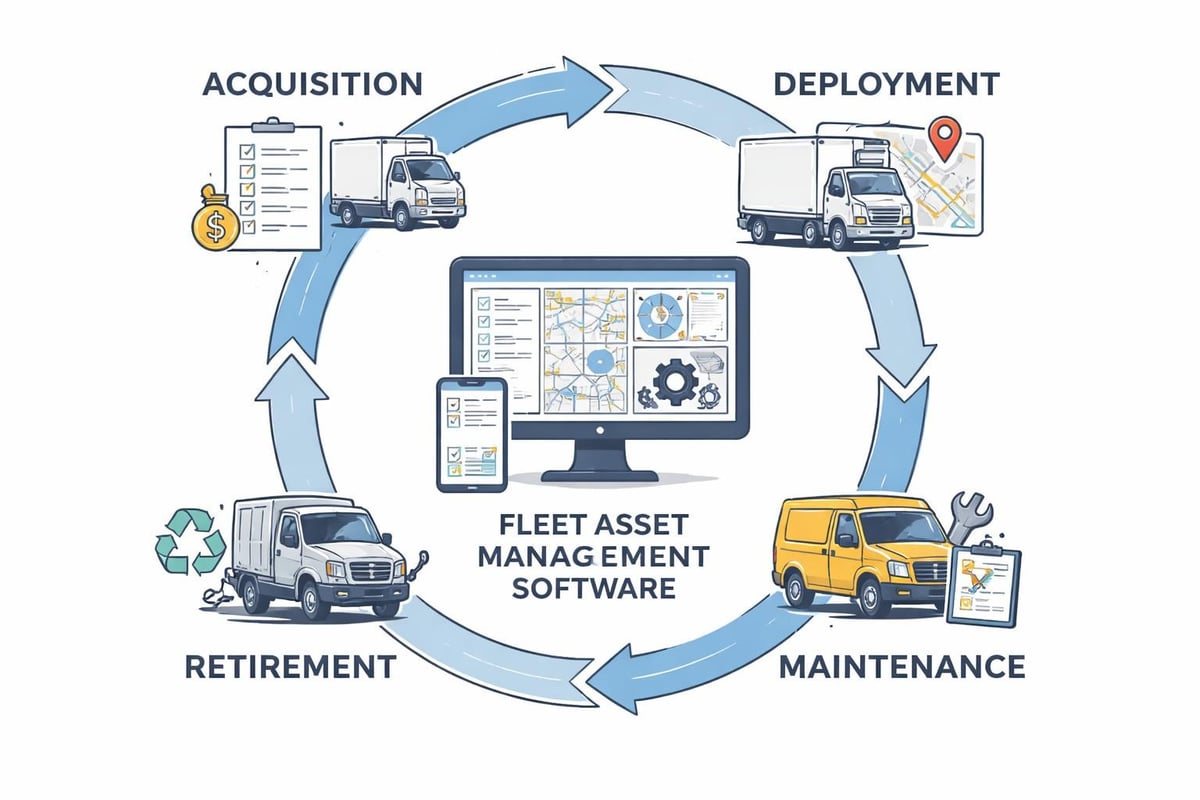
When dispatch management practices incorporate real-time data, businesses report significant improvements in first-time fix rates, customer satisfaction scores, and operational cost per job. The shift from periodic updates to continuous visibility fundamentally changes how operations respond to the constant variability of real-world execution.

Critical Features for Multi-Workflow Businesses

Not all dispatch systems handle complexity equally. Businesses operating across multiple service lines-combining transport, field service, equipment rental, or property maintenance-need capabilities beyond basic route optimization.

Unified resource pools allow the same assets, vehicles, or personnel to serve different workflows without manual coordination. A truck might deliver rental equipment in the morning and pick up returned goods in the afternoon, with the system automatically balancing both workloads.

Constraint-aware scheduling validates assignments against real-world limitations before committing to customers. The system checks whether vehicles have required certifications, assets need maintenance windows, or technicians possess necessary skills before creating jobs.

Cross-module automation connects dispatch decisions to other operational systems. Completing a delivery automatically triggers invoicing, updates inventory levels, schedules return logistics, and notifies customer service-all without manual handoffs between departments.

Integration Architecture Matters

Dispatch rarely operates in isolation. The system must exchange data with:

Businesses replacing disconnected systems often underestimate integration complexity. Choosing platforms with built-in connections or flexible APIs prevents the data silos that undermine dispatch efficiency. The Neovara modular approach illustrates how operational modules share one data layer, eliminating integration headaches common with best-of-breed tool stacks.

Measuring Dispatch Performance

What gets measured gets managed. Effective dispatch operations track specific metrics that reveal efficiency, quality, and cost performance.

Key performance indicators worth monitoring include:

Beyond Averages to Actionable Insights

Raw averages mask important patterns. Breaking metrics by team, geography, service type, or time period reveals where systems excel and where improvement opportunities hide. A 90% on-time rate sounds strong until analysis shows commercial customers receive 95% on-time service while residential jobs only hit 82%.

Modern dispatch management benefits extend to sustainability metrics as well. Optimized routing directly reduces fuel consumption, vehicle emissions, and environmental impact-factors increasingly important to customers and regulators in 2026.

Dispatch performance dashboard metrics

Implementation Strategies for Operational Success

Technology alone does not guarantee dispatch improvements. Successful implementation requires careful planning, change management, and continuous refinement.

Start with process documentation. Before selecting software, map current workflows end-to-end. Identify handoff points, exception handling, data sources, and decision criteria. This clarity prevents automating broken processes and ensures new systems address actual bottlenecks.

Prioritize data quality from day one. Dispatch algorithms depend on accurate information about customer locations, asset capabilities, service durations, and resource availability. Invest time cleaning master data before go-live rather than fighting garbage-in-garbage-out problems later.

Phase rollout by workflow or geography. Rather than switching everything simultaneously, prove the system works in controlled scope first. Start with one service line or regional team, learn from real usage, refine configurations, then expand. This approach reduces risk and builds internal champions.

Train both office and field teams thoroughly. Dispatchers need to understand system logic to make smart overrides. Field workers need confidence using mobile tools under time pressure. Best practices for dispatching emphasize clear communication and role-specific training as critical success factors.

The Transport Command Center demonstrates how unified dispatch platforms handle complex multi-workflow operations. By combining orders, assets, routes, and field resources in one control hub with automation, teams can plan, dispatch, monitor, and adapt rapidly across transport, delivery, and service execution scenarios.

Transport Command Center - Neovara Operations Center

Overcoming Common Dispatch Challenges

Even with strong systems, dispatch operations face recurring challenges that require both technology and process solutions.

Managing Last-Minute Changes

Real-world operations rarely follow perfect plans. Customers reschedule, traffic causes delays, equipment breaks down, and rush orders arrive. A robust dispatch management system accommodates variability without chaos by:

Balancing Efficiency and Service Quality

The cheapest dispatch plan is not always the best. Optimizing purely for cost might create technician schedules that bounce across town inefficiently or deliver packages outside customer-preferred windows. Effective systems let businesses weight multiple objectives-cost, speed, customer preference, environmental impact-and find balanced solutions aligned with strategic priorities.

Preventing Resource Conflicts

Double-booking assets or personnel creates expensive failures. Key features of dispatch management tools include real-time availability validation that checks constraints before confirming assignments. When multiple workflows compete for limited resources, the system applies business rules to prioritize automatically or flag conflicts for dispatcher resolution.

Technology Trends Shaping Dispatch in 2026

The dispatch management system landscape continues evolving rapidly as new technologies mature and customer expectations rise.

Artificial intelligence and machine learning now power predictive analytics that forecast demand patterns, optimize routing with historical learning, and suggest assignment decisions faster than human dispatchers. These capabilities reduce the expertise required for routine decisions while freeing skilled dispatchers to handle complex exceptions.

Internet of Things integration provides unprecedented asset visibility. Connected vehicles, equipment, and tools report location, condition, usage, and maintenance needs automatically. This sensor data feeds dispatch systems with real-time status that improves planning accuracy and prevents breakdowns.

Mobile-first field tools have become standard. Modern platforms assume field workers operate primarily from smartphones or tablets, with interfaces designed for quick task completion, photo capture, signature collection, and exception reporting without extensive training. The experience gap between consumer apps and business tools has narrowed dramatically.

API-first architecture enables businesses to compose best-of-breed solutions without the integration pain of previous generations. Rather than monolithic systems trying to do everything, modular platforms share data seamlessly while specializing in specific operational domains. Understanding how operational technology works helps businesses evaluate whether vendors offer genuine integration or just marketing promises.

Cost Considerations and ROI Calculation

Investing in dispatch technology requires analyzing both direct costs and expected returns across multiple dimensions.

Direct costs include:

Measurable returns typically show up as:

Beyond hard savings, businesses report softer benefits like improved customer satisfaction, reduced dispatcher stress, better compliance documentation, and competitive advantages from faster response times. While these benefits resist precise quantification, they often drive more business value than cost savings alone.

Selecting the Right Dispatch Platform

With dozens of vendors claiming dispatch expertise, choosing the right fit requires careful evaluation beyond feature checklists.

Evaluation Criteria Why It Matters Questions to Ask
Industry fit Generic tools miss workflow nuances Does the vendor understand our specific operations?
Scalability Systems must grow with business Can it handle 2x volume without replacement?
Integration depth Silos undermine efficiency What pre-built connections exist? How flexible is the API?
Mobile capabilities Field adoption determines success How does the field app work offline? How intuitive is it?
Support model Problems need fast resolution What response times are guaranteed? Is training included?
Pricing transparency Hidden costs create budget surprises What drives costs as we scale? What's included in base price?

Request demonstrations using your actual data and workflows rather than vendor-prepared scenarios. Watch how the system handles exceptions, changes, and edge cases-not just happy-path examples. Check references from businesses with similar complexity and scale to validate vendor claims.

Dispatch system selection framework

Building a Dispatch-Centric Operations Culture

Technology enables change, but culture determines whether teams embrace new methods or resist them. Shifting from legacy dispatch approaches to system-driven coordination requires deliberate culture work.

Make data visible and actionable. When teams see real performance metrics daily rather than monthly, they develop data-driven habits. Dashboards showing current on-time rates, utilization, and customer feedback create healthy competition and accountability.

Celebrate system-driven wins. Highlight examples where following system recommendations produced better outcomes than manual intuition. Share stories of perfect routes, avoided conflicts, or proactive problem detection to reinforce trust in the platform.

Create feedback loops. Field teams know when dispatch decisions miss reality. Build formal mechanisms for workers to report system problems, suggest improvements, and contribute to configuration refinements. This participation increases buy-in and surfaces valuable operational knowledge.

Maintain human oversight for exceptions. Automation handles routine decisions, but complex situations still benefit from experienced judgment. Design clear escalation paths where systems flag unusual scenarios for dispatcher review rather than forcing automated choices in ambiguous situations.

Understanding what dispatch management truly involves reveals it is as much about organizational change as technology deployment. Successful businesses invest in both simultaneously.

Future-Proofing Your Dispatch Operations

The pace of operational technology change shows no signs of slowing. Businesses investing in dispatch systems today need platforms that evolve rather than ossify.

Look for vendors with clear product roadmaps showing planned enhancements. Ask about their development cycle, how customer feedback influences priorities, and their track record of delivering updates. Platforms that released significant improvements in the past year will likely continue innovating.

Evaluate the underlying technology stack. Cloud-native platforms built on modern architectures typically add capabilities faster than legacy systems requiring extensive customization for each deployment. The ability to configure without code reduces dependency on vendor services for routine adjustments.

Consider the vendor's financial stability and market position. Dispatch systems become mission-critical infrastructure. Choosing vendors with solid backing and growing customer bases reduces the risk of sunset products or forced migrations due to acquisition or failure.

Plan for operational expansion from day one. Even if starting with single-site transport dispatch, choose platforms that can add field service, asset management, order processing, or CRM modules later without replacing the core system. The modular approach to operations platforms allows businesses to start focused and expand capabilities as value becomes clear.

Data Security and Compliance

Dispatch systems contain sensitive operational and customer information requiring robust protection. As regulations tighten around data privacy, location tracking, and digital records, compliance becomes both a necessity and competitive advantage.

Essential security capabilities include:

For businesses operating across jurisdictions, verify that dispatch platforms support required data residency, allow customer data deletion, and provide compliant consent management. The consequences of security breaches or compliance failures-regulatory fines, customer trust loss, operational disruption-far exceed prevention costs.


Modern operations demand coordination tools that match today's complexity and speed. A dispatch management system transforms fragmented, reactive processes into orchestrated, proactive operations that scale across workflows, geographies, and teams while maintaining visibility and control. For businesses juggling transport, field service, assets, and customer commitments, the right platform eliminates the chaos of spreadsheets and siloed apps that plague multi-workflow coordination. Neovara Operations Center replaces disconnected tools with a unified command layer where dispatch, planning, orders, assets, and field execution share real-time operational data. Start with the modules you need today and expand when it adds value, gaining cleaner data, faster coordination, and better customer communication across your entire operation.

2026-02-20T15:00:52.956Z
MercuryGate TMS: Features, Benefits, and Alternatives

Transportation management systems have become essential infrastructure for businesses shipping physical goods. MercuryGate TMS has established itself as a prominent solution in this space, offering comprehensive logistics capabilities for shippers, carriers, and third-party logistics providers. Understanding what the platform delivers, where it excels, and how it compares to integrated operational alternatives helps businesses make informed decisions about their transportation technology stack in 2026.

What MercuryGate TMS Delivers

MercuryGate TMS is a cloud-based transportation management platform designed to streamline logistics operations from planning through execution and settlement. The system serves multiple stakeholder types within the supply chain, providing tools for shippers to optimize freight spend, carriers to manage capacity, and 3PLs to coordinate complex multi-client operations.

The platform architecture supports end-to-end transportation workflows across multiple modes. Users can plan shipments, select carriers, optimize routes, tender loads, track in-transit freight, manage appointments, audit freight bills, and analyze transportation performance. This breadth of functionality positions mercurygate tms as a comprehensive logistics solution rather than a point tool.

MercuryGate TMS workflow

Core Capabilities and Modules

The system delivers several distinct functional areas that address different stages of the transportation lifecycle:

Planning and Optimization

Execution and Visibility

Settlement and Analytics

According to reviews from industry analysts, the platform's strength lies in its configurability and ability to support complex, multi-entity logistics networks. Large enterprises with sophisticated transportation requirements often find value in the system's depth of functionality.

MercuryGate TMS in Practice

Real-world implementations demonstrate both the potential and the practical considerations of deploying mercurygate tms. A major food manufacturer achieved significant operational benefits after implementing the platform, including improved carrier selection, reduced freight costs, and enhanced visibility across their distribution network.

The system's performance in third-party evaluations reinforces its position in the market. MercuryGate ranked in the top three in the 2018 Gartner Critical Capabilities Report, demonstrating strong capabilities across various transportation management use cases.

Integration and Ecosystem

Modern logistics technology rarely operates in isolation. MercuryGate has developed partnerships to extend platform functionality beyond core TMS capabilities. The integration with DAT load boards and services enables users to access spot market capacity directly within the TMS interface, streamlining carrier procurement during capacity constraints.

Infrastructure considerations also matter for enterprise deployments. When MercuryGate migrated to AWS and implemented FlashGrid Cluster, they prioritized database high availability to support mission-critical logistics operations. This infrastructure investment reflects the operational importance transportation systems hold for users who depend on continuous availability.

Implementation Factor Consideration Impact
Deployment Model Cloud-native SaaS Reduces IT overhead, enables rapid updates
Configuration Complexity Highly configurable Flexibility for complex workflows, longer setup
Integration Requirements API-based connections Requires technical resources or partners
User Training Needs Comprehensive platform Investment in change management required

The Transportation Technology Landscape

Understanding mercurygate tms requires context about where dedicated transportation management fits within broader operational systems. Logistics software has traditionally existed as a specialized category, separate from order management, warehouse systems, customer relationship tools, and asset tracking platforms.

This separation made sense when businesses operated distinct functional silos. Transportation teams focused solely on moving goods from point A to point B, often receiving static shipment instructions from order processing systems and passing tracking updates downstream without deep integration.

Modern multi-workflow operations challenge this model. When transportation connects directly to customer orders, field service appointments, rental asset movements, and return logistics, the handoffs between specialized systems create friction. Data gets manually re-keyed, status updates lag, exceptions require coordination across multiple platforms, and the operational picture fragments across tools.

When Specialized TMS Makes Sense

Certain business profiles align well with dedicated transportation management systems:

  1. High-volume shipping operations where transportation is the primary business process
  2. Complex multi-modal networks requiring sophisticated optimization algorithms
  3. Businesses with established ERP/WMS infrastructure seeking to add transportation capabilities
  4. Organizations with dedicated logistics teams who work exclusively in transportation workflows

For these scenarios, the depth of transportation-specific functionality in mercurygate tms and similar platforms delivers value that justifies the specialization and integration overhead.

System integration challenges

The Unified Operations Alternative

Businesses running multiple interconnected workflows face different architecture decisions. When transportation supports broader operational processes rather than existing as the primary function, unified platforms offer structural advantages over specialized point solutions.

Consider companies in equipment rental, property services, last-mile delivery, or field operations. These businesses coordinate orders, assets, service appointments, transport movements, and customer updates as integrated workflows. A rental company doesn't just move equipment; they manage customer orders, track asset availability, schedule deliveries and pickups, coordinate service tasks, and maintain customer relationships as one continuous process.

The Modular Integration Approach

Neovara Operations Center addresses this multi-workflow reality by unifying transport, orders, assets, CRM, field service, and planning in one command layer. Rather than implementing separate systems that require constant integration maintenance, teams work within modules that share real-time operational data by design.

The Transport Command Center exemplifies this approach. It delivers transportation management capabilities-route planning, dispatch automation, live tracking, and resource coordination-while maintaining native connections to order status, asset locations, and field execution data. When a delivery runs late, the system updates customer ETAs, adjusts downstream appointments, and notifies relevant teams without manual intervention across platforms.

Transport Command Center - Neovara Operations Center

This architecture eliminates the traditional pain points of TMS integration: no duplicate data entry between order systems and transportation tools, no lag between asset status changes and transport planning, no manual coordination when field conditions change routes or schedules.

Key Operational Differences:

Approach Specialized TMS Unified Operations Platform
Primary Use Case High-volume freight optimization Multi-workflow coordination (orders, assets, service, transport)
Data Architecture Integrations with separate systems Shared operational data layer
Setup Complexity Transportation-specific configuration Modular activation across workflows
User Experience Transportation team tool Cross-functional operational dashboard
Change Management Transportation processes focus End-to-end workflow automation

Automation Across the Operational Flow

Transportation automation reduces manual steps in freight management, but truly efficient operations automate the handoffs between processes, not just within them. When quote systems check real-time transport capacity, orders automatically trigger optimized routes, and field teams update delivery status that flows back to customer communications, the entire operational cycle accelerates.

This end-to-end automation requires more than transportation features. It demands unified data about what's been promised (orders), what's available (assets and capacity), what's planned (schedules and routes), what's happening (execution status), and who needs to know (customer updates).

Practical Automation Examples

These scenarios exceed what standalone transportation management delivers because they require operational context beyond freight movement.

Choosing the Right Architecture

The decision between specialized transportation management systems like mercurygate tms and unified operational platforms depends on business structure and workflow patterns. Several factors guide this architectural choice:

Evaluate these business characteristics:

  1. Is transportation your primary business process or a supporting function for broader operations?
  2. Do transport decisions depend on real-time data from orders, assets, or service schedules?
  3. How many systems do your teams currently use to manage end-to-end customer fulfillment?
  4. What percentage of your operational challenges stem from system integration gaps versus transportation optimization?
  5. Do you have dedicated transportation specialists or cross-functional operational teams?

Businesses answering yes to questions about multi-workflow coordination, integration challenges, and cross-functional teams often find unified platforms reduce total complexity while improving operational responsiveness.

Implementation and Scaling Considerations

Traditional TMS implementations follow a familiar pattern: requirements gathering, system configuration, integration development, user training, and go-live. The process typically spans months and requires coordination between IT, logistics teams, and integration partners.

Modular operational platforms take a different approach. Organizations at Neovara Operations Center can start with the modules addressing immediate pain points-perhaps transport and orders-then activate additional capabilities as operational needs evolve. This reduces initial scope complexity and allows teams to expand functionality based on demonstrated value rather than upfront requirements forecasting.

The financial model differs as well. Enterprise TMS platforms typically involve significant license fees scaled to shipment volumes or users, plus implementation services and ongoing maintenance costs. Modern operational platforms increasingly offer transparent pricing models that scale with business growth rather than penalizing operational expansion.

Technical Infrastructure and Data Strategy

Behind the user interface, the underlying technical architecture shapes long-term operational capability. Mercurygate tms runs on cloud infrastructure, providing scalability and reducing on-premise IT requirements. The platform's API framework enables integration with ERP systems, warehouse management solutions, and other enterprise applications.

For businesses evaluating transportation technology, technical considerations extend beyond the TMS itself:

Unified platforms address these concerns through shared data architecture rather than integration layers. When transportation, orders, assets, and field execution modules access the same operational database, data consistency happens by design rather than through synchronization effort.

Modern operational platform architecture showing how transport, orders, assets, field service, and customer engagement modules share real-time data through unified command layer versus traditional integration approach

Mobile Execution and Field Coordination

Transportation management extends beyond the back office to the field where drivers and service teams execute planned work. The quality of mobile tools directly impacts operational performance, customer experience, and data accuracy.

Enterprise TMS platforms typically include or integrate with driver mobile applications for proof of delivery, exception reporting, and status updates. The challenge lies in coordinating these transportation-specific tools with broader field execution requirements when the same resources handle deliveries, installations, service calls, and pickups as part of integrated workflows.

Modern field execution requires mobile tools that guide workers through complete task sequences, not just transportation steps. When a driver delivers equipment, installs it, collects payment, and schedules the pickup appointment, they need a unified mobile experience that connects all these actions without switching between apps or manual documentation.

Performance Metrics and Operational Visibility

Transportation management systems generate substantial data about logistics performance: on-time delivery rates, freight costs per mile, carrier performance scores, route efficiency metrics, and exception frequencies. This transportation-centric reporting provides valuable insights for logistics optimization.

Comprehensive operational visibility requires broader context. Businesses need to understand how transportation performance impacts customer satisfaction, asset utilization, revenue recognition, and operational profitability across the full service lifecycle.

Critical visibility requirements beyond TMS metrics:

This expanded visibility emerges naturally from unified operational platforms where transportation data shares context with orders, assets, and execution records. Achieving similar insights from specialized systems requires custom integration and reporting development.

Market Position and Competitive Landscape

MercuryGate competes in a mature transportation management market alongside established providers and emerging cloud-native alternatives. The competitive landscape includes enterprise-focused platforms with deep functionality, vertical-specific solutions targeting particular industries, and newer entrants emphasizing user experience and rapid deployment.

Understanding competitive positioning helps frame architectural decisions. MercuryGate positions itself for complex, multi-stakeholder logistics networks where configurability and comprehensive functionality justify implementation investment. This positioning serves large shippers, established 3PLs, and enterprises with sophisticated transportation requirements.

Businesses with different profiles may find better alignment elsewhere. Companies prioritizing operational simplicity, rapid deployment, cross-functional workflows, or unified data architecture often explore alternatives that trade transportation-specific depth for broader operational integration and reduced complexity.

The modular platform approach represents a fundamentally different competitive strategy: rather than optimizing a single business process across all edge cases, unified platforms deliver good-enough capability across multiple connected processes with seamless data flow and minimal integration overhead.

Strategic Technology Decisions

Selecting operational technology involves more than feature comparison. Strategic technology decisions shape organizational capability, determine change management requirements, influence talent needs, and create long-term commitments that affect business agility.

When evaluating mercurygate tms or any specialized system, consider these strategic factors:

Organizational alignment: Does the technology reinforce how your business operates or require process changes to fit the tool's structure?

Total cost of ownership: Beyond license fees, account for implementation services, integration development, training, ongoing maintenance, and the cost of workarounds for gaps between systems.

Operational agility: How easily can you adapt processes when market conditions change, new services launch, or business models evolve?

Talent requirements: What skills do teams need to configure, maintain, and optimize the platform? Are those skills available internally or through partners?

Data ownership and portability: How does your operational data get structured, accessed, and potentially migrated if business needs change?

These considerations often reveal that the "best" transportation system isn't the one with the most logistics features, but rather the one that best supports your complete operational reality.


MercuryGate TMS delivers comprehensive transportation management for businesses where logistics optimization drives competitive advantage, but many multi-workflow operations need broader integration than specialized systems provide. When your business coordinates transport with orders, assets, field service, and customer engagement as one operational flow, fragmented tools create more problems than they solve. Neovara Operations Center replaces disconnected systems with a unified command layer where teams share real-time visibility and automate end-to-end workflows from quote through execution, eliminating the integration overhead and data gaps that limit operational responsiveness.

2026-02-19T13:01:04.948Z
Dispatch Software for Service Companies in 2026

Service companies face relentless operational complexity: technicians scattered across territories, jobs arriving unpredictably, customers demanding accurate ETAs, and back-office teams struggling to maintain visibility into field progress. The traditional approach-phone calls, spreadsheets, clipboards, and disconnected systems-creates bottlenecks that slow response times, inflate costs, and frustrate customers. Modern dispatch software for service companies eliminates these friction points by unifying scheduling, routing, tracking, and communication into a single operational platform that keeps field teams and office staff aligned in real time.

Why Service Companies Need Dedicated Dispatch Software

Service operations are fundamentally different from other business models because value is delivered at customer locations, not in controlled environments. Technicians need the right skills, tools, parts, and availability to complete jobs successfully, while dispatchers must balance customer expectations, travel time, and resource constraints across dynamic schedules.

Manual dispatch processes create predictable problems:

Dispatch software replaces this chaos with automated workflows that assign jobs based on skill, location, and schedule, optimize routes to reduce drive time, and provide real-time updates that flow automatically between field and office.
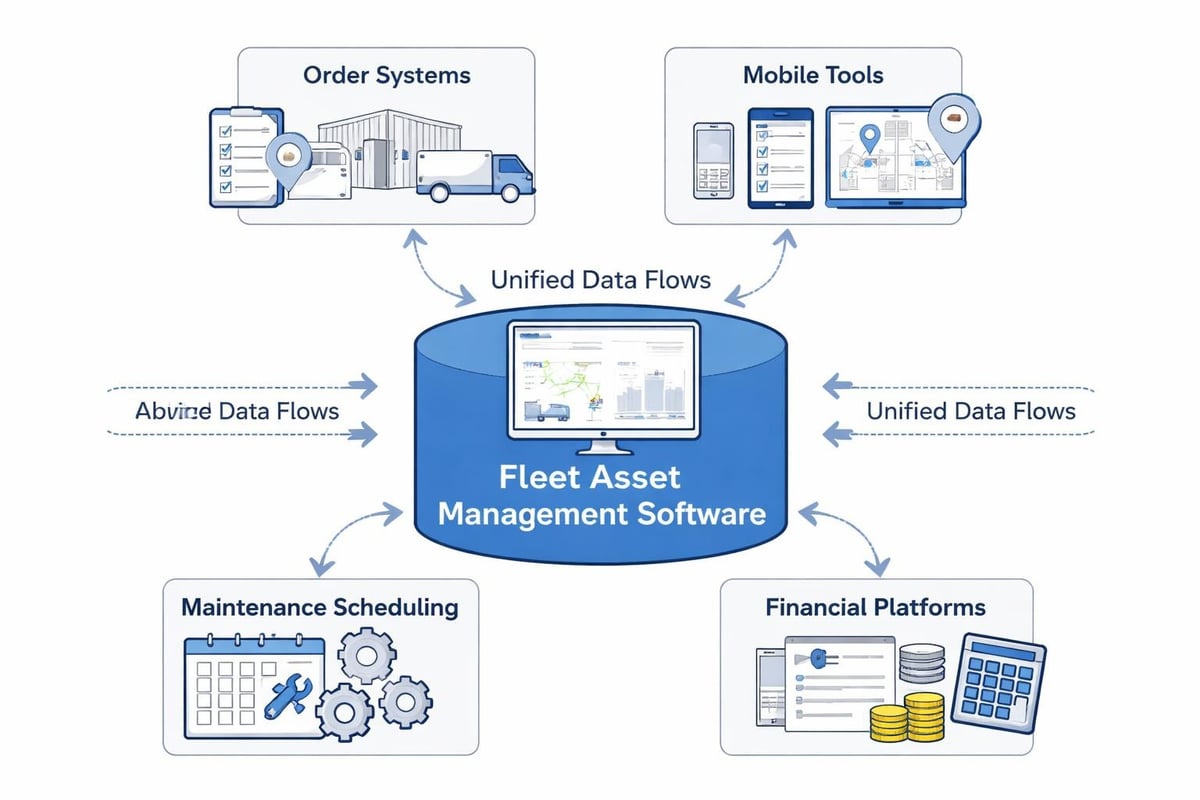
Dispatch workflow automation

The Cost of Fragmented Dispatch Systems

Many service companies cobble together solutions from calendar apps, GPS tracking tools, messaging platforms, and spreadsheets. Each tool handles one piece of the puzzle, but the handoffs between systems create delays and errors.

When a customer calls to schedule service, the representative checks availability in one system, creates the appointment in another, emails job details to the dispatcher, who then texts the technician. If the job requires specific parts or certifications, that involves checking yet another database. By the time everyone has the information they need, hours have passed and details have been lost in translation.
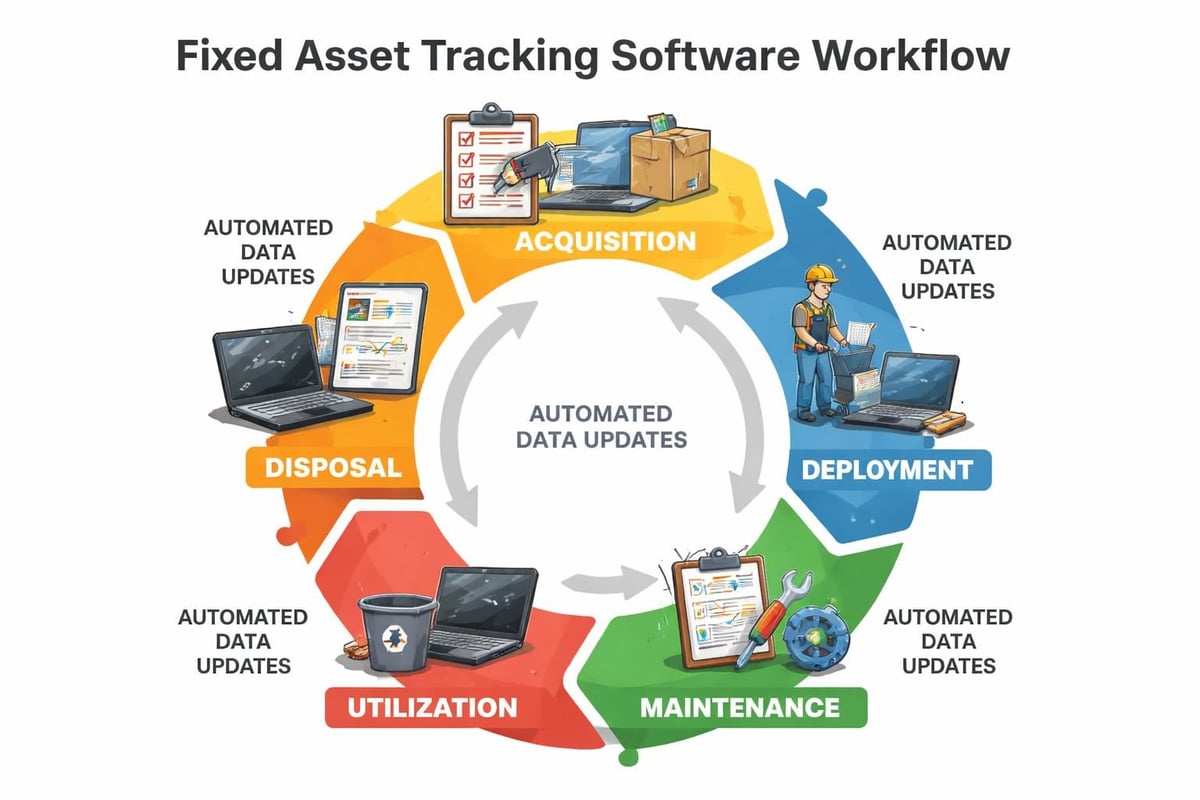
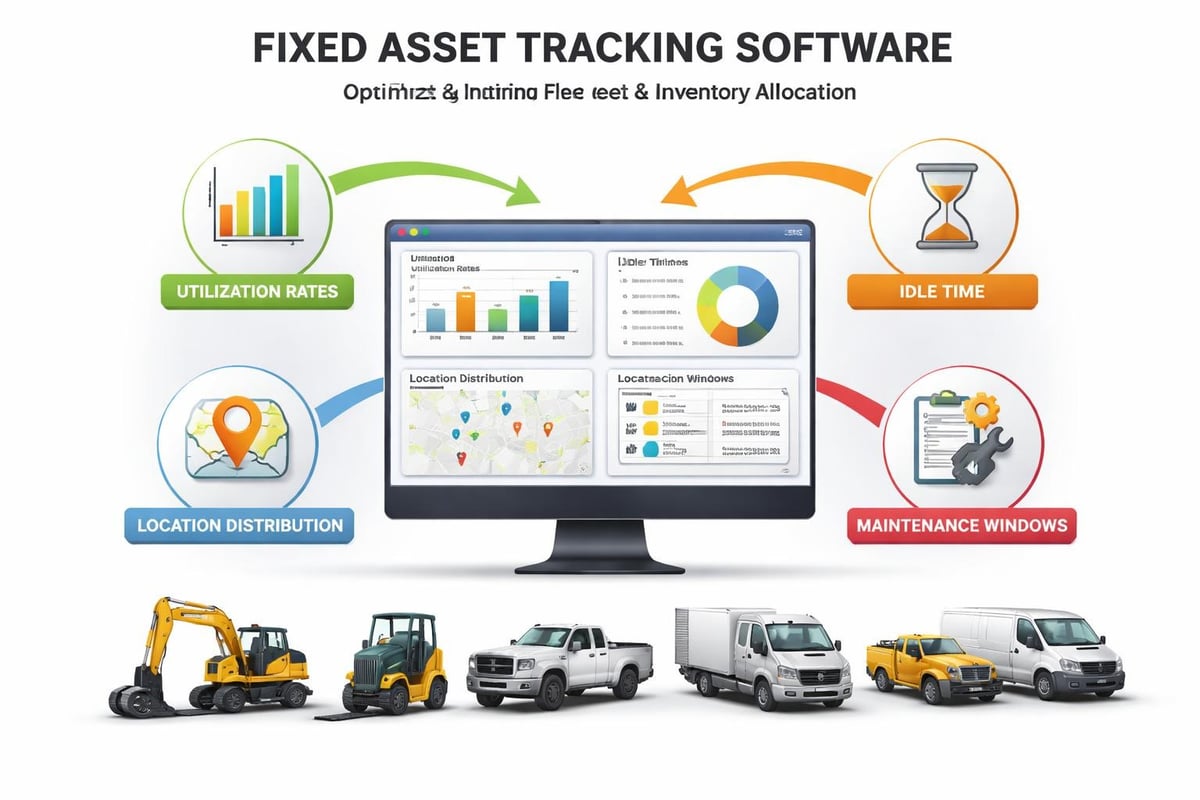
This fragmentation becomes exponentially worse as service companies scale. What worked with five technicians becomes unmanageable with fifty. Dispatch software for service companies eliminates fragmentation by becoming the single source of truth for scheduling, dispatch, execution, and reporting.

Essential Features That Drive Operational Performance

Not all dispatch platforms deliver the same capabilities. Service companies evaluating solutions should prioritize features that address their specific operational bottlenecks and growth trajectory.

Intelligent Job Assignment and Scheduling

Advanced dispatch systems assign work based on configurable business rules that consider technician skills, certifications, current location, scheduled availability, and travel time. The best platforms check these constraints in real time during order entry, preventing over-commitment before it happens.

Key scheduling capabilities include:

Systems that integrate scheduling with asset and inventory management provide even greater value. Before dispatching a technician, the platform confirms that required parts are available and allocated, reducing trips where technicians arrive unprepared.

Route Optimization and Travel Time Management

Drive time represents pure cost in service operations. Every unnecessary mile burns fuel, increases vehicle wear, and reduces billable capacity. Route optimization algorithms calculate the most efficient sequence for multi-stop days, accounting for appointment windows, traffic patterns, and service duration estimates.

Modern dispatch software for service companies continuously recalculates routes as conditions change. When a job runs long or an emergency call arrives, the system automatically resequences remaining stops to minimize delay impact. This dynamic optimization keeps schedules realistic even when reality doesn't cooperate with the plan.

Route Planning Approach Average Daily Stops Drive Time Efficiency Schedule Adherence
Manual/Spreadsheet 4-6 stops 65-70% 60-65%
Static Route Planning 6-8 stops 75-80% 70-75%
Dynamic Optimization 8-10 stops 85-92% 85-90%

Real-Time Tracking and Status Updates

Visibility transforms operations. When dispatchers can see technician locations, job progress, and completion status in real time, they make better decisions about reassignments, customer communication, and resource allocation.

GPS tracking shows where technicians are throughout the day, but the real value comes from status integration. As technicians start jobs, encounter issues, or complete work through mobile apps, those updates flow instantly to dispatch boards and customer portals. This eliminates the constant "where are you?" phone calls that interrupt field work and creates transparency that improves customer satisfaction.

The most effective platforms provide mobile apps designed specifically for field execution rather than forcing technicians to navigate complex back-office interfaces. Simple check-ins, photo capture, digital signatures, and exception reporting keep data flowing without slowing down service delivery.

Real-time field visibility

Integration Requirements for End-to-End Operations

Dispatch software doesn't operate in isolation. Service companies need platforms that connect scheduling and field execution with customer relationship management, inventory control, asset maintenance, and financial systems.

CRM and Customer Communication Integration

Every service interaction represents an opportunity to build customer relationships or damage them. When dispatch platforms integrate with CRM systems, technicians see customer history, preferences, and prior issues before arrival. Post-service, completion data flows back to customer records, creating continuity across interactions.

Automated customer communication reduces support burden while improving satisfaction. Dispatch confirmations, technician-on-the-way alerts, and completion summaries sent automatically keep customers informed without requiring dispatcher involvement. These updates become particularly valuable when schedules shift-proactive delay notifications preserve trust even when timing doesn't go as planned.

Asset and Inventory Connectivity

Field service companies managing equipment installation, maintenance, or repair need dispatch systems that understand asset relationships. The platform should track which assets are assigned to which customers, what maintenance schedules apply, and what parts are typically required for common service scenarios.

When a customer reports an issue with a specific asset, integrated dispatch platforms automatically pull service history, warranty status, and recommended parts, then dispatch a technician with appropriate expertise and inventory. This reduces diagnostic time and increases first-time fix rates.

Real-time inventory visibility prevents the frustration of dispatching technicians who arrive to discover required parts are out of stock. Advanced systems reserve parts when jobs are scheduled and update inventory as technicians consume materials in the field.

Financial System Connection

Service operations generate complex billing scenarios: hourly rates, trip charges, parts markup, warranty coverage, contracted rates, and emergency premiums all factor into final invoicing. Dispatch platforms that integrate with ERP or accounting systems eliminate double entry by flowing completed job data, labor hours, materials used, and customer approvals directly into billing workflows.

This integration reduces billing cycle time, improves accuracy, and provides field teams with clear visibility into what activities and materials require customer authorization before proceeding.

Mobile Capabilities That Empower Field Teams

Office dispatch efficiency means nothing if field teams can't execute effectively. The mobile experience determines whether technicians embrace the platform or work around it.

Essential mobile functionality includes:

  1. Offline capability that lets technicians access job details and record completion even without cellular coverage
  2. Guided workflows that walk technicians through required steps, reducing missed tasks
  3. Digital forms and checklists that replace paper clipboards and ensure consistent data capture
  4. Photo and signature capture that documents conditions and customer acceptance
  5. Two-way messaging that enables quick questions without phone calls
  6. Parts lookup and usage tracking that maintains inventory accuracy

The best mobile tools provide just enough information to complete the work without overwhelming technicians with data they don't need. Field execution apps designed for specific roles-driver, installer, repair technician, inspector-present relevant tasks and hide unnecessary complexity.

AI and Automation Enhancements for 2026

Artificial intelligence is transforming dispatch software for service companies from reactive coordination tools into proactive operational assistants that predict problems and recommend solutions.

Predictive ETA Calculation

Traditional ETA estimates rely on distance and average speed. AI-enhanced systems analyze historical completion times for similar jobs, current traffic conditions, technician work patterns, and time-of-day factors to generate predictions that customers can actually trust. These systems learn continuously, becoming more accurate as they accumulate operational data.

Pattern recognition algorithms identify which variables most impact service duration-customer type, asset age, time since last service-and factor those into both scheduling and customer communication.

Smart Exception Management

AI monitors operational execution and flags anomalies that require human attention. When a technician has been on-site unusually long, when scheduled jobs haven't started within expected windows, or when completion rates drop below normal patterns, the system alerts dispatchers with context and recommended actions.

This proactive monitoring prevents small issues from becoming major disruptions. Instead of discovering at day's end that three jobs weren't completed, dispatchers receive real-time notifications that enable same-day recovery.

Demand Forecasting and Capacity Planning

Advanced platforms analyze historical patterns to predict service demand by day, week, and season. This forecasting helps operations managers make better decisions about staffing levels, territory assignments, and capacity investments.

For service companies with preventive maintenance contracts, AI can optimize PM scheduling to balance workload across slow and busy periods, ensuring contractual obligations are met without creating capacity crunches.

Choosing Dispatch Software That Scales With Your Business

Service companies at different growth stages need different dispatch capabilities. A startup with three technicians has fundamentally different requirements than an established operation managing fifty field resources across multiple territories.

Modular Platforms vs. Monolithic Solutions

Traditional dispatch systems force companies to buy complete suites whether they need every feature or not. Modular platforms allow businesses to start with core dispatch functionality and add capabilities-advanced routing, customer portals, inventory integration, reporting analytics-as operational complexity increases and ROI justifies expansion.

This approach reduces initial investment, accelerates implementation, and prevents over-complicating operations with features teams aren't ready to use. The modular architecture also supports easier customization since modules can be configured independently without affecting core dispatch workflows.

Deployment Approach Initial Cost Implementation Time Feature Utilization Scaling Complexity
All-in-one Suite High 3-6 months 30-50% Low
Modular Platform Low-Medium 2-6 weeks 70-90% Very Low
Custom Build Very High 6-18 months Variable High

Configuration Flexibility vs. Out-of-Box Simplicity

Service companies operate diverse business models: some focus on emergency repair, others on scheduled maintenance, many do both. Dispatch software needs to accommodate different pricing models, service types, and workflow requirements without requiring custom development.

Configurable platforms allow operations managers to define job types, required fields, approval workflows, and automation rules that match their specific processes. This flexibility ensures the software adapts to the business rather than forcing the business to change how it operates.

However, configurability can create complexity. The best platforms provide sensible defaults that work for common scenarios while allowing deeper customization when needed.

Data Migration and System Integration

Most service companies replacing existing dispatch approaches need to migrate customer records, asset histories, and scheduling data into new platforms. The complexity and risk of this migration often determines implementation success.

Look for platforms that provide structured migration tools, clear data mapping templates, and phased rollout support that allows parallel operation during transition periods. Integration capabilities matter just as much-pre-built connectors to common CRM, accounting, and inventory systems reduce custom development costs and ongoing maintenance burden.

Measuring Dispatch Software ROI

Service company executives need clear performance metrics to justify dispatch software investments and monitor ongoing value delivery.

Operational Efficiency Metrics

Efficiency improvements typically appear first and drive immediate cost reduction:

Companies implementing dispatch software for service companies typically see 15-30% improvements in jobs-per-technician and 20-40% reductions in administrative overhead within the first six months.

Customer Experience Indicators

Customer satisfaction drives retention and referrals but can be harder to attribute directly to dispatch improvements:

Financial Performance Outcomes

Ultimate ROI appears in revenue growth and margin expansion:

Leading service companies use dispatch platforms not just to manage existing operations more efficiently, but to support business model evolution-adding premium same-day service tiers, expanding into new territories, or launching preventive maintenance programs that require sophisticated scheduling capabilities.

Dispatch software performance metrics

Building the Operational Foundation for Growth

Service companies that treat dispatch software as merely a scheduling tool miss the larger opportunity. The best platforms become operational control centers that unify not just dispatch and tracking, but the entire service delivery lifecycle from customer inquiry through job completion and billing.

When unified operations platforms connect quotes, orders, asset management, field execution, and reporting in a single system, service companies eliminate the data fragmentation that creates errors, delays, and customer frustration. Real-time visibility extends beyond knowing where technicians are to understanding capacity availability, asset readiness, inventory levels, and scheduling constraints across the entire operation.

For multi-service businesses handling transport, installation, repair, and maintenance, this unified approach becomes essential. Teams no longer waste time translating information between siloed systems or reconciling conflicting data. Everyone works from the same real-time operational view, and automated workflows keep work flowing smoothly from planning through execution even as conditions change.

The Transport Command Center exemplifies this integrated approach by combining order management, asset allocation, route optimization, and field execution in a single control hub. Dispatchers see real-time status across all active jobs, drivers receive assignments and task guidance through mobile apps, and automated workflows handle routine coordination tasks that would otherwise require constant manual intervention.

Transport Command Center - Neovara Operations Center

Industry-Specific Dispatch Considerations

While core dispatch capabilities apply across service sectors, different industries face unique challenges that specialized features address.

Property and Facility Services

Companies managing building maintenance, HVAC service, or property repairs often serve multiple locations for single customers and need platforms that understand site hierarchies, asset relationships, and contracted service levels. Preventive maintenance scheduling becomes critical since missed PM visits can trigger contract penalties.

Emergency response capabilities matter significantly-when a facility system fails, property managers need immediate dispatch confirmation and accurate ETAs. Integration with building management systems or IoT sensors enables proactive service dispatch based on equipment condition rather than waiting for failure.

Utilities and Critical Infrastructure

Utility service providers face unique dispatch challenges including regulatory response time requirements, crew assembly for major outages, and coordination across internal teams and contractor resources. Safety protocols, qualification tracking, and equipment assignment add complexity that general dispatch tools don't address.

Automated crew callout systems that contact available qualified personnel, confirm availability, and assemble teams rapidly become essential during emergency responses where every minute affects customer impact.

Home Services and Residential Contractors

HVAC, plumbing, electrical, and appliance repair companies typically manage high call volumes, diverse service types, and price-sensitive customers who expect convenient scheduling. Online booking integration, automated appointment reminders, and payment collection capabilities drive customer satisfaction while reducing coordination overhead.

Seasonal demand fluctuation creates capacity planning challenges-platforms that support flexible staffing models including contractors, helpers, and overtime scheduling help companies scale resources to match demand without maintaining excess fixed capacity.

Equipment Rental and Delivery Services

Companies delivering and servicing rental equipment need dispatch platforms that understand asset lifecycles, availability windows, and multi-stop delivery/pickup routes. Integration between order management, asset tracking, and delivery execution ensures customers receive confirmed equipment on schedule while preventing over-commitment of limited inventory.

Return logistics add complexity-drivers need visibility into pickup schedules, condition inspection workflows, and immediate inventory status updates so returned assets become available for re-rental without delay.

Implementation Best Practices for Adoption Success

Technology capability means nothing if field teams and dispatchers don't adopt the new platform. Implementation approach determines whether dispatch software delivers projected ROI or becomes expensive shelfware.

Critical success factors include:

  1. Start with a pilot team rather than company-wide rollout to validate workflows and identify issues
  2. Involve field technicians early in platform selection and configuration to ensure mobile tools meet real needs
  3. Provide role-specific training rather than generic system overviews that don't match daily tasks
  4. Establish clear metrics before go-live so teams understand how success will be measured
  5. Maintain parallel systems briefly during transition to provide safety net and build confidence
  6. Celebrate early wins to build momentum and demonstrate value to skeptical team members

Resistance typically comes from experienced dispatchers who have developed mental models and workarounds that make current systems functional. Demonstrating how automation eliminates their most frustrating tasks-tracking down technicians for status updates, manually calculating routes, reconciling conflicting information-converts skeptics into champions.

Security and Compliance Requirements

Service companies handle sensitive customer information, access customer properties, and track employee locations throughout the day. Dispatch platforms must address security and privacy requirements that protect both the business and customers.

Data Protection and Privacy

Field service data includes customer addresses, contact information, property access codes, and payment details. Platforms must encrypt data in transit and at rest, provide role-based access controls that limit who can view sensitive information, and maintain audit logs that track data access and modifications.

Privacy regulations like GDPR or CCPA may apply depending on service territories and customer types. Dispatch systems should support data retention policies, customer data export/deletion requests, and consent management workflows.

Location Tracking and Employee Privacy

Real-time GPS tracking raises employee privacy concerns that companies must address through clear policies and transparent communication. Best practices include tracking only during scheduled work hours, providing drivers with visibility into what location data is collected, and using location data only for legitimate business purposes like routing optimization and customer communication.

Some jurisdictions regulate employee location tracking, requiring consent or limiting how tracking data can be used. Dispatch platforms should provide configuration options that let companies comply with applicable regulations while maintaining operational visibility.

System Reliability and Business Continuity

Service operations can't afford dispatch system downtime. Customer emergencies, scheduled appointments, and field team coordination continue regardless of technology availability. Cloud-based platforms typically provide better uptime than on-premise systems, but companies should verify SLA commitments, understand disaster recovery capabilities, and maintain offline contingency procedures.

Mobile apps with offline capability ensure field teams can continue executing work and recording completion even when connectivity is temporarily unavailable, with data syncing automatically once connection is restored.

Future Trends Shaping Service Dispatch Technology

Dispatch software for service companies continues evolving as new technologies mature and customer expectations shift. Companies evaluating platforms should consider not just current capabilities but development trajectories that will affect future value.

Autonomous Scheduling and Self-Optimizing Systems

Current dispatch platforms require human dispatchers to make assignment and routing decisions, even when those decisions follow predictable patterns. AI advancement is enabling systems that handle routine scheduling autonomously, escalating only exceptions and capacity constraints that require human judgment.

These self-optimizing systems continuously learn from outcomes-when jobs take longer than scheduled, when routes encounter unexpected delays, when specific technician-customer pairings produce better satisfaction scores-and adjust future assignments accordingly. The dispatcher role shifts from tactical coordination to strategic oversight and exception management.

IoT Integration and Predictive Service

As equipment increasingly includes connected sensors, dispatch systems gain the ability to schedule service based on actual equipment condition rather than calendar intervals. Predictive maintenance models analyze sensor data to identify assets likely to fail soon and automatically schedule preventive service before breakdown occurs.

This shift from reactive repair to predictive maintenance improves customer satisfaction by preventing unexpected downtime while optimizing service resource utilization since maintenance happens when truly needed rather than on rigid schedules.

Augmented Reality Support Tools

Complex service scenarios sometimes require expertise beyond the on-site technician's knowledge. Augmented reality platforms enable remote experts to see what field technicians see and provide visual guidance overlaid on the technician's view. This capability reduces the need for multiple trips or highly specialized technicians for every service call.

Dispatch platforms that integrate AR support tools can optimize assignments differently-sending available generalist technicians with AR backup rather than waiting for specialized experts to become available, improving response times without compromising service quality.

Sustainability and Carbon Footprint Optimization

Corporate sustainability commitments and customer preferences increasingly drive operational decisions. Route optimization already reduces fuel consumption, but next-generation dispatch platforms explicitly factor carbon impact into assignment and routing decisions.

These systems might prioritize electric vehicles for certain routes, consolidate jobs to reduce total miles driven even if individual technician utilization decreases slightly, or schedule service during off-peak hours to reduce emissions from traffic congestion. Reporting capabilities track and document sustainability improvements to support corporate goals and customer communication.

Training and Change Management Strategies

New dispatch software changes daily workflows for dispatchers, field technicians, customer service representatives, and operations managers. Each role requires different training approaches and faces distinct adoption challenges.

Dispatcher Training Focus Areas

Dispatchers need deep platform knowledge since they use the most features and troubleshoot issues for other users. Training should cover:

Hands-on practice with realistic scenarios builds confidence faster than feature-by-feature system walkthroughs. Simulated dispatch boards populated with sample jobs, technicians, and customer requests let dispatchers learn without pressure of affecting real operations.

Field Team Onboarding

Technicians typically resist tools that slow them down or require extensive data entry. Mobile training should emphasize how the platform makes their work easier:

Short video tutorials that demonstrate specific mobile tasks-checking in to a job, recording parts used, capturing a signature-work better than lengthy training sessions. Make sure mobile training happens on actual devices technicians will use in the field, not desktop computers.

Management Adoption and Strategic Use

Operations managers and executives need different platform exposure focusing on strategic capabilities rather than tactical execution:

Executive training should emphasize how dispatch data enables better business decisions about territory expansion, service offering additions, pricing adjustments, and resource investments. When leadership understands the strategic value, they become advocates who support field adoption and process changes.


Service companies that embrace modern dispatch software gain competitive advantages through faster response times, higher first-time fix rates, and better customer communication while reducing operational costs and administrative burden. The key is selecting platforms that unify scheduling, routing, field execution, and reporting while supporting the specific workflows that make your service model unique. Neovara Operations Center replaces fragmented dispatch tools with a unified command layer that connects Transport, Orders, Assets, Field Service, and Planning so teams share one real-time operational view. Start with the dispatch modules you need today and expand as your operation grows, knowing that cleaner data, automated workflows, and integrated visibility will keep improving coordination, ETAs, and customer satisfaction across every service interaction.